

Why the container changes everything regarding oil quality
A quality extra virgin olive oil can degrade in just a few weeks if improperly packaged. This isn't a question of the producer's lack of care: it's a matter of chemistry. Oil is sensitive to three main aggressors—light, oxygen, and heat—and the container is the first line of defense against each of them.
Photo-oxidation is the fastest and most invisible form of degradation. Under the effect of light, particularly ultraviolet rays, the oil's aromatic compounds gradually break down. The green fruitiness disappears first, the bitterness softens, and then a rancid note sets in. This process can begin in just a few days in a clear glass bottle exposed to direct light. This is why the choice of packaging is not a detail of presentation: it is a technical act.
For professionals looking to secure a long-term supply of quality oil, the question of packaging is even more strategic. The professionals page details the available formats and recommended storage conditions.

The four types of packaging and what they signify
Tinted glass: the gold standard
Dark-colored glass—green, amber, or brown—filters a large part of the light spectrum and significantly slows down photo-oxidation. It is the traditional packaging for quality oils and remains the most common for 200 to 750 ml bottles sold to consumers.
Be aware of one important nuance, however: tinted glass protects against light, but not against heat or oxygen. A properly tinted bottle stored near a radiator or in an overheated kitchen will see its oil degrade almost as quickly as an improperly stored clear bottle.
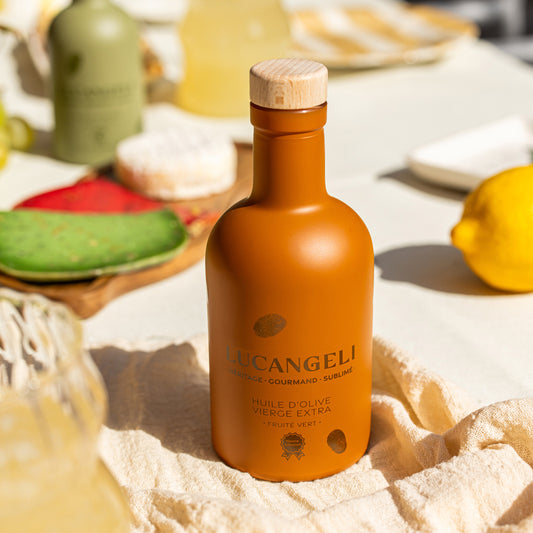
The organic green fruity olive oil in 200 ml and the organic ripe fruity olive oil in 200 ml both use dark glass: this is a deliberate technical choice to preserve the aromatic profile of each harvest right up to your plate.
The opaque metal or HDPE plastic tin: the ally for large volumes
For 3- to 5-liter formats, an opaque tin—made of metal or high-density polyethylene—is often more appropriate than glass. It allows no light to pass through, is impact-resistant, and its cost per liter is lower. This is the preferred solution for professional kitchens and households that consume a lot of oil.
The point of caution with a tin is the opening. Once opened, the volume of air inside increases with each use, and oxidation progresses. The best practice is to decant the contents into a smaller container as you consume it to limit oil-to-air contact.
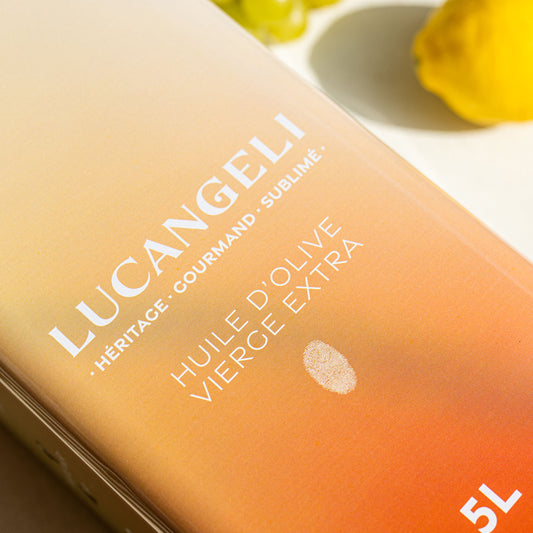
The 5-liter organic olive oil tin is designed specifically with this in mind: an economical format, opaque packaging, ideal for regular consumption over two to three months.
Clear glass: a warning sign
Oil packaged in transparent glass isn't necessarily bad at the time of production, but it is exposed to photo-oxidation as soon as it hits the shelf. If you see a clear bottle filled with a light-gold oil on a well-lit display, it is a sign of a supply chain that has not taken this technical constraint into account.
Some very high-end oils are presented in clear glass inside closed gift boxes, with the guarantee that they have not been exposed to light. This is an exception, not the rule. In the vast majority of cases, clear glass is a container to avoid for oil that you want to consume in the best possible condition.
PET plastic: the stopgap solution
PET plastic is light-impermeable (depending on the tint), lightweight, and inexpensive. It is common in entry-level oils sold in supermarkets. Its limitations are well-known: a slight permeability to oxygen over time, and a risk of plastic compounds migrating if exposed to prolonged heat or light. For an oil bought in a pinch and consumed quickly, plastic can suffice. For quality oil bought to be kept and enjoyed, it is packaging to avoid.
What the packaging also says about the producer
The choice of container is above all an economic decision. Tinted glass costs more than clear glass, and food-grade metal costs more than plastic. A producer who invests in protective packaging signals that they seek to preserve the product's quality until it reaches the consumer, rather than just cutting packaging costs.
This is a concrete selection criterion, just like free acidity or harvest date. When you read a label, look at the container too. An oil with an acidity level of 0.2% in a clear bottle sitting in direct sunlight on a market stall has likely already lost some of its organoleptic qualities.
The Carolea variety, which is one of the main varieties of the Olio di Calabria PGI, has a profile particularly rich in volatile aromatic compounds. These compounds are the first to degrade under the influence of light. A tinted bottle is therefore not a luxury for oil made from this variety: it is a necessity so that the intense green fruitiness that characterizes the October harvest reaches your kitchen intact.
The discovery duo of two 500 ml bottles and the 2.5-liter jeroboam allow you to build a reserve in suitable packaging, whether for daily use or a special occasion. For those wishing to gift oil in a sophisticated container, the personalization page offers screen-printing options on bottles.

Frequently asked questions about olive oil packaging
Does oil in a dark glass bottle really keep better than in clear glass?
Yes, significantly. Tinted glass filters out a large part of the light spectrum, which slows down photo-oxidation. Oil in clear glass exposed to light can have its aromatic profile degrade in just a few weeks, whereas the same oil in dark glass, stored correctly away from light and heat, retains its qualities for several months.
Can you decant your olive oil into another container?
Yes, provided the new container is perfectly clean, dry, airtight, and opaque. A tinted glass jar with an airtight lid works very well. Avoid containers that have held other aromatic products, as oil easily absorbs residual odors. If you use a 5-liter tin, decant into a 500 ml bottle as needed: this limits contact with air each time you open it.
Does the bottle size influence preservation?
Yes. For an equal volume of oil, a small, full bottle keeps better than a large, half-empty one. When a bottle is opened, the space left by the consumed oil fills with air, and oxidation begins. This is why 200 ml bottles are useful if you want oil that is always fresh at the table, even if the cost per liter is higher. For intensive daily cooking use, a large opaque format with regular decanting into a smaller service bottle is the best strategy.




 lucangeli.it