

How the container changes everything about the quality of oil
Choosing an olive oil carafe for the table is, first and foremost, a matter of capacity, material, and airtightness. A poor container will oxidize the oil in a few hours and spoil what you carefully selected. Here's how to navigate your choices.
Glass, stainless steel, or ceramic: which material to choose?
Tinted glass is the gold standard. It protects the oil from light, doesn't retain odors, and allows you to see the remaining level. Transparent glass exposes the oil to UV rays and accelerates rancidification: avoid it on a table in direct sunlight or on a terrace.

Stainless steel is sturdy and opaque, providing good light protection. Its drawback: it's impossible to see what's left, and some cheap models can impart a slight metallic odor to delicate oils. For a fruity green organic olive oil with pronounced herbaceous aromas, tinted glass remains preferable.
Ceramic looks beautiful on the table but is porous if not glazed on the inside. It's suitable for occasional serving, not for storing oil between meals.
Capacity: the most common mistake
Overfilling a carafe is the most common mistake. The larger the contact surface between the oil and the air, the faster the oxidation. For a mellow fruity oil with sweet notes of tomato and almond, a 100 to 150 ml carafe is more than enough for a meal for four people.
This number is not arbitrary: for an oil from the Carolea variety, cultivated in Calabria and characterized by a soft, gently pungent ripe fruitiness, the recommended finishing dosage is 8 to 12 ml per plate. For four guests, that's a maximum of 32 to 48 ml. A 100 ml carafe filled two-thirds of the way covers the meal without leaving oil exposed to air for hours.
Stopper, pourer, and airtightness
An airtight stopper is essential between servings. Cork-stoppered carafes are aesthetic but not very airtight over time. Prefer a ground glass stopper or a lid with a silicone seal.
The drip-free pourer is a small detail that changes the dining experience. A well-designed spout dispenses oil without splashing and without leaving a trail on the tablecloth. Models with an integrated flap are the most practical: they close automatically after each use and limit air entry.
How to use and care for your olive oil carafe
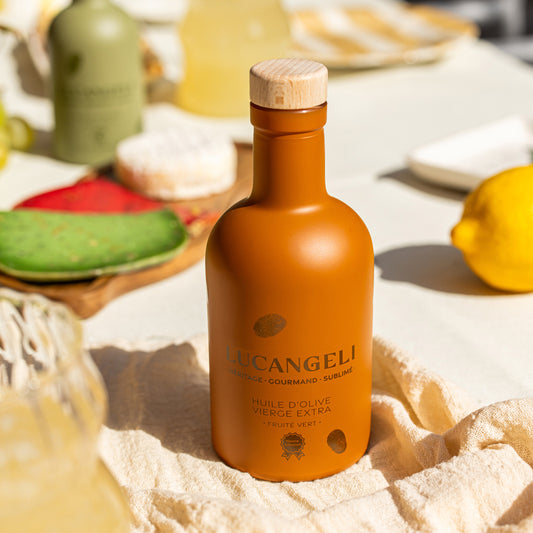
A table carafe is not a storage container. After each meal, pour any remaining oil back into its original, tightly sealed bottle, away from light and heat. The 1-liter limited edition bottle is designed with a narrow neck that limits oxidation with each opening.
Cleaning the carafe without harsh detergents
Olive oil leaves a greasy film that is difficult to remove with cold water. The most effective method: rinse with very hot water, without soap, then let it dry upside down on a clean cloth. If a residue persists, a spoon of baking soda in hot water will suffice. Avoid perfumed detergents that impregnate the glass and alter the taste of the next oil.
How often should you refill?
For daily use, fill the carafe just before the meal, only with the amount you will consume. If you use a 500 ml bottle duo, you can alternate the two oils depending on the dishes: a fruity green for salads and fish, a mellow fruity for meats and pasta.
Which container for which use
To help you choose, here are the five most common options:
- Tinted glass carafe with pour spout (100 to 200 ml): protects from light, precise dosing, fragile.
- Stainless steel oil dispenser with flap (150 to 250 ml): sturdy, integrated drip-free, opaque, and possible odor on low-end models.
- Glazed ceramic carafe (100 to 150 ml): aesthetic, neutral taste, weight and fragility to consider.
- Original bottle with adapted pourer (200 to 500 ml): practical, no decanting, less elegant on the table.
- Canister with tap in stainless steel or food-grade plastic (5 L): economical for intensive use, reserved for the kitchen and not the table.
For professional use or a large volume, the 5-liter canister allows you to fill table carafes without handling large bottles. This is the solution adopted by many establishments that want to offer quality oil in the dining room while controlling their material costs. To learn more about solutions for professionals, consult the professional section.
Going further: personalized bottles on the table
In some restaurants and hotels, the generic carafe has been replaced by a bottle reflecting the establishment's identity. This sends a strong signal to the customer: the oil is not an anonymous condiment, it's a choice. If you manage an establishment or want to offer a personalized bottle for an event, the personalized bottle configurator allows you to create your design starting from 24 bottles. For a professional project or a larger volume, the personalization service handles the entire project.
Frequently Asked Questions
What capacity should I choose for an olive oil carafe on the table?
For a meal for four people, a 100 to 150 ml carafe is sufficient. The finishing dosage is 8 to 12 ml per plate. Overfilling exposes the oil to air and accelerates its oxidation.
Can olive oil be left in the carafe between meals?
No. A table carafe is not a storage container. Pour any remaining oil back into its original bottle after each meal, tightly sealed and stored away from light.
How to clean an olive oil carafe without leaving residual taste?
Rinse with very hot water without perfumed detergent. If a residue persists, use baking soda diluted in hot water. Let it dry upside down on a clean cloth before refilling.




 lucangeli.it