

Why Calabrian bergamot gives such different products
Bergamot (Citrus bergamia) looks like a slightly flattened orange, but its fragrance belongs in a category of its own: floral, faintly bitter, with an almost minty freshness you won't find in any other citrus. Commercial growing is concentrated on a coastal strip just a few dozen kilometres wide around Reggio Calabria — nowhere else in the world is it produced on this scale.
That geographical quirk explains why bergamot products stay rare on the French market. It also explains why quality varies so much from one producer to the next: a bergamot picked at peak ripeness between November and March, processed locally within days, gives you a radically different product from a preparation built on synthetic flavouring.
In practice, Calabrian bergamot reaches your kitchen in five main forms. Each one has its strengths, its limits and the uses it was made for.
---
Side by side: the five Calabrian bergamot products

The comparison table
Organic Calabrian bergamot juice
This is bergamot in its most direct form. The pure organic Calabrian bergamot juice is pressed from the whole fruit, with no added flavouring and no sugar. The taste is intense, slightly bitter on the finish, with that signature floral note that tells Calabrian bergamot apart from its imitations straight away.
You can take it in several directions: a few drops in a vinaigrette lift a rocket or radicchio salad, it works in a marinade for white fish, and in baking it stands in for lemon in a sponge or an icing with plenty to spare. The organic bergamot juice in the 200 ml size is a good way to try it before committing to a larger bottle.
Worth knowing: the juice is naturally acidic. Used generously in a cold drink, it can catch you off guard unless you lengthen it with sparkling water or honey.
Bergamot olive oil
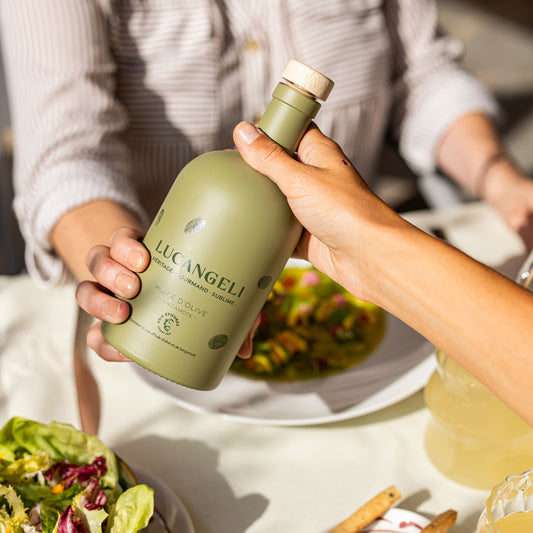
The bergamot olive oil is made by milling the fresh citrus together with the olives at the moment of extraction — not by adding flavouring afterwards. That distinction changes everything: the bergamot aroma is built into the structure of the oil, it doesn't burn off under heat the way a surface flavouring does, and it never has that artificial edge you recognise instantly. This oil was awarded the Épicures d'Argent in 2023.
Savoury cooking is where it belongs: a finishing drizzle over a fillet of sea bass or sea bream, a thread over burrata, the dressing on a fennel salad, a final touch on steamed asparagus or artichokes. It suits baking less well, where the bitterness of bergamot can upset the balance of a sweet sponge.
Bergamot spread
The bergamot spread is the most accomplished product in the range in terms of sheer taste: it marries the softness of a creamy base with the floral acidity of bergamot, without either one overpowering the other. It was awarded the Épicures d'Or in 2024 — one level above the Argent given to the oil the year before.
It's the easiest way in for anyone discovering bergamot: the sweetness tempers the citrus's natural bitterness, and a spreadable texture invites immediate, concrete uses. On a slice of toast at breakfast, tucked between the layers of a layer cake, or piped into macarons — it adapts to very different settings.
Bergamot jam
The bergamot jam plays in a different register from the spread: sweeter, looser, with the texture of a traditional preserve. It shines alongside blue cheeses or aged goat's cheeses — the residual bitterness of bergamot talks to the salt and fat of the cheese in a remarkable way. On plain yoghurt or fromage blanc, it brings a freshness that takes you by surprise.
Less versatile than the spread for baking, it is on the other hand irreplaceable on a cheeseboard with a bit of character.
Calabrian bergamot essential oil
The Calabrian bergamot essential oil is not for cooking. Highly concentrated, it belongs to aromatherapy and cosmetic care. It's included here to make clear that it is not interchangeable with the juice or the olive oil: a few drops in a diffuser or diluted in a carrier oil, never on a plate.
---
How to choose for what you have in mind
You want to explore bergamot for the first time
Start with the bergamot spread or the small bottle of juice. The spread is the gentlest way in; the juice gives you bergamot in its purest version. If you want both in a single order, the bergamot gift box brings together several products from the range and makes for a complete first tasting.
You cook savoury food and want an unusual finishing oil
Bergamot olive oil is the obvious pick. It turns an ordinary dish into something unexpected with no particular effort: a drizzle over a salad, a final touch on a scallop carpaccio or a chilled cucumber soup. It also makes an excellent gift for a keen cook who already owns all the classics.
You want to give something original that stands out
The bergamot gift box is built for exactly that. It gathers the range in ready-to-give packaging. For a personalised corporate gift featuring bergamot products, the professionals section lets you put together bespoke sets.
You bake and you're after a natural flavouring
Bergamot juice is the reference: it brings the citrus's true bitter floral note, which synthetic flavourings never reproduce faithfully. The spread works as a filling or an insert in sweet preparations. Bergamot olive oil can replace part of the fat in a sponge or a financier, but that use is more technical.
You want to personalise a bottle for an event
The bergamot olive oil bottle can be personalised through the design configurator, from 24 bottles upwards. It's a very original alternative to the usual guest favours, especially for food-focused events or Mediterranean-themed celebration tables.
---
The three questions everyone asks
Is Calabrian bergamot really different from other bergamots?
Yes. Italian bergamot grown on the Ionian coast of Reggio Calabria benefits from a soil, a microclimate and a production tradition that produce a specific aromatic profile — more intense, more floral, less metallic than synthetic bergamots or those grown in other regions. Harvest runs from November to March, which creates a real seasonality that processed products let you carry through the rest of the year.
Does bergamot spread taste like orange marmalade?
No. Orange is round, sweet, with no notable bitterness. Bergamot is floral, slightly bitter on the finish, with an acidity more elegant and less blunt than lemon. The confusion comes from how the fruit looks, but the taste has almost nothing in common. If you know Earl Grey tea, that is exactly the aroma — only in a creamy spread.
Can you cook with bergamot essential oil?
No. The essential oil is a concentrate obtained by cold expression of the peel and dosed for non-food use. It is not fit for food consumption. For cooking, you need the juice or the bergamot olive oil. It's a common mistake and worth stating plainly.




 lucangeli.it