

A well-designed aperitif buffet on a terrace generates value as soon as the customer arrives. It signals the establishment's standards even before the first dish is served. Here's how to set it up, compose it, and serve it rigorously outdoors, regardless of the season.
Organizing the space and flow around the buffet
Define the direction of traffic before placing anything
The first mistake in an outdoor aperitif buffet is to arrange products without considering the flow of guests. Outdoors, space is often less constrained than indoors, but the constraints are different: wind, sunlight, distance between tables and the buffet. Before setting up anything, mentally trace the path a customer will follow from their arrival until they leave with their plate or glass.
The ideal flow follows a simple logic: items to be taken first (bread, spreads, olives) are at the start of the buffet, items to be dispensed (oils, vinegars, condiments) in the center, and drinks at the end. This organization reduces crossovers and streamlines service, which is particularly important during a hotel buffet dinner where dozens of guests might be present simultaneously.
Play with heights to structure visual readability
A flat buffet is an unreadable buffet. Guests cannot see what is at the back, products blend together, and the table loses its visual impact. On a terrace, where natural light is strong, contrasts in height are even more effective than indoors.
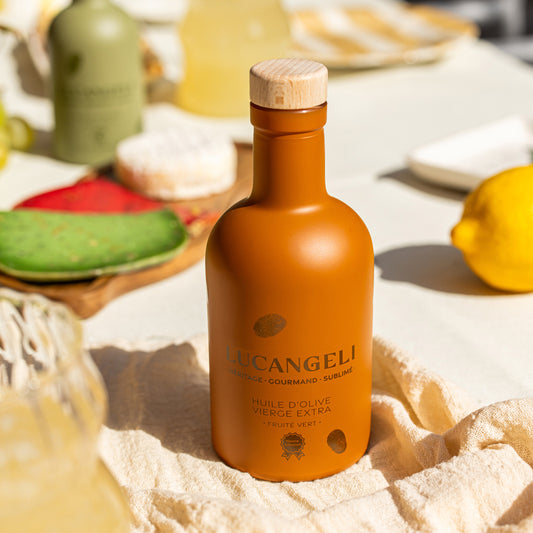
Use wooden stands, overturned crates, raised platters, or slate displays to create three distinct levels: low (olives, small bowls), medium (spreads, cheeses), high (bottles, decorative elements). A large format extra virgin olive oil bottle placed high in the center of the buffet acts both as a visual signal and a serving element: it indicates that oil is available for drizzling on toasts or grilled vegetables.
Protecting products without making the presentation heavy
Outdoor service imposes a constraint that is often underestimated: heat, insects, and wind. On a summer terrace, olive oil exposed to direct sunlight quickly heats up and loses some of its aromas. Opened spreads oxidize faster. Olives dry out.
Some practical solutions:
- Cover bowls of spreads with a lid or film until serving, then uncover them gradually.
- Place oil bottles in the shade or under a strategically oriented parasol.
- Replenish small bowls of olives every 45 minutes rather than filling one large bowl at the start of service.
- Use lightweight glass or metal cloches for cheeses and cold cuts.
The Carolea variety, a Calabrian olive that produces an olive oil with ripe fruit notes of tomato and sweet almond, offers a notable technical advantage for terrace service: it does not crystallize below 8 °C, making it stable even during prolonged outdoor service, without risk of cloudiness or sediment in the bottle.
Composing the antipasti buffet: product logic and balance of flavors

The five product families to bring together
An outdoor antipasti buffet relies on a balance between five product families. Each plays a specific role in the tasting experience and in the logistics of service.
- Spreads: the anchor of the buffet, a product with high perceived value. Sun-dried tomato tapenade, black olive tapenade, and DOP basil pesto cover the most common flavor profiles.
- Olives: a snack product, easy to replenish. Pitted black olives in olive oil are served in small bowls that are regularly refilled.
- Bread and accompaniments: focaccia, grissini, sliced country bread. They are the vehicle for spreads and must be replenished before running out.
- Finishing oil: an active service product, visible on the table, served upon request or self-service with a drip-free pourer.
- Vegetables and crudités: cherry tomatoes, grilled peppers, marinated zucchini. They add freshness and color to the presentation.
An assortment of four spreads allows covering the most common flavor profiles without multiplying the references to manage in stock.
Calibrating quantities for outdoor service
On a terrace, guests generally consume more than indoors during an aperitif, due to the heat and relaxed atmosphere. A basic rule: plan for 80 to 100g of spreads per person for a 45-minute aperitif, and 120 to 150g for a 90-minute buffet dinner.
For serving olive oil, a 5-liter can allows refilling service bottles in the dining area without interruption, while controlling the cost per portion. The can is stored in reserve, away from light, and service bottles are refilled throughout the service.
Integrating olive oil as an active service product
Olive oil is not a passive condiment that you place on the table and forget. In an outdoor antipasti buffet, it can be presented in two complementary ways.
The first: a bottle placed on the buffet, with a drip-free pourer, which guests use freely to drizzle on their toast or vegetables. This presentation works well for establishments that want to showcase their oil selection without needing a dedicated server.
The second: tableside service by a team member, who pours the oil in front of the customer, naming the variety and origin. This more engaging approach is particularly suited to four-star hotels and gourmet restaurants. A green fruity oil, with its fresh herb notes and pungency at the finish, lends itself well to this type of commented presentation.
Careful service and personalization to enhance the experience
Train the team in product knowledge
A terrace aperitif buffet is not an anonymous self-service. Even if guests serve themselves, a team member must be present to guide, replenish products, and answer questions. Training this contact person on two or three key pieces of information (oil origin, olive variety, production method) is enough to transform an ordinary moment into a memorable experience.
The most frequent questions during an outdoor aperitif service concern product origin, presence of allergens, and the possibility of ordering products for takeaway. Prepare short and precise answers for each. For establishments wishing to go further, the professional area provides access to detailed product sheets and tailor-made support.
Personalize bottles to reinforce the establishment's identity
An olive oil bottle bearing the establishment's name or logo on the buffet table sends a strong signal. It indicates that the establishment has made a choice, stands by its selection, and does not serve generic oil. This detail is noticed by customers accustomed to refined dining.
Personalization is possible from 24 bottles, with a design created directly on the online configurator. For large volumes or specific projects (hotel chain, private event, seasonal menu), the sales department dedicated to establishments handles design and logistics.
Adapt the presentation to the season and time of service
A terrace aperitif buffet in August is not the same as in May or September. In mid-summer, the priority is visual freshness: bright colors, light products, frequent replenishment. At the beginning and end of the season, more substantial products (aged cheeses, cold cuts, roasted vegetables) that hold up better at room temperature can be introduced.
The time of service also matters. A late afternoon aperitif, between 6 and 8 pm, benefits from low light that enhances textures and colors. A midday aperitif, in full sun, requires more vigilance regarding product preservation and buffet shading.
Frequently asked questions
How many references should be planned for a restaurant terrace aperitif buffet?
For smooth service and a clear presentation, three to five spread references are sufficient, complemented by one or two serving olive oils, a bowl of olives, and an assortment of breads. Beyond five spread references, the buffet becomes confusing, and stock replenishment more complex to manage during service.
How to prevent olive oil from becoming rancid during prolonged service on a terrace?
Exposure to light and heat accelerates oxidation. Place bottles in the shade, use tinted glass or stainless steel bottles, and do not fill serving bottles to the brim: a half-full bottle oxidizes faster than a full one. Replenish the contents of serving bottles every two hours during prolonged service.
Can an antipasti aperitif buffet be offered on a terrace for a seminar or private event?
Yes, and it is a format particularly suited to outdoor corporate events. Logistics are simpler than table service, material costs are controllable, and the presentation can be customized with bottles bearing the company's or event's logo. For this type of project, the service dedicated to professionals supports establishments from product selection to delivery.




 lucangeli.it