


An Italian-style brunch isn't just a brunch with added mozzarella. It's a way of setting the table where sweet and savory coexist from the start, where olive oil replaces butter, and where guests serve themselves freely for two hours without anyone having to get up to serve.
What distinguishes an Italian brunch from an ordinary brunch
The table as a starting point
In a classic brunch, the table is a support. In an Italian brunch, it is the meal itself. Everything is laid out from the beginning: breads, spreads, fruits, olives, and nut butters. There is no two-stage service, no dishes arriving one after another. The table is set once, and it remains that way until the end.
This logic comes directly from the colazione allungata, the extended Sunday breakfast in southern Italian families. You don't eat quickly to leave; you settle in, you come back, you take more. The table must therefore be designed to last, with products that keep well at room temperature and elements that complement each other without repetition.
Essential items
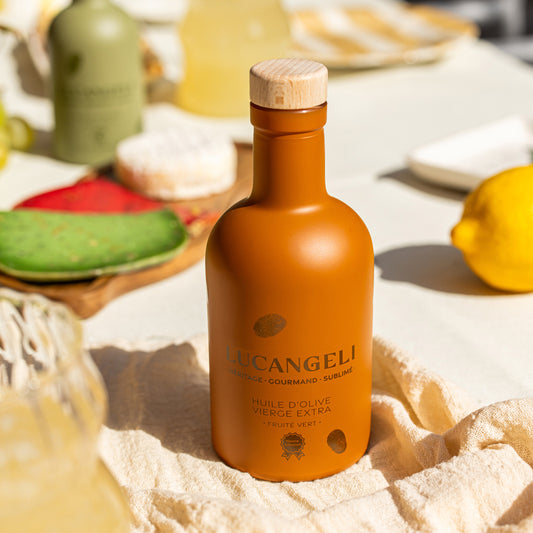
A well-set Italian brunch relies on a few specific items. A wooden or slate board for spreads and cheeses. Small bowls for olives and jams. An olive oil bottle with a pouring spout, placed in the center of the table and accessible to everyone. Deep plates for those who want to mix sweet and savory in the same bowl.
The oil cruet is not a decorative accessory; it is an active serving element. It should be refilled if the brunch lasts more than an hour and a half, and never left empty on the table. For a brunch of six to eight people, a 200 ml bottle is sufficient for serving; keep a second one in reserve.
Olive oil, not butter

This is the most visible difference between a French brunch and an Italian brunch: olive oil replaces butter on bread. It's not a dietary substitution; it's a tradition. In Calabria, morning bread has been dipped in oil for generations, and the olive variety that gives character to this gesture is Carolea, grown in the province of Cosenza. It produces an oil with an intense green fruitiness, a distinct bitterness, and a persistent pungency on the finish, exactly what's needed to awaken the palate at the beginning of a meal.
For this specific role, a green fruity oil is the natural choice. For sweet toasts and spreads, a ripe fruity oil, softer and rounder, pairs better. If you want to offer both without cluttering the table, the trio of 200 ml oils takes up little space and allows guests to choose according to their preference.
How to compose the table: sweet and savory together
The sweet side: spreads and seasonal fruits
The sweetness of an Italian brunch doesn't come from industrial jams. It comes from nut spreads, fresh seasonal fruits, and honey. In August, figs, peaches, and apricots are at their peak ripeness: slice them and place them directly on the board, without preparing them in advance to prevent them from releasing water.
For spreads, the rule is simple: offer at least two different profiles. A pistachio spread for lovers of vegetal and slightly salty notes. A Piedmont hazelnut spread for softer, toasted profiles. And if you want an element of surprise, the bergamot spread, awarded at the Épicures d'Or 2024, brings a citrus and floral note that no one expects on a brunch table, and that everyone asks for again.
For a brunch of four to six people, an assortment of five spreads covers all profiles without having to choose.
The savory side: spreads, olives, and bread
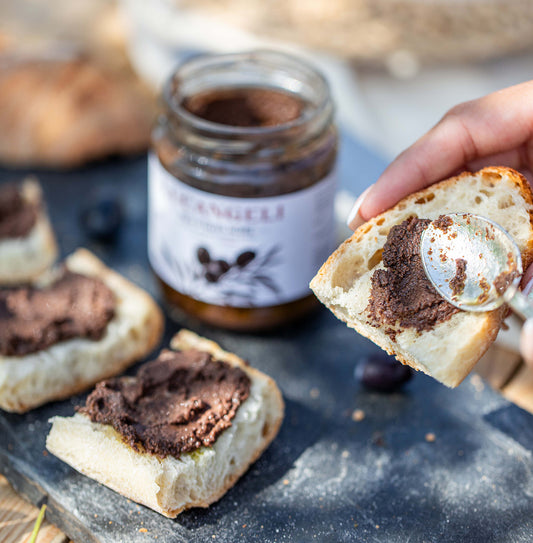
The savory aspect of an Italian brunch is as important as the sweet. It's not about a charcuterie board; it's about quality spreads, olives, and bread. Sun-dried tomato tapenade and black olive tapenade are the two classics to place on the table from the start. DOP basil pesto can be used on toasted bread or mixed with scrambled eggs.
The pitted black olives in extra virgin olive oil are placed in a small bowl in the center of the table. They always disappear before the end of the brunch.
Composition according to the number of guests
Here are the reference quantities to calibrate your table:
- For 2 to 3 people: 1 bread (baguette or focaccia), 2 jars of spreads, 1 savory spread, 1 200 ml bottle of olive oil, 1 small bowl of olives.
- For 4 to 6 people: 2 different breads, 3 to 4 jars of spreads, 2 savory spreads, 1 200 ml bottle with a reserve, 1 medium bowl of olives.
- For 8 to 10 people: 3 breads and some crackers, 5 jars (complete set), 3 savory spreads, 2 200 ml bottles, 2 bowls of olives.
- For 12 people and more: 4 breads including a homemade focaccia, 5 jars with refill, 4 savory spreads, 3 bottles or 1 large container, 3 bowls of olives distributed along the length of the table.
Service and details that make the difference
Arrangement of elements
The basic rule of a well-set Italian brunch: everything must be accessible without anyone having to reach more than 60 centimeters. For a round table of six people, place the elements in the center in a circle. For a rectangular table of eight or more people, create two symmetrical serving points, one at each end, with the same duplicated products.
Olive oil is always placed next to the bread, never at the other end of the table. It's the most frequent gesture of brunch: dipping, pouring, drizzling. It must be fluid.
Temperature and serving time
Spreads are served at room temperature, never taken straight from the refrigerator at the last minute. Take them out at least 20 minutes before the start of brunch so they regain their soft texture and full aroma. A jar taken cold from the refrigerator spreads poorly and loses some of its flavor profile.
Bread is served warm if possible, or at room temperature. Avoid slicing it too far in advance: it dries out quickly in summer. Slice it as you go, or place it whole on the board with a bread knife. For an almond spread, the texture is particularly pleasant on slightly warm bread.
Personalizing the experience
An Italian brunch can also be an opportunity for a gift or a souvenir. For a birthday brunch, a wedding brunch, or a family brunch, a personalized olive oil bottle with a name, date, or message creates a keepsake that guests take home. The design is created directly online by the customer, for orders of 24 bottles or more. For a larger project or a professional event, the space dedicated to professionals and events allows for a custom order to be built.
To offer the entire table as a gift, a customizable gift box with the products of your choice is a simple and personalized option.
Frequently asked questions
What is an Italian brunch and how is it different from a classic brunch?
An Italian brunch mixes sweet and savory on the same table from the start, without a two-stage service. Olive oil replaces butter, nut-based spreads replace industrial jams, and savory spreads (tapenade, pesto, olives) coexist with sweet elements. The logic is one of free sharing, not plated service.
What spreads should be on an Italian brunch table?
Offer at least two profiles: a sweet and toasted profile (hazelnut, almond) and a more original profile (pistachio, bergamot). For a brunch of four to six people, three to four jars cover all tastes. A set of five spreads is the most practical solution so you don't have to choose.
What olive oil to use for an Italian brunch?

For bread dipped at the start of brunch, choose a green fruity oil with bitterness and pungency. For sweet toasts and spreads, a ripe fruity oil, which is softer, pairs better. If you want to offer both, a trio of small 200 ml bottles is the most practical solution for a table of six to eight people.




 lucangeli.it