

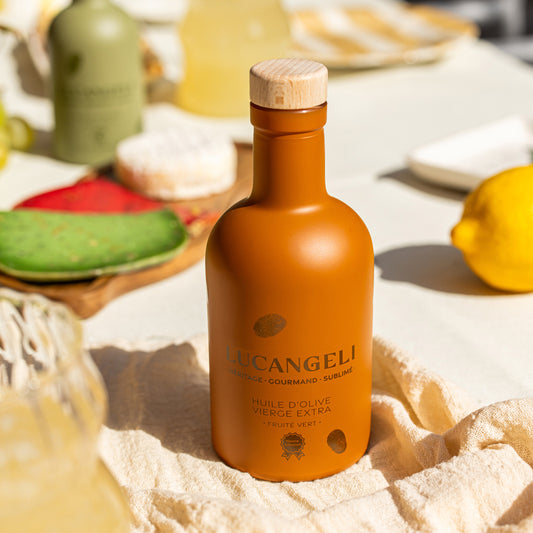
The best before date (BBD) of your olive oil is printed on each bottle, but it doesn't tell you everything. It's calculated from the bottling date, not the harvest date — and this nuance completely changes the actual freshness of what you pour onto your plate.
What the BBD on an olive oil bottle really means

BBD and Use-by Date: two very different logics
The use-by date (DLC in French) concerns perishable products like meat or dairy. Exceeding it can pose a risk. The BBD, on the other hand, works differently: it's an indicative date until which the producer guarantees that the product retains its organoleptic qualities — color, aroma, taste, texture. After this date, the oil is not dangerous, but it may have lost some of its aromatic profile.
Olive oil is not a perishable product in the regulatory sense. It presents no microbiological risk. What degrades is its sensory quality: the aromas fade, the bitterness and pungency characteristic of a quality extra virgin olive oil diminish, and the oil can develop a rancid taste if it has been poorly stored.
18 months from when, exactly?
European regulations impose a maximum BBD of 18 months from bottling for extra virgin olive oils. But here's the point many ignore: bottling can occur several months after harvest. An oil harvested in November, stored in an stainless steel tank until April, then bottled in May, will display a BBD of November of the following year — that is, 18 months after May, not after November.
Result: two bottles with the same printed BBD can have very different actual ages. The one that was bottled soon after harvest is fresher than the one that waited six months in a tank before being packaged. The BBD alone does not allow you to tell the difference. To explore several profiles without opening large bottles, the discovery duo in 500 ml is a good starting point.
The harvest date, the information the BBD doesn't give you
Why two bottles with the same BBD are not equivalent
The harvest date is the most reliable indicator of freshness. It tells you how long it's been since the olives were pressed, regardless of when the oil was bottled. An oil harvested in October and bottled in December of the same year is objectively fresher than an oil harvested in October and bottled the following March, even if their BBDs are similar.
Some serious producers indicate the harvest date on the label, sometimes accompanied by the vintage. This is a sign of transparency and traceability. If you only find a BBD without any mention of harvest, you don't have all the information to assess the actual freshness of the bottle. To easily compare several profiles, the 200 ml discovery trio allows you to test different expressions without opening large bottles.
What the olive variety changes about the actual shelf life
Not all oils age at the same rate. The olive variety plays a direct role in the oil's stability over time. Carolea, an emblematic variety from Calabria harvested between November and December, produces a naturally more stable oil thanks to its high phenolic content. This is one reason why some quality Calabrian oils can display a BBD of 24 months without losing their aromatic profile — while other, more delicate varieties begin to oxidize much earlier.
Conversely, an oil from olives harvested late, at full maturity, will be sweeter but also more fragile. It oxidizes faster and requires more rigorous storage. This is why the choice between a green fruity and a ripe fruity is not just a matter of taste: it's also a matter of shelf life in your kitchen.
What to do with olive oil past its BBD?
Concrete signs of oxidized oil
Before looking at the date, trust your senses. Oxidized oil can be recognized by several signs:
- An odor of old crayon wax, rancid nuts, or damp cardboard
- A total absence of aroma, whereas a fresh oil smells of cut grass, artichoke, or green tomato
- A flat, greasy mouthfeel, without the slight final pungency characteristic of an extra virgin oil
- A dull yellowish color, without sparkle
If you find these characteristics, the BBD has passed or storage conditions were poor — even if the date is still valid. Light, heat, and air are the three enemies of olive oil, regardless of the date on the bottle. A dark glass bottle protects better than a transparent container.
Cooking or finishing: how to use the rest
An oil whose BBD has passed but which does not show any marked olfactory defect can still be used for cooking over medium heat. It is suitable for sautéing vegetables, preparing a sauce, or cooking eggs. However, it should no longer be used raw — as a finish on a dish, in a vinaigrette, or for dipping bread — because that's where its aromatic profile matters most.
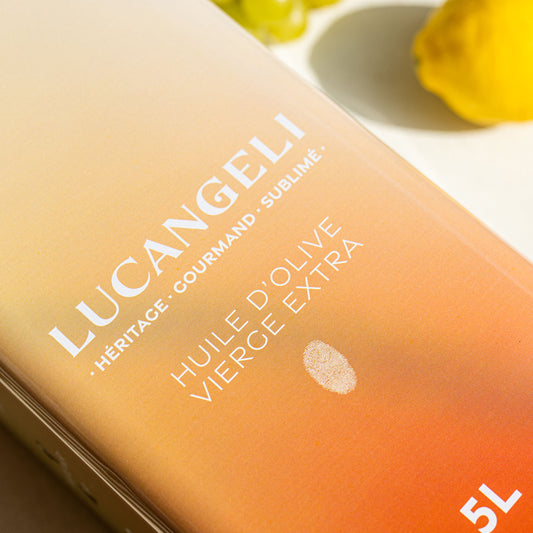
If you consume little oil daily, prefer small formats. The 200 ml format is consumed within a few weeks and guarantees consistent freshness. For large families or regular cooks, the 5-liter can is economical, provided it is transferred into a small opaque bottle for daily use. Catering professionals find formats adapted to their rotation on the dedicated establishments page.
What the label should ideally tell you
Here are the five pieces of information to look for on an olive oil bottle, in order of priority:
- Harvest date or vintage: the most reliable indicator of freshness
- BBD: minimum guarantee from the producer, calculated from bottling
- Free acidity: must be less than 0.8% for extra virgin
- Olive variety: informs you about the aromatic profile and natural stability
- Appellation or certification: PDO, PGI, or organic guarantee enhanced traceability
The more transparent a label is on these points, the more confident the producer is in the quality of their oil. A bottle that only displays the BBD without any other information about origin or harvest leaves little room for verification. For those who wish to go further in customizing their supply, the customization page offers bottles with a unique identity, with all traceability information.
Frequently Asked Questions
Can you consume olive oil past its BBD?
Yes, without health risk. The BBD is not a strict expiration date. After this date, the oil may have lost some of its aromatic qualities, but it is not dangerous. Trust your nose: if it smells good, it's still good.
What is the difference between BBD and harvest date on an olive oil bottle?
The BBD is calculated from bottling (18 months maximum according to European regulations). The harvest date indicates when the olives were pressed. An oil can have a valid BBD while already being old if it was bottled long after harvest. The harvest date is the most reliable indicator of freshness.
How long does an open bottle of olive oil keep?
Once opened, an extra virgin olive oil ideally keeps for 2 to 3 months. Close the bottle tightly after each use, store it away from light and heat, and avoid leaving it near the hob. Prefer small formats if you consume little. The limited edition jeroboam is designed for large tables that consume quickly.




 lucangeli.it