


The Italian-style aperitivo is much more than just an aperitif: it's a dining ritual that structures the evening, brings guests together, and highlights products of character. Here's how to create one at home with the right spreads, olives, and condiments. For an even more refined table, also explore the professional section if you entertain regularly or manage an establishment.
The Fundamentals of a Southern Aperitivo

What Distinguishes the Calabrian Aperitivo
In Northern Italy, the aperitivo developed around the Spritz and industrial canapés. In the South, and in Calabria in particular, the tradition is different: what the land produces is placed on the table. Marinated olives, vegetables preserved in oil, spreads made from sun-dried tomatoes or black olives, grilled country bread. Nothing superfluous, everything precise.
Carolea is the most cultivated olive variety in Calabria. Harvested between October and November, it yields a fleshy, mildly bitter table olive, ideal for aperitifs. It is used in the pitted black olives in extra virgin olive oil that have been found on Calabrian tables for generations.
The Basic Ingredients for a Successful Board
A successful antipasti board relies on four families of products. Firstly, spreads: tapenade, vegetable caviar, pesto. Secondly, whole or pitted olives. Thirdly, bread: bruschetta, crostini, grissini. Fourthly, finishing condiments: olive oil, balsamic vinegar.
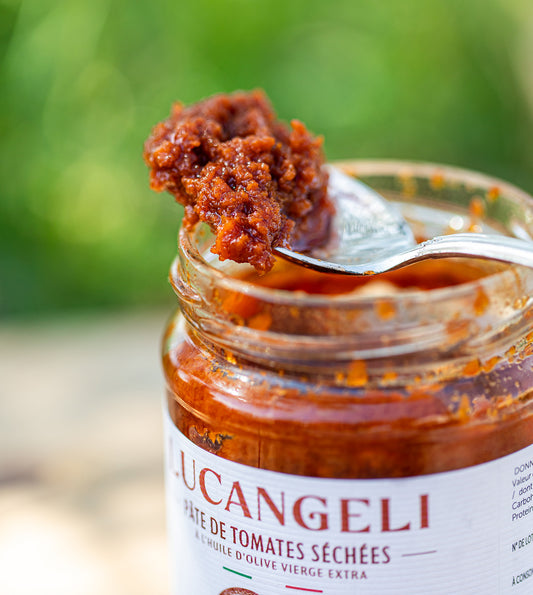
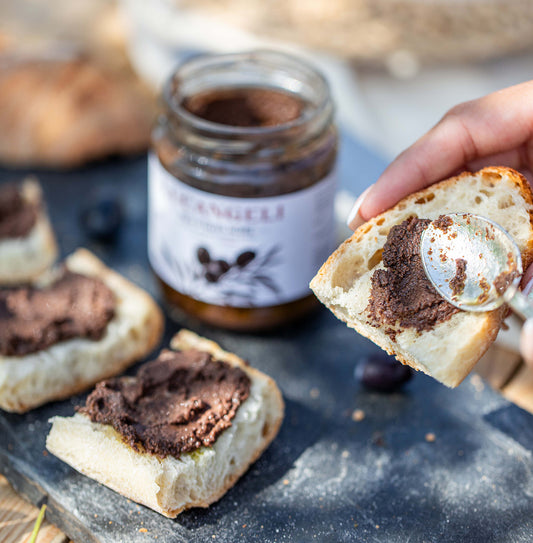
The golden rule: alternate textures and intensities. A powerful spread like black olive tapenade balances with a milder element, such as fresh cheese or a slice of plain bread. An acidic spread like sun-dried tomato caviar calls for lightly grilled bread to fully bring out the flavors.
Composing Your Antipasti Board: Winning Combinations
Spreads and Their Role
Spreads are the heart of the board. They concentrate flavors, make serving easy, and allow everyone to create their own bite according to their taste. Three simple rules for choosing them well: vary the raw materials (olive, tomato, basil, vegetable), vary the textures (smooth, granular, creamy), and limit yourself to three or four options to avoid overwhelming the palate.
DOP basil pesto is a classic that works just as well on a crostino as it does mixed with fresh cheese to create an express spread. To save time and offer a coherent selection, the kit of four spreads covers all four flavor families in a single choice.
Key Combinations to Remember
Here are the four combinations that work best on an Italian antipasti board:
- Black olive tapenade on grilled crostino, with a drizzle of fruity green olive oil as a finish.
- Sun-dried tomato caviar on country bread or grissini, with a few drops of balsamic vinegar.
- DOP basil pesto on crostino or raw vegetables, with a drizzle of olive oil as a finish.
- Pitted black olives to snack on alone or with aged cheese, enhanced with a hint of lemon zest and fresh herbs.
These four combinations cover salty, acidic, herbaceous, and fruity registers. They allow each guest to find their match without the flavors neutralizing each other. For a festive table or a gift box, the customizable gift box allows you to combine spreads, oil, and vinegar in one set.
The Details That Make a Difference
Olive Oil as a Finishing Touch
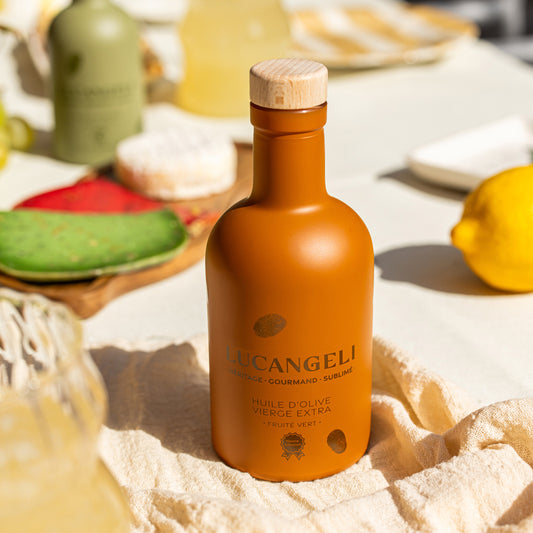
A drizzle of olive oil added at the last moment transforms an ordinary board into an Italian table. Here, the oil is not for cooking: it adds a vegetal note, a slight bitterness, and a pungency at the end of the palate that awakens the whole dish. For this use, choose a fruity green oil, whose aromas of fresh grass and artichoke complement the savory flavors of the spreads. A small bottle of organic fruity green olive oil is ideal: it keeps better once opened and allows you to vary oils according to the occasion.
Balsamic Vinegar as a Table Condiment
Balsamic vinegar is not just for salads. A few drops on a sun-dried tomato spread, on a slice of aged cheese, or on marinated olives create a sweet-sour contrast that rekindles the appetite between bites. The balsamic vinegar with red onion, Epicures 2025 medal winner, adds a slightly sweet note and a deep color that visually enhances the board. A few drops are enough: it's a precision condiment, not a volume seasoning.
Lucangeli offers several PGI balsamic vinegars from Modena, including a Gold collection and a Silver collection, to adjust the intensity according to the moment and the dishes served.
Frequently Asked Questions
What's the difference between antipasti and aperitivo?
Antipasto refers to dishes served before the meal, as a cold or hot starter. Aperitivo is the convivial moment that precedes the meal, often accompanied by a drink. In practice, antipasti form the basis of the aperitivo: they are served together, but the aperitivo also includes the drink and the dining ritual.
How many spreads should you plan for a home aperitivo?
Three to four spreads are enough for six to eight people. Beyond that, the flavors become muddled, and guests don't know what to choose. A short, coherent selection is better than an overcrowded table. Allow about 30 to 40 grams of spread per person.
Can an antipasti board be prepared in advance?
Yes, provided you don't spread the toppings too early on the bread: bread quickly softens when it comes into contact with moisture. Prepare the jars and olives in advance, and arrange the bread at the last minute. Jarred spreads can be stored in the refrigerator for several days once opened.




 lucangeli.it