


Why Jerusalem Artichokes Call for a Green-Fruited Olive Oil
An October vegetable with complex aromas
Jerusalem artichokes are in season from October to March. Their flavor profile is unusual: a natural sweetness reminiscent of artichoke, a dense texture that holds up well to heat, and a slight bitterness on the finish that partly disappears during cooking. This aromatic complexity makes them a demanding vegetable to season — neutral fats overwhelm them, while oils that are too powerful mask their flavor.
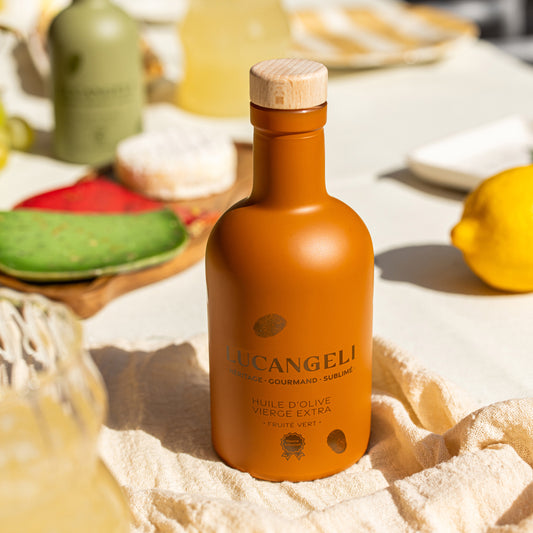
An organic green-fruited olive oil is the clear choice for two reasons. First, its vegetal notes — fresh grass, tomato leaf, artichoke — echo the vegetable’s own flavor rather than imposing an unfamiliar profile. Second, its gentle peppery kick on the finish complements the natural bitterness of Jerusalem artichokes instead of neutralizing it.
The profile of green-fruited oil and how it pairs with bitter autumn vegetables

Green-fruited olive oil is made from olives harvested early in the season, while they are still green or just beginning to turn. In Calabria, the robust, generous Carolea variety, grown at higher elevations, produces an oil in this style with pronounced green hues, a lively first impression, aromas of cut grass, and a slightly peppery finish. It is exactly what Jerusalem artichokes need to shine on the plate.
This oil can withstand oven cooking at a moderate temperature, around 180 °C. It is not suitable for deep-frying, but excels in roasting — the oven’s dry heat brings out its aromas instead of destroying them, provided the temperature does not exceed 200 °C and cooking times are kept short to moderate.
---
The recipe: oven-roasted Jerusalem artichokes with green-fruited olive oil
Ingredients for 4 people
- 800 g firm Jerusalem artichokes, with no soft spots
- 4 tablespoons of organic green-fruited olive oil for cooking, plus 1 tablespoon to finish
- 1 garlic clove, unpeeled and lightly crushed
- A few sprigs of fresh thyme
- Fleur de sel, freshly ground black pepper
- Optional: finely grated zest of half an untreated lemon, added at the end
Step-by-step method
- Prepare the Jerusalem artichokes. Scrub them thoroughly under cold water. You can leave the skin on if it is thin and clean — it crisps up during cooking and concentrates the aromas. Halve the larger ones lengthwise and leave the small ones whole.
- Coat with oil. Pour the 4 tablespoons of green-fruited olive oil into a large bowl. Add the garlic, thyme, a generous pinch of fleur de sel, and a few grinds of pepper. Toss the Jerusalem artichokes in the flavored oil until evenly coated. The coating should be visible: each piece should glisten.
- Arrange on the baking sheet. Spread the Jerusalem artichokes in a single layer on a baking sheet lined with parchment paper. Do not pile them up — this is what distinguishes a roasted vegetable from a steamed one. Heat needs to circulate around every piece.
- Roast in the oven. Roast at 190 °C with the fan on for 30 to 35 minutes. Turn the Jerusalem artichokes halfway through cooking. They are ready when a knife tip slides in without resistance and the surface is browned in places.
- Finish with uncooked oil. As soon as they come out of the oven, transfer the Jerusalem artichokes to a warm serving dish. Drizzle immediately with the tablespoon of uncooked green-fruited olive oil. This is when the oil’s aromas come through fully — the vegetable’s residual heat releases them without cooking them. Add the lemon zest if using.
Why using the oil twice makes all the difference
Many recipes use oil only for cooking. This is a mistake in technique: the oven’s heat transforms the oil’s aromatic compounds, so it mainly contributes to texture and browning. Finishing with uncooked oil, on the other hand, brings back the full tasting profile — the vegetal notes, the peppery bite, the lingering finish. With a vegetable like Jerusalem artichoke, these two stages are inseparable.
---
Variations and accompaniments
A quick weeknight version in a skillet
If you are short on time, a skillet works too. Cut the Jerusalem artichokes into half-inch-thick rounds. Heat 2 tablespoons of organic green-fruited olive oil over medium heat in a large skillet. Add the rounds in a single layer and leave them untouched for 4 minutes to form a crust. Turn them over, cover for 3 minutes, then uncover and finish over high heat for 2 minutes. Season off the heat with a drizzle of uncooked oil, salt, and chopped parsley.
What to serve alongside
Roasted Jerusalem artichokes with green-fruited olive oil pair naturally with:
- Roasted white meat — guinea fowl, free-range chicken, veal — with the oil bridging the gap between the juices and the vegetable
- A soft-boiled egg served on top of the hot Jerusalem artichokes, with an extra drizzle of oil — a complete meal in under 40 minutes
- Burrata served at room temperature as a starter, with warm Jerusalem artichokes and a few seasonal shelled walnuts
- A firm-fleshed fish fillet — pollock or hake — gently cooked at a low temperature, with the Jerusalem artichoke serving as a hearty vegetable base
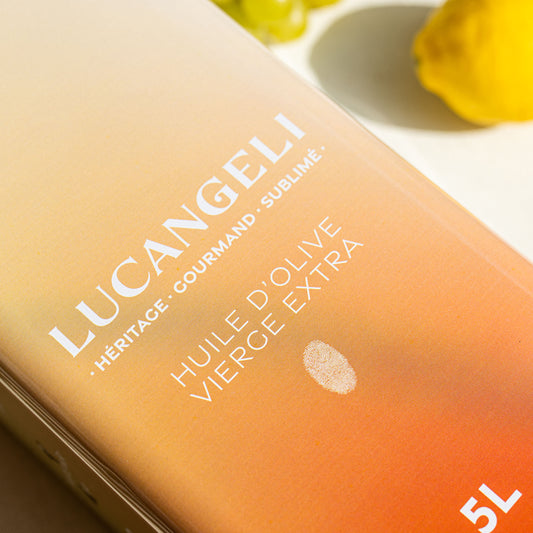
If you cook regularly and want to avoid buying a small bottle every week, the 5-liter can of organic olive oil is designed for everyday home use — easy pouring from the tap, storage away from light, and good value for money over time.
If you are hosting and want to put together a full seasonal menu, Lucangeli’s professional section also offers formats suited to restaurateurs and caterers who feature this type of product on their autumn menus.
---
Frequently asked questions
Should you peel Jerusalem artichokes before roasting them?
No, as long as you scrub them thoroughly. Jerusalem artichoke skin is thin and edible. It crisps up slightly during cooking and concentrates the vegetable’s aromas. Peel them only if they are very uneven or their skin is thick and fibrous — some older varieties have tougher skin.
Which olive oil should you choose for roasting autumn vegetables in the oven?
For vegetables with a bitter or earthy flavor profile — Jerusalem artichokes, fennel, broccoli, chicory — green-fruited olive oil is the best match. Its vegetal notes and gentle peppery bite complement the vegetable’s natural bitterness instead of masking it. For milder vegetables — butternut squash, carrots, potatoes — a riper, rounder, less robust fruity oil is a better fit.
Can you prepare roasted Jerusalem artichokes in advance?
Yes, up to 24 hours ahead. Roast them as usual, let them cool, then refrigerate them in a single layer in a sealed container. A few minutes at 180 °C is enough to reheat them. Add the uncooked oil only when serving — never in advance, as unheated oil loses its aromas when it comes into contact with a cold vegetable.




 lucangeli.it