


On a slice of toast, at aperitif time, olive tapenade stands out as one of the most iconic spreads of the Mediterranean basin. Provençal or Italian, black or with sun-dried tomatoes, this olive-based preparation concentrates all the character of the sun and the terroirs of the South. But how do you choose it, distinguish it from a simple olive caviar, and above all, how do you use it beyond toast?
Olive tapenade: origins and definition

The word "tapenade" comes from the Provençal word "tapena," which means caper — one of the founding ingredients of the recipe. It was in Marseille, in 1880, that chef Meynier of the restaurant La Maison Dorée is said to have codified the first official recipe: black olives, capers, anchovies, and olive oil. A simple but precise composition that makes tapenade much more than just a simple olive purée.
Provençal tapenade, a codified recipe
In France, the designation "tapenade" is governed by strict compositional rules. For a product to be legally called tapenade, it must contain a minimum of 70% black or green olives, 3% capers, and 0.5% anchovies, all bound exclusively with olive oil. This rigor guarantees a certain authenticity, but it excludes many olive-based preparations that, without anchovies or capers, cannot bear this name.
Provençal tapenade comes in two main versions: the black, more intense and slightly bitter, and the green, livelier and more herbaceous. Both can be spread on toast, incorporated into savory recipes, or served with raw vegetables as an aperitif.
Italian olive caviar: another tradition
On the other side of the Alps, the tradition of olive spreads has existed for centuries, but in a different form. In Italy, it's more commonly referred to as crema di olive or olive caviar — a preparation made from finely crushed olives, mixed with extra virgin olive oil, sometimes enhanced with aromatic herbs or sun-dried tomatoes. Without mandatory anchovies or systematic capers, this Italian version is often sweeter, rounder on the palate, and highlights the intrinsic quality of the olive.
In Southern Italy, particularly in Calabria, black olives are harvested at full maturity, giving them deep aromas and a generous texture. The black olive tapenade made from this tradition is prepared with extra virgin olive oil, without additives, to preserve the fruit's full sincerity.
How to choose your tapenade or olive caviar?
Given the variety of products available in delicatessens or supermarkets, it's not always easy to know what to choose. A few simple criteria can help distinguish a quality product from an industrial preparation.
Quality criteria to look for
The first thing to do is read the list of ingredients. A good olive caviar or quality tapenade should list olives first, with a high percentage — ideally over 70%. The olive oil used should be extra virgin olive oil, not a generic vegetable oil. The presence of additives, preservatives, or artificial flavors is a red flag.
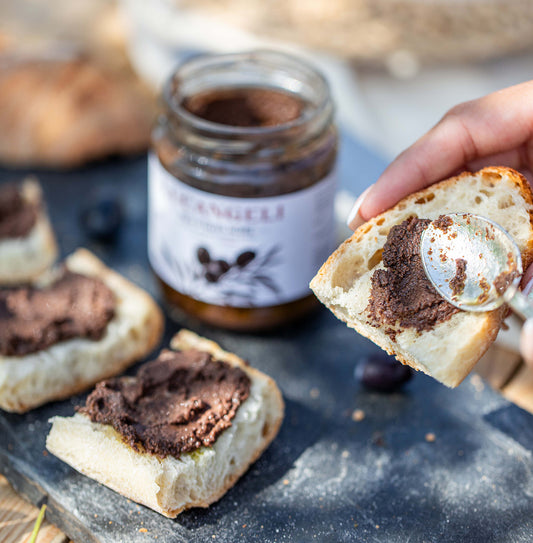
Texture and color are also revealing. A quality black olive tapenade has a dark, deep color and a slightly granular texture — a sign that the olives have been crushed and not excessively blended. A preparation that is too smooth and homogeneous may indicate extensive industrial processing.
Finally, the origin of the olives matters. Pitted black olives in olive oil from identified terroirs — such as those in Southern Italy — offer much more complex aromatic profiles than olives of undetermined origin.
Black tapenade, sun-dried tomato tapenade: what are the differences?
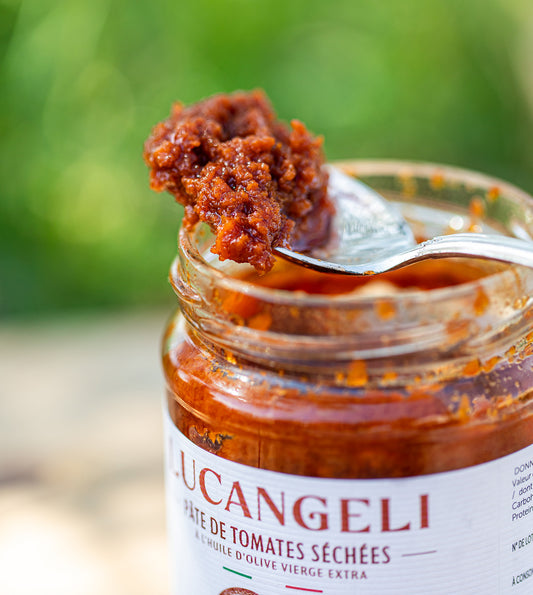
Beyond classic black tapenade, there are other spreads made from olives or sun-drenched vegetables that deserve a place at the table. Sun-dried tomato tapenade is one of them: prepared from sun-dried tomatoes, crushed with olive oil, it offers a concentrated, slightly sweet and tangy flavor that contrasts pleasantly with the bitterness of black olives.
These two spreads complement each other perfectly on an aperitif platter. Black tapenade brings depth and character; sun-dried tomato tapenade brings freshness and roundness. Together, they create a balanced Mediterranean harmony, ideal for summer meals on the terrace.
How to use tapenade in summer cooking?
Tapenade is often confined to the role of an aperitif spread. This is a shame, as it proves to be a versatile condiment, capable of transforming a simple dish into a flavorful preparation.
On toast and as an aperitif
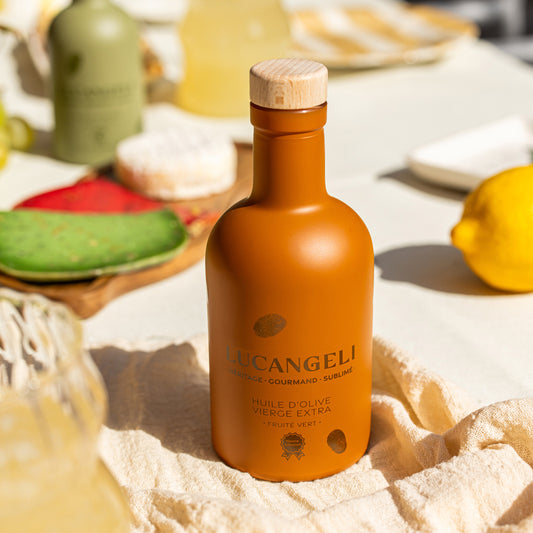
The most classic use remains toast: a slice of grilled country bread, a spoonful of black tapenade, a few fresh herbs. Simple, effective, timeless. To vary the pleasures, tapenade can be combined with a drizzle of organic green fruity olive oil on bruschetta, or served with raw vegetables — carrots, celery, radishes — for a lighter aperitif.
Tapenade also pairs very well with burrata or mozzarella di bufala: a few dots of black olive caviar on the cheese, a drizzle of organic ripe fruity olive oil, and the appetizer takes on a whole new dimension.
In the kitchen: original usage ideas
Beyond aperitifs, tapenade finds its place in many culinary preparations. It can serve as a base for a quick sauce: diluted in a little olive oil and lemon juice, it perfectly accompanies grilled white fish or roasted vegetables.
It also integrates well into pasta dishes: a spoonful of black tapenade mixed with hot pasta, a few basil leaves, and a drizzle of olive oil — or even better, a spoonful of basil pesto PDO for a more herbaceous version — and dinner is ready in minutes. Sun-dried tomato tapenade works similarly, with a sweeter note that is particularly suitable for short pasta.
It can also be used as a marinade for chicken or lamb skewers, or as a filling in homemade aperitif puff pastries.
Composing an Italian-style aperitif platter
Summer is the ideal season to prepare a generous aperitif platter, in the spirit of Italian antipasti. The idea is simple: vary textures and flavors, combining spreads, whole olives, and condiments.

A set of 4 tapenades makes it easy to create this type of platter, offering several aromatic profiles at once. Add some pitted black olives in olive oil, toasted bread, grissini, and you're all set. For Italian gastronomy enthusiasts who wish to offer this type of selection, a gift box to customize allows you to assemble products according to your desires and those of your loved ones.
Whether for a family aperitif, a meal with friends, or a carefully set table, olive tapenade — in its Provençal or Italian version — remains one of the most genuine and generous spreads in Mediterranean cuisine.



 lucangeli.it