


What is black olive tapenade?
Black olive tapenade is one of the most iconic spreads in Mediterranean cuisine. Present on aperitif tables from Provence to Calabria, it seduces with its intense character, creamy texture, and versatility in the kitchen. But behind this familiar condiment lie real differences in quality. Here's everything you need to know to choose it well.
Mediterranean Origins
The word "tapenade" comes from the Provençal tapéno, which refers to the caper — one of the recipe's historical ingredients. Born in Provence at the end of the 19th century, tapenade quickly spread throughout the Mediterranean basin, reaching Southern Italy where olive cultivation is deeply rooted in daily life. In Calabria, a region renowned for the quality of its olives and olive oil, the preparation of olive-based spreads has been part of the family culinary heritage for generations. It is within this heritage that Lucangeli's black olive tapenade is crafted, made from pitted black olives and Calabrian extra virgin olive oil.
Traditional Composition
Quality black olive tapenade relies on a few simple ingredients: pitted black olives, extra virgin olive oil, capers, sometimes anchovies, garlic, and a hint of lemon juice. The proportion of olives is crucial: a good tapenade should contain at least 70%. It is this concentration of olives that gives it its dense texture and deep flavor. Lucangeli's pitted black olives in olive oil, preserved in Calabrian extra virgin olive oil, exemplify this care taken with the raw material.
Black Tapenade vs. Green Tapenade
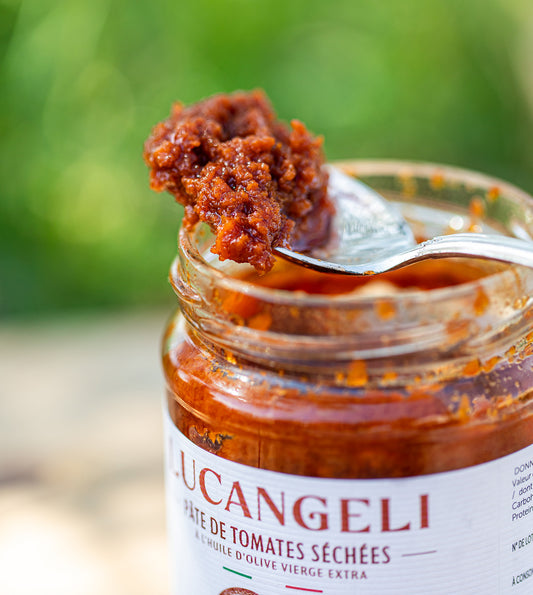
Black tapenade and green tapenade are not simply two different colors: they correspond to two stages of olive maturity and two distinct aromatic profiles. Black tapenade, made from fully ripe olives, develops round, deep aromas with a pleasant slight bitterness. Green tapenade, prepared from olives picked earlier, is livelier, more herbaceous, and often saltier. For a complete Mediterranean aperitif, the two complement each other perfectly — just like sun-dried tomato tapenade, which adds a third sweet-and-sour dimension to a spread platter.
How to choose a good black olive tapenade?

In specialty food stores or on specialized websites, the offer of black olive tapenade is vast. Not all products are created equal. A few criteria can help distinguish quality artisanal tapenade from an industrial preparation.
Quality Criteria
The first step is to read the ingredient list. A quality tapenade should list olives first, indicating they constitute the majority of the product. The olive oil should be stated as "extra virgin" — not merely "vegetable oil." The absence of artificial additives, preservatives, and synthetic flavors is also a good indicator. Finally, the origin of the olives matters: olives from a region with a strong olive-growing tradition, such as Calabria, guarantee a more authentic aromatic profile. For a successful aperitif, Lucangeli's set of 4 tapenades allows you to discover several artisanal spreads in one box.
Artisanal vs. Industrial
The difference between artisanal and industrial tapenade is noticeable from the first bite. Industrial versions, produced in large quantities, often dilute the proportion of olives and compensate with thickeners or flavors. Artisanal tapenade, on the other hand, is prepared in small batches, with selected olives and quality olive oil. It has a more irregular texture, a more direct taste, and a more natural color. This artisanal approach is championed by Lucangeli, whose black olive tapenade is made without palm oil or preservatives.
The Importance of Olive Oil

Olive oil is more than just a binding agent in tapenade: it determines its taste, texture, and preservation. Quality extra virgin olive oil brings fruity notes that balance the bitterness of the olives and the saltiness of the capers. This is why the choice of oil used in making tapenade is as important as the choice of olives themselves. The organic ripe fruity olive oil, with its soft and floral notes, or the organic green fruity olive oil, more intense and peppery, are two expressions of the Calabrian terroir that perfectly illustrate the impact of oil on the final profile of a spread.
How to use black olive tapenade in cooking?
Black olive tapenade is a highly versatile condiment. Beyond the classic aperitif, it can be incorporated into many culinary preparations and pairs with a wide range of ingredients.
For Aperitif
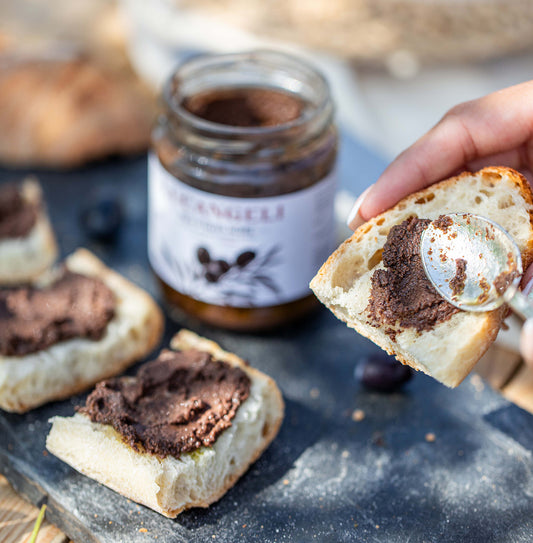
This is its most natural use: spread on toasted bread slices, breadsticks, or crackers, black olive tapenade is the heart of a successful Mediterranean aperitif. It pairs well with crunchy vegetables, aged cheeses, or Italian cured meats. To create a generous and varied platter, combine it with other spreads like sun-dried tomato tapenade or DOP basil pesto — a combination that instantly evokes the flavors of Southern Italy.
In Everyday Cooking
Black olive tapenade is also an excellent cooking condiment. A spoonful in a pasta dish, on a white fish fillet before cooking, or incorporated into a tomato sauce: it adds depth and character effortlessly. It can also fill puff pastry rolls for a quick homemade appetizer, or enhance a grilled vegetable salad. Its intensity allows it to be used sparingly for maximum effect. To vary the pleasures, sun-dried tomato tapenade can be used in the same way and brings a softer, sunnier note.
Pairings and Combinations
Black olive tapenade naturally pairs with other Mediterranean terroir products. It goes well with tomatoes, roasted peppers, anchovies, tuna, and aromatic herbs like thyme or rosemary. In Italian cuisine, it perfectly complements an antipasto platter alongside DOP basil pesto and a good olive oil. To offer an assortment of Italian flavors, Lucangeli's customizable gift box allows you to combine tapenades, oils, and other gastronomic gems according to your desires — a great idea to share the taste of Southern Italy.



 lucangeli.it