

Origin and history of the Taggiasca olive
The Taggiasca olive embodies the olive-growing tradition of Liguria, a region in north-west Italy famous for its steep terraces plunging down toward the sea. Its name comes from the village of Taggia, where Benedictine monks are said to have planted it as early as the 12th century. Since then, the Taggiasca has become the symbol of the Ligurian Ponente, prized as much for its table olives as for its fine, fruity oil.
To better understand the diversity of Italian terroirs, explore the panorama of natural extra virgin olive oils or discover the bottle personalization service for a made-to-measure experience.

Tasting profile and distinctive traits of the Taggiasca
A delicate fruitiness and an exceptional oil
The Taggiasca gives an oil with a golden colour and a rare finesse. On the palate it unfolds notes of sweet almond, pine nut, ripe apple and fresh herbs, with a discreet bitterness and a light pungency. That profile makes it one of the most sought-after oils for finishing refined dishes, especially white fish, grilled vegetables and summer salads.
How do you recognize the Taggiasca olive?
- Small size, elongated shape, colour ranging from green to purplish brown depending on ripeness.
- Fine, fragrant flesh with little fibre.
- Clear oil with floral and fruity aromas.
The Taggiasca is also enjoyed as a table olive, often preserved in brine or in extra virgin olive oil. For a bit of variety, try the 200 ml olive oil trio or discover the organic ripe-fruity olive oil 200 ml.
Pairings, uses and practical tips
The best food pairings
Taggiasca oil brings out the best in:
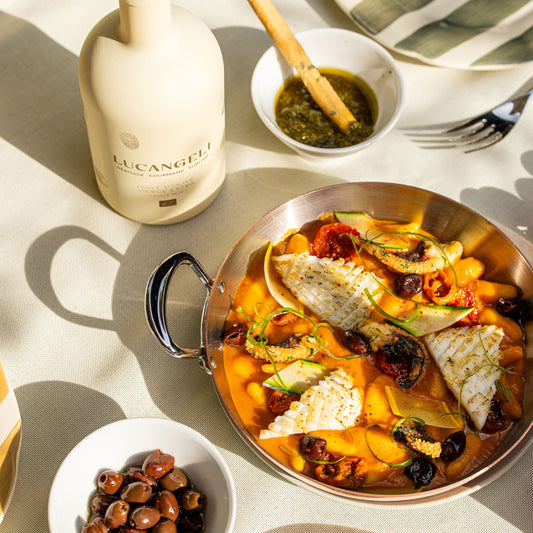
- Fish, raw or cooked, as carpaccio or a grilled fillet.
- Heirloom tomato salads, burrata, summer vegetables.
- Focaccia and homemade breads, for a Mediterranean touch.
Chef's tip:
In Liguria it is not unusual to see Taggiasca oil used to dress a fresh fruit salad, thanks to its sweetness and its lightness. It is one of the details that sets Ligurian cooking apart.
For professionals, the jeroboam of organic extra virgin olive oil is a way to showcase an exceptional single-variety oil on a menu or at the table.

Table: characteristics of the Taggiasca
Frequently asked questions
What is the difference between a Taggiasca oil and a classic olive oil?
Taggiasca oil is sweeter, fruitier and more floral than most classic oils, which makes it ideal for finishing.
Can you use Taggiasca oil for cooking?
It is mainly recommended for dressing or finishing, so that its delicate aromas are preserved.
Where can you find a quality Taggiasca oil?
Go for oils with a certified origin or single-variety oils, like those offered in the selection of Italian olive oils.
Want to go further? Discover bottle personalization for your table or your events and the professionals area for a made-to-measure experience.



 lucangeli.it