


Why pair red kuri squash with ripe fruity olive oil
It all comes down to the aromatic profile. A green fruity oil — lively, grassy, with notes of artichoke and fresh herbs — is built for raw vegetables, carpaccios and dishes where you want to keep that freshness intact. Roasted red kuri squash is a vegetable of another nature: its flesh tightens up in the heat, its natural sugars concentrate, and its flavour shifts towards hazelnut and candied squash.
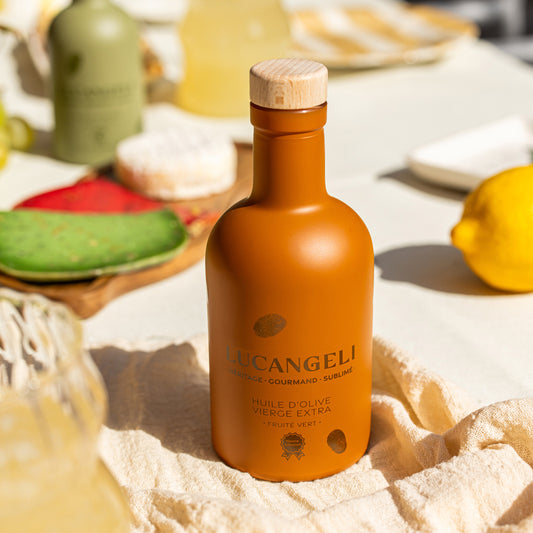
That is exactly where the organic ripe fruity comes in. Made from olives harvested at full maturity — in Calabria, the Carolea and Roggianella varieties are picked between late October and November, once the fruit has turned from green to purple — this profile stands out for its notes of sweet almond, ripe tomatoes and sometimes red fruits. It is round, barely bitter, with a slight peppery kick on the finish. On a vegetable roasted in dry heat, it extends and enriches the caramelised aromas without masking them.
Using a green fruity oil on roasted red kuri squash is a common mistake: the vegetal bitterness and grassy notes of a green fruity clash with the sweetness of the vegetable. The result is out of balance. Ripe fruity, on the other hand, plays in the same aromatic register as red kuri squash.
How much do you need for a perfect result?
For 600 g of red kuri squash cut into wedges (about 4 people as a side), count on 3 tablespoons of ripe fruity olive oil to coat it before cooking, and 1 extra tablespoon to finish, poured over the wedges as they come out of the oven, while they are still hot. This double move — before and after — is the key to a recipe that tastes like no other.
---
The recipe step by step

Ingredients for 4 people
Method
- Preheat your oven to 200 °C on the fan setting.
- Wash the red kuri squash under cold water. The skin is edible: there is no need to peel it if you are using a good-quality squash. Cut it in half, scoop out the seeds with a spoon, then cut each half into wedges about 2 cm thick.
- In a large bowl, pour 3 tablespoons of ripe fruity over the squash wedges. Add the salt, pepper, rosemary sprigs and unpeeled garlic cloves. Mix with your hands so every piece is well coated.
- Spread the wedges out in a single layer on a baking sheet lined with parchment paper. Make sure they do not overlap: the dry heat is what creates the crisp surface.
- Bake for 30 to 35 minutes, turning the pieces over halfway through. The squash is ready when the surface is lightly golden and caramelised, and the flesh gives under the tip of a knife.
- As soon as it comes out of the oven, pour the last tablespoon of ripe fruity olive oil over the wedges while they are still hot. This finishing move is what cooks in southern Italy call a crudo: the oil is not cooked, it brings freshness and aromatic complexity where the heat has transformed the vegetable.
Plating
Arrange the wedges on a serving dish and add a few fresh rosemary leaves for visual contrast. Roasted red kuri squash is served hot alongside a lamb roast, grilled Italian sausages or, in a plant-based version, with green lentils dressed in olive oil.
---
Variations, pairings and tips to take it further
The Calabrian variation: with honey and balsamic vinegar
In the tradition of southern Italy, roasted vegetables are often served with a drizzle of Modena PGI balsamic vinegar, Gold collection to add a tangy, caramelised note. Pour 2 teaspoons over at the moment of serving, after the finishing oil. The acidity of the vinegar balances the natural sweetness of the squash and creates an extra layer of depth.
The quick variation: with a sun-dried tomato tapenade
If you want to serve roasted red kuri squash as an aperitif or a starter, pair it with a sun-dried tomato tapenade on slices of toasted bread. The umami flavour of the sun-dried tomato marries with the sweet notes of the squash. A simple, quick pairing that works every time.
The professional tip: managing the cooking for restaurant service
For professionals who want to put this vegetable on their autumn menu, roasted red kuri squash lends itself very well to being prepared ahead: cooked to 90 %, cooled, then back in the oven for 10 minutes before service. The oil finish is always done at plating, never during mise en place. For information on the formats and sizes suited to food service, the professionals section is dedicated to this kind of request.
The festive version: stuffed red kuri squash
Scoop the seeds out of a small red kuri squash without cutting it into wedges, brush the inside with ripe fruity and stuff it with a mix of rice, basil pesto DOP, fresh walnuts and Parmesan. Bake at 180 °C for 45 minutes. The result is spectacular to look at and concentrates all the flavours of autumn into a single dish.
---
Frequently asked questions
Do you need to peel red kuri squash before roasting it?
No, and that is one of the great advantages of this vegetable. Red kuri squash skin is thin, edible and eats perfectly well once cooked. It even turns slightly crisp in the oven, which adds an interesting texture. Just make sure you wash the vegetable well before cutting it up.
Can you use a green fruity instead of a ripe fruity for this recipe?
Technically yes, but the result will be different. The organic green fruity brings grassy notes and a pronounced bitterness that can pull against the natural sweetness of the squash. For this kind of dense, sweet autumn vegetable, ripe fruity is the most balanced match. Save the green fruity for raw vegetables, carpaccios and spring greens.
What temperature should you roast red kuri squash at to get a good caramelisation?
Fan heat at 200 °C is the setting that gives the best results. Below 190 °C, the vegetable cooks but does not really caramelise; above 210 °C, the surface browns too quickly before the inside is done. Remember not to overload the tray: the pieces need to be spaced out so the heat can circulate around each one. That is the essential condition for getting the crisp surface you never find with steaming or boiling.





 lucangeli.it