


Panzanella is Tuscany's answer to a heatwave: stale bread, ripe tomatoes, fresh basil, and a characterful olive oil. In under 20 minutes, with no cooking required, you get a complete, generous, and profoundly Italian dish.
What panzanella truly is — and isn't

A bread salad, not a salad with bread
Panzanella is not a salad with a few croutons added. Bread is its central ingredient: it absorbs the tomato juice, oil, and vinegar to become tender, dense, almost creamy. The final texture depends entirely on the quality of the bread and the resting time. Industrial sandwich bread will turn to mush. Two-day-old stale sourdough bread makes panzanella.
Ingredients for 4 people
For a successful panzanella, you need:
- 300 g stale sourdough bread (at least two days old)
- 600 g ripe tomatoes, beefsteak or Roma, in season in August
- 1 medium cucumber, deseeded
- 1 small red onion, soaked for 10 minutes in cold water
- 1 bunch fresh basil, added at the last moment
- 4 tablespoons extra virgin olive oil (see selection below)
- 2 tablespoons red wine or balsamic vinegar
- Salt and pepper
For a richer version, a few sun-dried tomatoes in olive oil added when plating provide a depth that classic recipes lack.
What traditional recipes never mention
Original Tuscan panzanella does not contain bell peppers, capers, or mozzarella. These additions are modern, legitimate variations, but different. If you want the original, stick to bread, tomatoes, onion, cucumber, basil, oil, vinegar.
Which olive oil to choose for panzanella

Green fruity or ripe fruity: the difference is decisive
This is the question no one asks in online recipes, and yet it changes everything about the result.
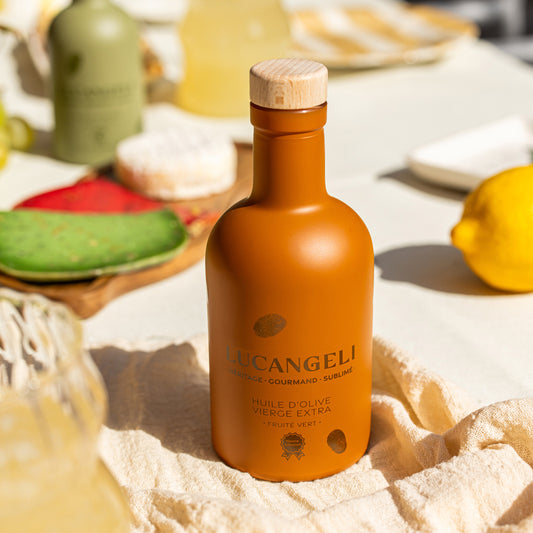
A green fruity oil — harvested early, before full olive ripeness — brings notes of fresh grass, artichoke, and sometimes a slight peppery finish. It contrasts with the sweetness of the tomatoes and livens up the dish. This is the choice for a vibrant, summery panzanella that stands up to the heat.
A ripe fruity oil — harvested later, when olives are fully ripe — is rounder, sweeter, with notes of yellow-fleshed fruits. It coats the bread and softens the whole dish. This is the choice for a more generous, almost candied version.
For an August panzanella with very ripe tomatoes, organic green fruity olive oil is the most suitable choice: its aromatic intensity withstands the acidity of the tomatoes and vinegar.
The Carolea variety and its profile
Carolea is a Calabrian olive variety little known outside Southern Italy. It yields intensely green fruity oils, with characteristic notes of fresh grass, artichoke, and a persistent slight bitterness. It is precisely this profile that works in a panzanella: the bitterness of the oil interacts with the acidity of the tomatoes and creates a balance that neutral oils cannot produce.
If you want to explore both profiles side-by-side, the trio of organic olive oils in 200 ml allows you to compare green fruity, ripe fruity, and a flavored oil on the same dish.
Vinegar: a specific role
Vinegar is not there to acidify; it's there to awaken. Two tablespoons are enough for 4 people. A Modena IGP balsamic vinegar brings a slight sweetness that balances the bitterness of the green fruity oil — it's a less classic combination than red wine vinegar, but more interesting.
The step-by-step recipe — with the right time for the oil
Oil is added in two stages
This is the detail that all recipes omit, and yet it is what makes the difference between a flat panzanella and a memorable one.
First stage, before soaking the bread: cut the stale bread into 3 cm cubes. Pour 2 tablespoons of olive oil directly over the bread and mix to coat well. Let it rest for 5 minutes. The oil slightly waterproofs the surface of the bread and slows the absorption of tomato juice: the bread remains tender without becoming soggy.
Second stage, when serving: after assembling and chilling (minimum 20 to 30 minutes), drizzle the remaining 2 tablespoons of oil over the panzanella just before serving. It is this finishing oil, uncooked and unmixed, that gives the dish its full aroma.
The complete steps
- Cut the bread into cubes, drizzle with 2 tablespoons of oil, mix and let rest for 5 minutes.
- Quarter the tomatoes, lightly salt them, and let them drain for 10 minutes in a colander over a bowl. Collect the juice.
- Deseed and cut the cucumber into half-moons. Thinly slice the red onion, previously soaked in cold water to soften its pungency.
- In a large bowl, mix the bread, tomatoes, cucumber, and onion. Add the collected tomato juice, vinegar, salt, and pepper.
- Refrigerate for 20 to 30 minutes. The bread will absorb the juices.
- Just before serving, add the hand-torn basil leaves and drizzle with the 2 tablespoons of finishing oil.
Possible variations and additions
For a more substantial version, a spoonful of black olive tapenade integrated into the vinaigrette adds an extra depth. For professionals who wish to offer this dish on their summer menu, the space dedicated to cafes, hotels, and restaurants details the formats available for catering.
If you want to have both oil profiles on hand to test both versions, the 500 ml discovery duo is the most practical format for everyday cooking.
Frequently Asked Questions
Can panzanella be prepared the day before?
Yes, but without the basil or the finishing oil. Prepare the bread-tomato-vegetable assembly the day before, refrigerate, and add the basil and a drizzle of oil at the last moment. Beyond 12 hours, the bread becomes too soft.
Which olive oil to use for panzanella?
A green fruity oil, with notes of fresh grass and a slight bitterness. It stands up to the acidity of tomatoes and vinegar, where a mild oil would disappear. Organic ripe fruity olive oil is suitable if you prefer a rounder, less sharp version.
What kind of bread should be used for authentic panzanella?
Two-day-old stale sourdough bread with a thick crust. Country bread also works. The essential thing is that it should be dry: fresh bread absorbs too quickly and disintegrates. In Tuscany, pane sciocco, an unsalted bread, is traditionally used, but good French sourdough bread gives a very similar result.



 lucangeli.it