

Every spring, the same question arises: how can we better choose what we put on our plates? Between similar-looking labels, multiplying certifications, and shelves overflowing with products from all corners of the globe, it's not always easy to find your way. Yet, eating local and seasonal is one of the most concrete decisions one can make to consume more consciously — and above all, to rediscover the authentic taste of things.
Why eat local and seasonal in spring?

The return of authentic flavors
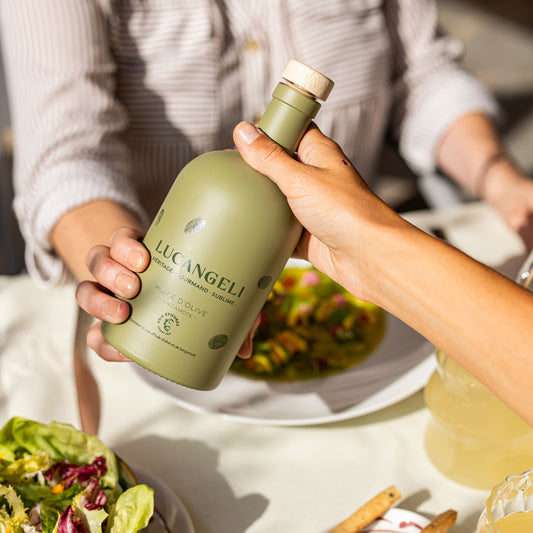
With the return of warmer days, markets once again fill with colors and aromas. Locally grown fruits and vegetables harvested at maturity have a much more pronounced flavor than those that have traveled thousands of miles to reach your plate. A seasonal product is one that has had time to develop naturally, in its original environment, without being picked prematurely to withstand transportation. This is the difference you feel from the very first bite. For condiments and oils, the same principle applies: an organic green fruity olive oil cold-pressed from olives harvested at their peak ripeness is nothing like a standardized industrial oil.
Supporting local producers and craftsmanship
Choosing local products is also an economic and human choice. Behind every bottle of olive oil, every jar of tapenade, or every balsamic vinegar, there is a producer, a family, and expertise passed down from generation to generation. By buying directly from committed producers, we support small-scale agriculture that respects the soil and traditions. Lucangeli's organic olive oil trio, for example, comes from a Calabrian family production, where each olive is hand-picked in harmony with the rhythm of the seasons.
How to recognize a true local product?
Labels and appellations to know
To ensure the authenticity of a local product, European labels are valuable guides. PDO (Protected Designation of Origin) guarantees that a product is entirely produced, processed, and developed in a specific geographical area, according to strict specifications. PGI (Protected Geographical Indication) certifies that at least one stage of production is linked to a specific region. The Organic (Organic Farming) label, meanwhile, prohibits the use of pesticides and synthetic chemical fertilizers. The Modena PGI Gold collection balsamic vinegar is a concrete example of a product benefiting from a European PGI, guaranteeing its origin and traditional production methods.
Traceability, a guarantee of quality
Beyond labels, traceability is an essential criterion for evaluating the quality of a local product. A reputable producer can tell you the precise origin of their raw materials, the harvesting and processing methods used, and the storage conditions. This transparency is a sign of a sincere commitment to quality. The black olive tapenade with extra virgin olive oil, for example, is prepared from olives whose origin and production method are clearly identified, without artificial additives or preservatives.
Which local products to highlight this spring?

Extra virgin olive oil, a pillar of Mediterranean cuisine
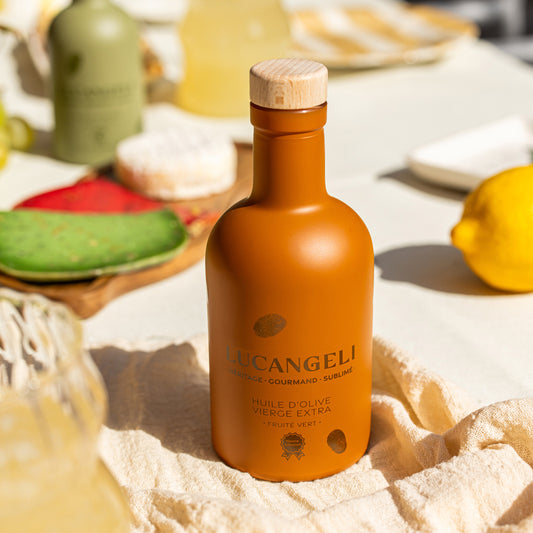
Extra virgin olive oil is undoubtedly the most emblematic Mediterranean local product. It accompanies spring salads as well as grilled vegetables, fresh pasta, or bruschetta. Its quality depends directly on the olive variety, the terroir, and the harvest time. An organic ripe fruity olive oil with round and sweet notes will be perfect for finishing a seasonal vegetable dish, while a bergamot olive oil — an emblematic fruit of Calabria — will bring a touch of originality to your spring vinaigrettes and marinades.
Spreads and condiments to enhance seasonal meals
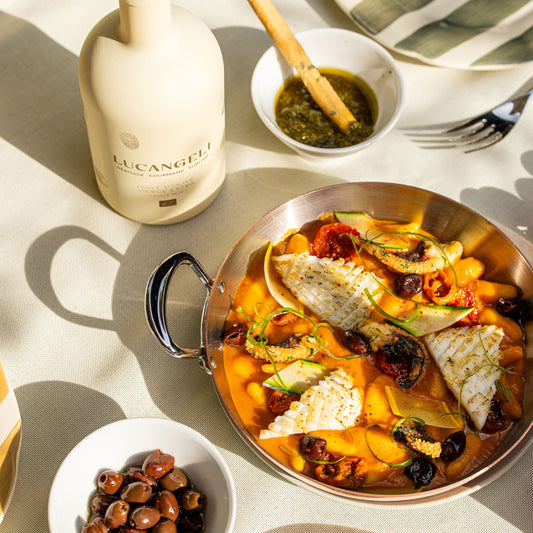
Spring is also the season for shared meals, aperitifs on the terrace, and outdoor dining. It's the ideal time to rediscover Italian local spreads and condiments. The sun-dried tomato tapenade pairs wonderfully with grilled bread slices or raw vegetables. The basil DOP pesto with olive oil, prepared with certified DOP basil, enhances both pasta and mixed salads. For those who wish to discover several flavors at once, the set of 4 tapenades is a great way to explore the richness of Mediterranean spreads.
Conclusion
On Earth Day, April 22nd, choosing local products is a simple yet meaningful gesture. It means valuing craftsmanship, respecting natural cycles, and rediscovering flavors that the food industry has often diluted. Whether for an everyday meal or to compose a customizable gift box to offer, local products are an invitation to eat better, consciously, and with pleasure.




 lucangeli.it