


Basil pesto is one of the most iconic sauces in Italian cuisine. Its fresh, intense flavor, bright green color, and versatility make it a summer essential. But behind this familiar condiment lies a rich history, precise quality criteria, and a multitude of uses that we don't always dare to explore. Here's an overview to help you choose and use basil pesto better.
The origins of Pesto alla Genovese
Birth in Genoa, Liguria
Pesto has its roots in Genoa, the capital of Liguria, in northwestern Italy. This coastal region, bathed by the Mediterranean and protected by the Alps, offers an ideal microclimate for growing basil. As early as the 19th century, Genoese cooks prepared this sauce by crushing fresh basil leaves in a marble mortar with a wooden pestle — a technique that gives the sauce its name: pesto comes from the Italian verb pestare, which means "to crush." This artisanal method preserves the delicate aromas of basil without altering them with heat. Even today, purists advocate this mortar preparation as the only way to obtain authentic pesto.
Traditional ingredients of DOP pesto
The traditional recipe for pesto alla Genovese is based on six fundamental ingredients: Genoese basil (Ocimum basilicum variety grown in Liguria), extra virgin olive oil, Parmigiano Reggiano, Pecorino Sardo, pine nuts, and garlic. Each ingredient plays a specific role in the balance of the sauce. Basil provides freshness and aroma, cheeses provide depth and salt, pine nuts provide creamy texture, and olive oil provides smoothness. It is this precise combination, respected for generations, that has led to the official recognition of pesto alla Genovese with a European quality label. To discover a DOP basil pesto prepared in accordance with this tradition, click here.
How to choose quality pesto?

Artisanal vs. industrial: key differences
On grocery shelves, pestos often look similar, but their compositions reveal considerable differences. Artisanal pesto is prepared in small batches, with fresh and minimally processed ingredients. Its texture is generally thicker, its color brighter, and its aromas more complex. Conversely, industrial pestos frequently contain lower quality vegetable oils (sunflower, rapeseed), modified starches, artificial flavors, and preservatives. The ingredient list is the first indicator to check: a good basil pesto should not contain more than six to eight ingredients, all recognizable. Also, beware of pestos whose color is too uniform or too green — a possible sign of added colorings.
The role of olive oil in good pesto
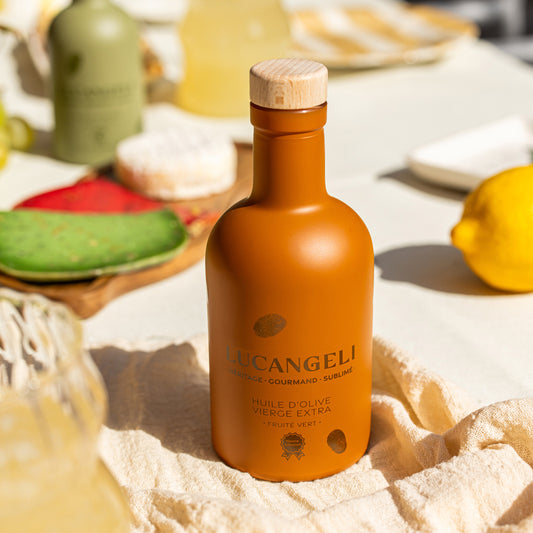
Olive oil is the binding ingredient in pesto: it emulsifies the other components and carries the aromas. Its quality directly determines the final taste of the sauce. A quality extra virgin olive oil brings fruity, slightly herbaceous notes that naturally harmonize with basil. A green fruity organic olive oil, for example, with its aromas of fresh grass and artichoke, is particularly suitable for preparing or seasoning homemade pesto. For those who want to go even further in the basil-olive oil pairing, a organic basil olive oil allows to intensify herbaceous aromas in dishes.
What does the DOP label mean for pesto?
The DOP (Denominazione di Origine Protetta, equivalent to the French AOP) label guarantees that the product is manufactured in a precise geographical area, according to traditional methods defined by strict specifications. For pesto alla Genovese DOP, this means that the basil used is grown in Liguria, that the other ingredients meet precise quality criteria, and that manufacturing follows ancestral techniques. This label is a guarantee of traceability and authenticity. It does not necessarily guarantee small-scale artisanal production, but it ensures a minimum level of quality superior to pestos without geographical indication. When you choose a DOP basil pesto, you are choosing a product rooted in its region of origin.
How to use pesto in summer cooking?
Beyond pasta: original ideas
Basil pesto is often limited to pasta, but its uses in summer cooking are much broader. It can serve as a base for a light vinaigrette (diluted with a dash of ripe fruity organic olive oil and a few drops of lemon juice), a marinade for grilled vegetables (zucchini, eggplant, bell peppers), or even a sauce for white pizza. Spread on toasted bread, it makes a simple and tasty bruschetta. Mixed with ricotta or fresh cheese, it becomes a creamy spread ideal for an aperitif. In summer, it also goes very well with heirloom tomato salads, vegetable carpaccios, or hard-boiled eggs.
Pesto and antipasti: the perfect match
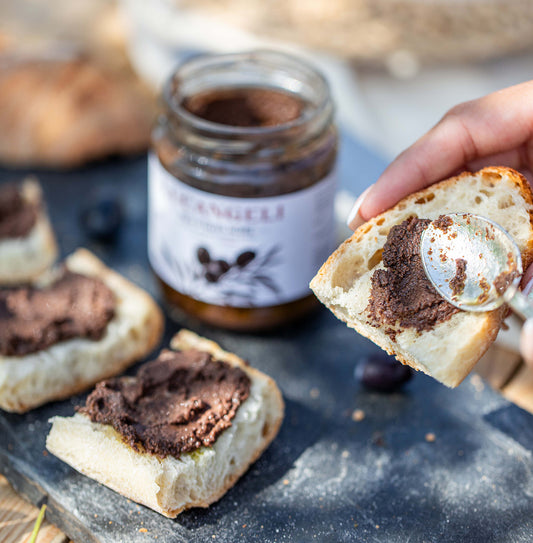
In Italy, pesto is naturally part of the antipasti table. It pairs wonderfully with pitted black olives in olive oil, whose gentle bitterness contrasts with the freshness of basil. Sun-dried tomato tapenade, with its concentrated and slightly sweet notes, creates an interesting balance when served alongside pesto on a sharing platter. To compose a complete and varied antipasti table, the set of 4 tapenades offers a selection of ready-to-serve Italian spreads, perfect to accompany pesto during an outdoor meal.
Combining pesto with other Italian condiments
Pesto lends itself well to combinations with other Italian culinary condiments. A black olive tapenade placed next to a bowl of pesto on an appetizer board creates a very pleasant contrast of colors and flavors. Balsamic vinegar, a few drops on a pesto bruschetta, adds a touch of acidity and sweetness that enhances the whole dish. For those who wish to explore the world of quality Italian condiments, a customizable gourmet gift box allows you to gather several Italian regional products and offer them or enjoy them with family.

Basil pesto is much more than a pasta sauce: it is a concentration of Ligurian know-how, a product whose quality directly depends on that of its ingredients. Choosing a DOP pesto prepared with extra virgin olive oil means choosing a product rooted in a living culinary tradition, to be enjoyed without moderation throughout the summer.




 lucangeli.it