

In summer, basil is everywhere: on balconies, in markets, in kitchens. And with it, basil pesto stands out as one of the most iconic sauces in Italian gastronomy. But between an industrial jar bought in a supermarket and a pesto alla Genovese prepared according to the rules of art, the difference is considerable. Ingredients, DOP label, extra virgin olive oil, manufacturing method: here's everything you need to know to choose a good pesto and get the best out of it in the kitchen.
Pesto alla Genovese: Origins and Ingredients of an Italian Classic
A Sauce Born in Genoa, Liguria
Basil pesto has its roots in Genoa, the capital of Liguria, a coastal region in northwest Italy. The first official recipe appeared in 1863 in Giovanni Battista Ratto's La Cuciniera Genovese. The word "pesto" comes from the Italian verb pestare, which means "to crush" or "to grind" — a direct reference to the traditional method of preparation using a marble mortar and wooden pestle.
Today, Pesto Genovese benefits from European recognition: it is protected by a consortium that precisely defines its seven ingredients. This rigor guarantees the authenticity of a product that, without a regulatory framework, could easily be imitated or altered.
The Seven Ingredients of Authentic Pesto
A true pesto alla Genovese is composed of: DOP Genovese basil (small-leafed, grown in the Prà region), Italian pine nuts, Vessalico garlic, aged Parmigiano Reggiano, Pecorino Sardo, coarse sea salt, and extra virgin olive oil from the Ligurian Riviera.
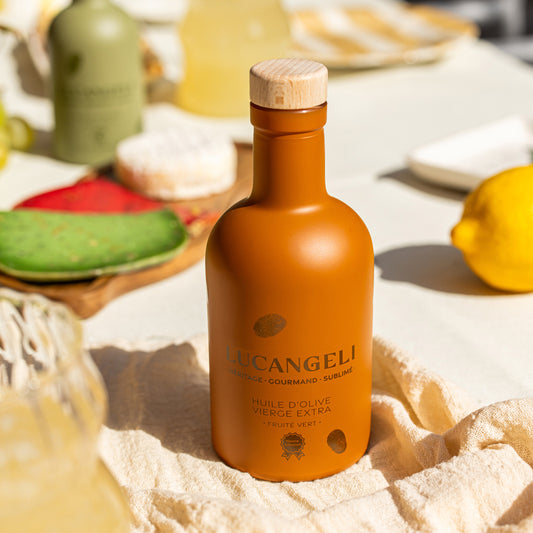
Olive oil plays a central role in the texture and taste of pesto. A green fruity organic olive oil, with herbaceous and slightly bitter notes, pairs particularly well with the freshness of basil. It binds the ingredients, provides richness, and preserves the sauce's characteristic green color.
DOP Pesto vs. Industrial Pesto: What's the Difference?
The DOP (Denominazione di Origine Protetta, equivalent to the French AOP) label guarantees that the product is made in a specific geographical area, with defined ingredients and methods. A DOP pesto contains locally grown Genovese basil, without artificial colors or preservatives.
Conversely, industrial pestos often use basil of undetermined origin, sunflower or soybean oil instead of olive oil, and additives to extend shelf life. The color is often darker, the taste less fresh, and the texture more homogeneous and less vibrant.
For those who want quality pesto without making it themselves, DOP basil pesto with olive oil is a benchmark: DOP basil, extra virgin olive oil, no palm oil or preservatives.
How to Choose Your Basil Pesto Well

Read the Label: Essential Criteria
Before buying pesto, a few points on the label deserve attention:
- The list of ingredients: Basil should be listed first, followed by extra virgin olive oil. If sunflower oil appears before olive oil, the quality is lower.
- The presence or absence of the DOP label: A pesto bearing the mention "Basilico Genovese DOP" offers a guarantee of origin and quality.
- Absence of additives: Colorants, preservatives, and thickeners are signs of an industrial product.
- Color: A good pesto should be a vibrant, almost luminous green. A dull or brownish green indicates oxidation or inferior basil quality.
Mortar or Blender: The Method Matters
The manufacturing method directly influences the taste. In a marble mortar, basil leaves are slowly crushed, releasing their essential oils without heat. The result is a creamy, bright green sauce with an intense aroma.
In a blender, metal blades cut the leaves and generate heat through friction, which oxidizes the basil and gives it a slightly bitter taste and a duller color. Quality artisanal pestos are often prepared at low speed or cold to limit this phenomenon.
Fresh Pesto or Jarred Pesto?
Fresh pesto (sold refrigerated) is generally more fragrant but has a shorter shelf life. Jarred, pasteurized pesto lasts longer and is perfect for everyday use. The key is to choose a jar with a short and legible ingredient list — a sign of a minimally processed product.
Using Basil Pesto in Summer Cooking
Beyond Pasta: Varied Uses
Basil pesto is often associated with pasta, but its uses in summer cooking are much broader:
- In marinades: Mixed with a drizzle of ripe fruity organic olive oil, it flavors chicken, grilled vegetables, or fish before cooking.
- As a cold sauce: Diluted with a little olive oil, it accompanies a tomato salad, burrata, or raw zucchini carpaccio.
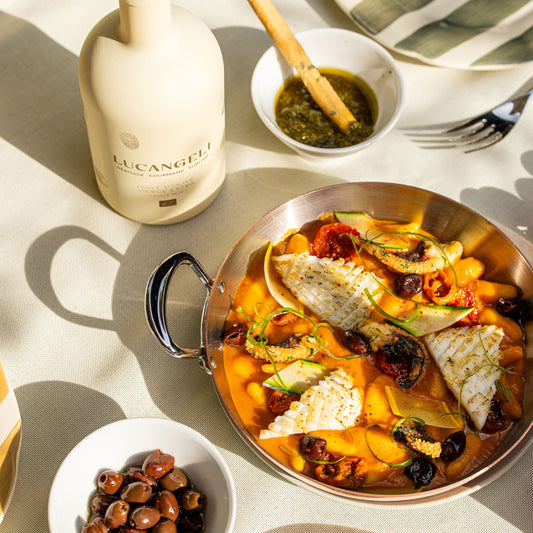
- As a spread: Spread on toasted bread for an aperitif, it pairs with pitted black olives in olive oil or a sun-dried tomato tapenade to create an Italian board.
- As a finishing touch: A spoon of pesto on a cold soup, gazpacho, or white pizza adds an herbaceous and fragrant touch.
Composing an Italian Aperitif Board
Summer is the season for aperitifs on the terrace. To compose a generous and delicious board, basil pesto naturally pairs with other Italian spreads. The set of 4 tapenades — black olives, sun-dried tomatoes, pesto, and other specialties — offers a complete selection for an effortless shared aperitif.

For lovers of aromatic cuisine, organic basil olive oil is an interesting alternative: it brings the fresh notes of basil directly into the oil, ideal for dressing a salad, dipping bread, or finishing a pasta dish.
Pesto and Gastronomy: Professional Use
In professional kitchens, pesto is used as a sauce base, plating element, or finishing condiment. Restaurateurs and hoteliers looking for consistently high-quality Italian products can rely on carefully selected artisanal references. Lucangeli's professional area offers a selection adapted to the needs of restaurants, hotels, and fine food stores.
To offer a gourmet gift set around Italian flavors — pesto, aromatic oils, tapenades — the customizable gift set allows you to personalize your selection according to your wishes or those of your loved ones.






 lucangeli.it