


Bread and olive oil at the table: a tradition to put back in its rightful place
Placing a plate of olive oil in the center of the table with bread is a welcoming gesture. But before doing so, it's worth understanding where this practice comes from and what it truly says about Italian cuisine.
A misconception from across the Atlantic
Contrary to popular belief, dipping bread in olive oil is not an ancient Italian tradition. It's an invention of Italian restaurants in the United States, popularized in the 1980s as a substitute for butter. In Italy, bread is eaten with the meal, used to make "scarpetta" – to mop up the sauce at the bottom of the plate – but it's not dipped into a bowl of oil served as an appetizer.
This detail does not diminish the pleasure of the gesture. It simply invites you to do it with intention rather than by reflex. A green fruity organic olive oil poured into a beautiful shallow dish, with quality bread, is a sincere and generous starter.
What Italians really do
In Southern Italy, and Calabria in particular, olive oil accompanies bread in another way: a drizzle of oil is poured directly onto the slice, sometimes with a pinch of salt, sometimes with a few olives on the side. This is bruschetta in its simplest form, without tomato or garlic, just bread, oil, and salt.
This method highlights the oil rather than diluting it in a bowl. It also allows for precise dosing, which a drip-free spout makes very easy. For an aperitif at home, accompany this gesture with a selection of pitted black olives in extra virgin olive oil and you get an authentic Italian table in less than five minutes.
How to serve olive oil with bread: the practical guide
Choosing the container
The container changes everything. Here are the four most common options, with their respective advantages:
- The shallow dish: friendly and easy to share, it's the most festive solution for an aperitif. The disadvantage is that the oil oxidizes quickly in the air once poured.
- The oil cruet with a pouring spout: it allows for precise dosing and hygienic daily use. Less spectacular for entertaining, but ideal for everyday dining.
- The small glass carafe: elegant and protective, it shows off the color of the oil and invites you to pour it yourself. A beautiful table gesture.
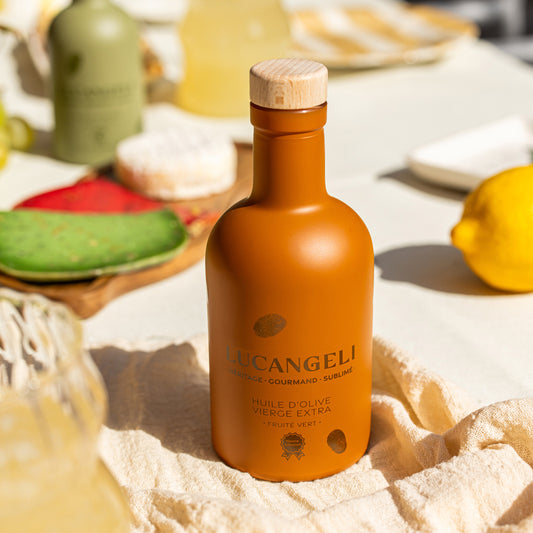
- The original bottle placed directly on the table: this is the most authentic gesture. It identifies the oil, tells where it comes from, and shows the attention you pay to what you serve. A bottle personalized to your colors can even become a decorative element in itself.
Which oil for dipping bread?
It all depends on what you want to highlight.
- To discover olive oil: choose a more mellow, ripe fruity oil, with notes of almond and ripe tomato. The Carolea variety, grown in Calabria, produces particularly suitable ripe fruity oils for serving with bread: its round and persistent aromas complement the crumb without overpowering it. It's the ideal oil for introducing guests unfamiliar with characterful oils. Organic ripe fruity olive oil is a good starting point.
- For a tasting: opt for a green fruity oil, more intense, with notes of fresh grass, artichoke, and a peppery finish. This is the oil that gets guests talking.
- To vary the pleasures: a flavored oil completely changes the experience. Bergamot olive oil (Épicures d'Argent 2023) brings an unexpected citrus and floral note to country bread. Organic garlic and chili olive oil is better suited for a summer aperitif with grilled vegetables.
- To offer several oils to your guests: the trio of organic olive oils in 200 ml bottles allows you to serve three different profiles and let everyone choose. It's also a simple way to initiate an informal tasting.
Serving temperature
Olive oil is served at room temperature, between 16 and 18 degrees Celsius. Below this, the aromas are attenuated and the oil may become slightly cloudy. This is not a defect: it is simply the natural reaction of vegetable waxes to cold. Above 20 degrees, the aromas are fully expressed, but the oil oxidizes faster once poured.
In summer, if you store your oil in the refrigerator, take it out at least thirty minutes before serving. Never heat it to speed up the process: this alters the aromas.
Going further: varying the pleasures around bread and oil
The accompaniments that make the difference
Bread and olive oil are a base. What surrounds them makes the table. A few ideas for composing a simple and generous platter:
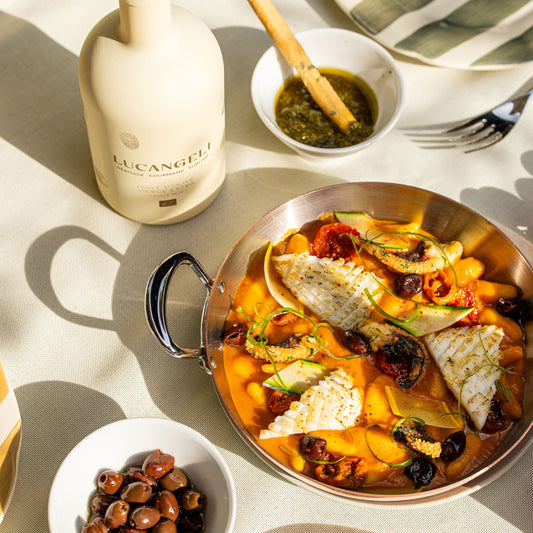
- A black olive tapenade alongside the oil, to alternate textures
- Quality salt, fleur de sel or grey salt, placed in a small ramekin
- A few fresh herbs: basil, oregano, thyme depending on the season
- A drizzle of balsamic vinegar in the oil dish, for guests who appreciate contrasts
This type of platter can be prepared in ten minutes and eaten in thirty. It's the Mediterranean aperitif in its most direct form.
The bottle on the table, a gesture of hospitality
Placing a beautiful bottle of olive oil on the table is a gesture that says something. It says that you have chosen the oil carefully, that you know where it comes from, and that you want your guests to know it too.
In restaurants that cultivate their table identity, the oil bottle is often customized with the establishment's colors. It's a detail that leaves a lasting impression. If you manage an establishment and want to explore this avenue, the professional space is for you.
For a private event, a dinner, a birthday, a wedding, a bottle with your name or that of your guests becomes an edible souvenir. The customizable bottle configurator allows you to create your design in a few minutes, from 24 bottles.

Frequently Asked Questions
How do you dip bread in olive oil without it spilling everywhere?
Pour the oil into a shallow dish rather than a flat plate. The depth retains the oil and prevents spills on the tablecloth. A drip-free spout on the bottle also helps to measure without overflowing.
What is the best olive oil to eat with bread?
For use with bread, a ripe fruity oil is generally more accessible: its almond and ripe tomato aromas pair well with the crumb without dominating. A green fruity oil, more intense and bitter, is better suited for enthusiasts who want to experience the characteristic pungency of a quality oil.
Can you put olive oil in a ceramic oil cruet?
Yes, provided the cruet is opaque or stored away from light. Olive oil degrades on contact with light and heat. A tinted glass or ceramic cruet is preferable to a transparent glass cruet placed near a window. Rinse and refill it regularly to prevent residues of old oil from contaminating the new.




 lucangeli.it