


With the arrival of good weather, aperitifs linger, and tables are filled with sun-kissed products. Among them, black olives hold a special place in Mediterranean gastronomy. But behind this generic term lies a great diversity of varieties, flavors, and preservation methods. In Italy, the black olive is much more than a simple condiment: it is a heritage cultivated for centuries, shaped by the terroir, climate, and expertise of producing families.
The main varieties of Italian black olives

Italy is one of the richest olive-producing countries in the world, with dozens of varieties cultivated from the north to the south of the peninsula. Each region has its own cultivars, its own harvesting and processing traditions. Among black olives, three varieties stand out for their character and their presence in Italian cuisine.
The Taggiasca from Liguria
Originating from the Liguria region in northwestern Italy, the Taggiasca is a small, elongated olive, purplish to black in color when fully ripe. Its taste is sweet, slightly fruity, with a very fine bitterness that makes it pleasant to eat as is. It is particularly valued for the production of olive oil with vegetal and almond notes, like the organic green fruity olive oil, which shares this delicate aromatic profile. The Taggiasca is also used in many Ligurian culinary preparations, including the famous DOP basil pesto.
The Gaeta from Lazio
South of Lazio, the coastal city of Gaeta gives its name to one of Italy's most famous black olives. Medium-sized, the Gaeta has firm flesh and a slightly bitter taste, with notes of ripe fruit. It is traditionally offered in brine or marinated in organic ripe fruity olive oil, which gives it an additional roundness. The Gaeta is perfect for enhancing summer salads, pizzas, or pasta dishes.
Olives from Calabria
Calabria, at the southern tip of Italy, is a blessed region for olive cultivation. Its centuries-old olive trees, bathed in sun and nourished by volcanic soil, produce black olives of remarkable aromatic intensity. It is in this terroir that pitted black olives in extra virgin olive oil are produced: harvested at maturity, preserved in quality extra virgin olive oil, they concentrate all the generosity of Southern Italy.
How to preserve black olives: brine or olive oil?
Preservation is a decisive step in the final quality of black olives. Freshly harvested, olives are naturally very bitter and cannot be consumed directly. They must undergo a fermentation, brining, or maceration treatment to reveal their aromas and become edible. Two main methods dominate: brine and olive oil.
Brine preservation
Brine is the most common commercial method. Olives are immersed in a salted water solution, sometimes flavored with aromatic herbs (thyme, bay leaf, rosemary) or garlic. This technique promotes natural fermentation and allows olives to be stored for several months. The result is a firm, slightly salty olive with a clear and direct taste. This is the ideal method for olives intended to be served as an aperitif or incorporated into cooked recipes.
Preservation in extra virgin olive oil
Preservation in extra virgin olive oil is considered the most qualitative method. It preserves the olive's melting texture, gives it extra creaminess, and enriches its aromas thanks to the qualities of the oil used. This is the choice of artisans and gourmet houses concerned with quality. The pitted black olives in olive oil perfectly illustrate this approach: preserved in extra virgin olive oil from the Calabrian terroir, they offer a much superior taste experience to industrial olives in brine.
Black olives in cooking: uses and preparations
Versatile and flavorful, black olives are used in a multitude of preparations, from the simplest to the most elaborate. Their intense taste and melting texture make them a choice ingredient to enhance summer dishes.
Tapenade, an essential preparation
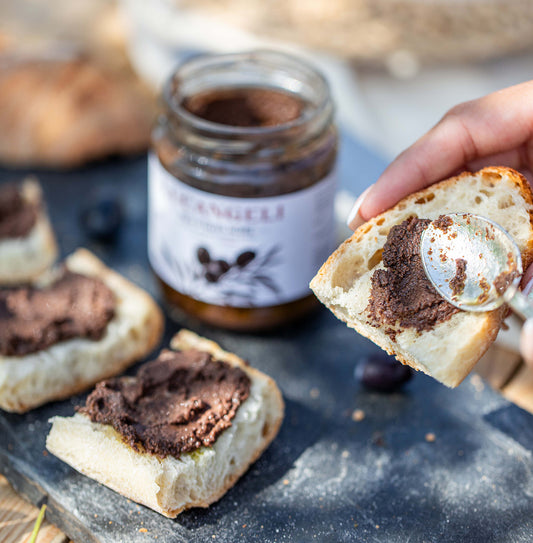
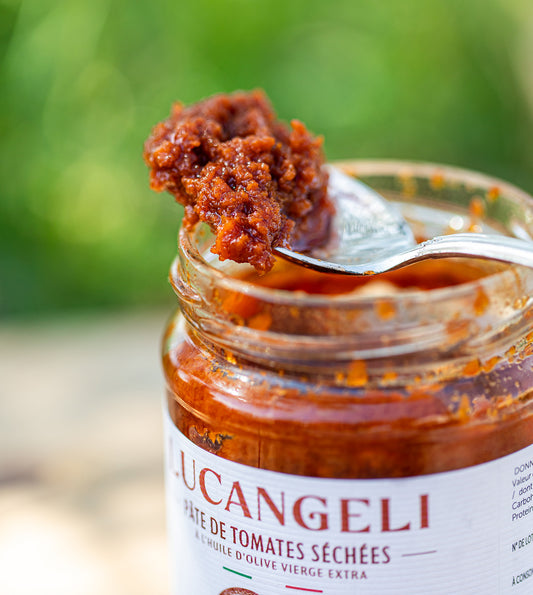
Tapenade is undoubtedly the most iconic preparation based on black olives. Originally from Provence, it consists of black olives mixed with capers, garlic, and olive oil. Spread on toasted bread, it is the ideal accompaniment for a Mediterranean aperitif. The black olive tapenade is an artisanal version of this preparation, made from quality black olives and Calabrian extra virgin olive oil. To vary the pleasures, the set of 4 tapenades allows you to compose a generous platter with also the sun-dried tomato tapenade, for an aperitif with Southern colors.
In savory cuisine: puttanesca, focaccia, salads
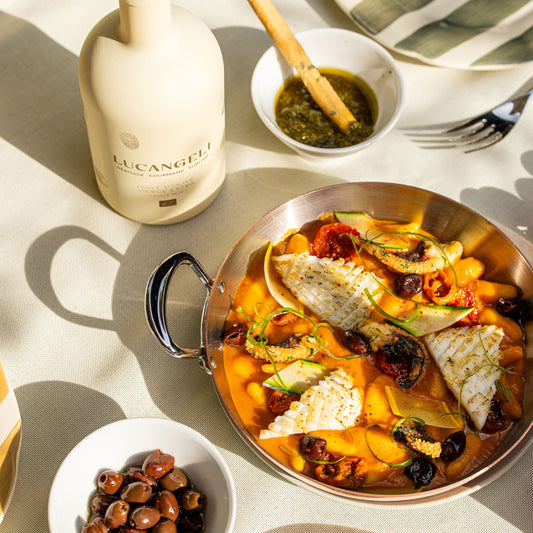
Black olives naturally integrate into many savory dishes. Puttanesca sauce, originally from Naples, combines tomatoes, capers, anchovies, and black olives for an intense and fragrant pasta sauce. On a homemade focaccia, a few pitted black olives add a salty and gourmet touch. In a summer salad—tomatoes, mozzarella, basil—they add depth and character. In all these uses, the quality of the olive makes the difference: an olive preserved in organic ripe fruity olive oil will bring much more flavor than an industrial olive.
On a summer aperitif platter
Summer is the season for extended aperitifs, generous platters, and shared meals on the terrace. Black olives find their natural place there, alongside Italian cold cuts, aged cheeses, and spreads. To compose a complete and balanced platter, the set of 4 tapenades is a practical and gourmet solution. For those who wish to offer an assortment of quality Italian products, the customizable gift box allows you to select products according to your desires and those of your guests.




 lucangeli.it