


What extraction yield really means
Extraction yield, or extraction rate, measures how much oil you get from a given quantity of olives. It's expressed as a percentage or as kilos of olives per litre of oil. A 15% yield means that a hundred kilos of olives give fifteen litres of oil — in other words, it takes about six and a half kilos of olives to fill a one-litre bottle.
This figure varies considerably depending on the variety, the vintage and the miller's choices. It's neither good nor bad in itself: what really matters is what it reveals when you set it against the quality of the oil produced. An organic green fruity olive oil made from olives picked early, before full ripeness, will often show a low yield — and a particularly intense aromatic profile.
The benchmark figures to know
A mill working fresh olives with cold extraction can get:
- Between 10 and 14% for an early harvest, green fruity, with olives still low in oil
- Between 15 and 20% for a harvest at optimal ripeness, ripe fruity
- Up to 25% for olives picked late, very ripe, or even fallen to the ground
In that last case, the yield is high but the quality collapses: free fatty acids rise, the aromas fade, and free acidity can exceed the legal limit for extra virgin.
Yield and green fruity: a deliberate trade-off

To produce an organic ripe fruity olive oil or an outstanding green fruity, serious producers deliberately choose to harvest early. In Calabria, the Carolea variety — one of the most widely grown in southern Italy — often has an extraction rate below 13% in early-October harvests. In practice, that means it takes more than seven kilos of olives to fill a one-litre bottle.
In 2026, the persistent drought across the Mediterranean weighed on yields right from the start of the season: estimates from Calabrian producers' associations point to a 10 to 20% drop in harvested volumes compared with the average of the last five years. This climate context partly explains the price pressures seen since the summer.
---
The factors that change the extraction rate
Yield isn't a constant: it depends on a chain of decisions and conditions that you can learn to read.
The olive variety
Each cultivar has its own natural pattern of oil accumulation. Coratina from Apulia, for example, is known for its relatively high yields and its richness in polyphenols. Tonda Iblea from Sicily produces a very fruity oil with a moderate extraction rate. In Calabria, Carolea gives a yield that varies with altitude and harvest date. Knowing the variety on the label already gives you an idea of the work done at the mill.
The harvest date
This is probably the most decisive factor. The earlier the harvest — green, firm olives, low in oil — the lower the yield, but the livelier, more bitter and more peppery the oil. The longer you wait, the higher the yield, but the rounder the aromas become, and the greater the risk of deterioration if the olives aren't milled quickly after picking.
The time between picking and the mill
Olives are fragile fruit. After twenty-four to forty-eight hours, they start to ferment, which degrades both the quality and the real yield of usable oil. A serious mill sets a maximum time between picking and milling — often twelve to twenty hours for premium productions.
The mill's technology
Malaxation, the step where the olive paste is worked before extraction, usually lasts twenty to forty minutes. Extending it mechanically increases the yield, but exposes the paste to longer oxidation. Cold extraction, which keeps the paste below 27 °C, preserves the aromas at the cost of any extra gain in yield.
---
What yield means for the price and for your choice of oil
A litre of good-quality extra virgin oil, from an early harvest and processed quickly, often takes seven to eight kilos of olives, a day's work at the mill, and several months of storage under controlled conditions. Add the cost of picking — often by hand on steep terrain — plus milling, filtering and bottling, and you'll better understand why a serious oil can't cost three euros a bottle.
Conversely, an oil with a very low price almost always reflects a high yield from overripe olives, milled in bulk, with less attention paid to temperature control or timing.
Reading yield on the label: what's there and what's missing
European regulations don't require the extraction rate to be shown on the label. Some producers include it voluntarily — a sign of transparency. You can also estimate it indirectly by cross-checking the harvest date, the variety and the type of fruitiness stated. A discovery duo with two 500 ml bottles is a good way to compare two profiles side by side and understand, as you taste, what yield actually produces in terms of aroma.
Yield and format: the tin, an economy of scale
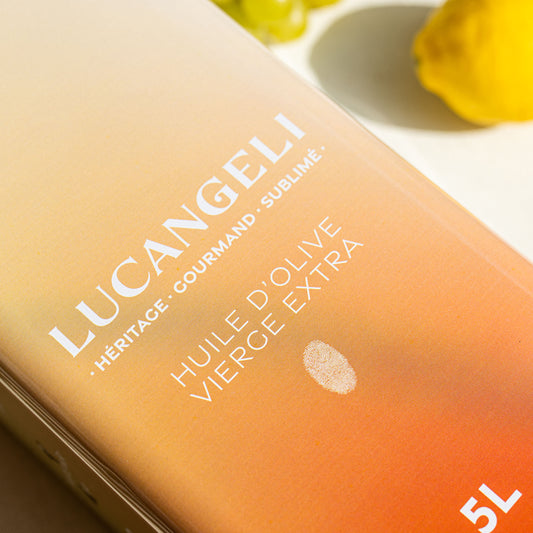
For everyday cooking, the format that makes the most sense is often the large pack. A 5-litre tin of organic olive oil lowers the cost per litre while cutting down on packaging. Provided you store it properly — away from light and heat — and use it within three to four months of opening.
For professional use, the question of yield also comes up at restaurant scale: choosing an exceptional finishing oil for plating and a solid-quality oil for cooking. The professionals area lets you explore formats and volumes suited to hospitality businesses.
---
Frequently asked questions
How many kilos of olives does it take to make a litre of olive oil?
Between five and eight kilos on average for a good-quality extra virgin oil. That figure rises above eight kilos for early green fruity harvests, and can drop below five kilos for very ripe olives producing a lower-quality oil.
Why does extra virgin oil cost more than standard oil?
Because the legal criteria for extra virgin — free acidity below 0.8%, a flawless sensory profile — demand rigour at every step: quick harvesting, milling within hours, cold extraction, storage in stainless steel. Each of these constraints lowers the yield or adds to production costs.
Is the extraction rate shown on the bottle?
No, it isn't mandatory. Some transparent producers mention it, but it's not the norm. To get close, look at the harvest date, the variety and the type of fruitiness: an early-harvest green fruity almost always means a low yield — and a more precious oil, weight for weight.




 lucangeli.it