


Bitterness and pungency: two sensations, one message
You pour olive oil onto a slice of bread, you taste it — and you feel a slight bitterness, followed by a peppery catch at the back of the throat. The usual reflex: assuming the oil has gone off. It's actually the opposite. Bitterness and pungency are the two sensory markers of a quality extra virgin olive oil, and understanding them completely changes the way you choose and use an oil.
In the official vocabulary of tasting — the one used by the accredited tasting panels that assess olive oils under European regulation EC 796/2002 — bitterness and pungency are positive attributes, not defects. Their absence, on the other hand, can point to an oil that is old, oxidised or made from overripe olives.
What is bitterness in olive oil?
Bitterness is perceived on the sides and the back of the tongue. It comes from polyphenols, a family of compounds naturally present in the flesh of the olive. The earlier the olives are picked — while they are still green or just beginning to turn — the higher their polyphenol concentration, and the more bitter the oil will be.
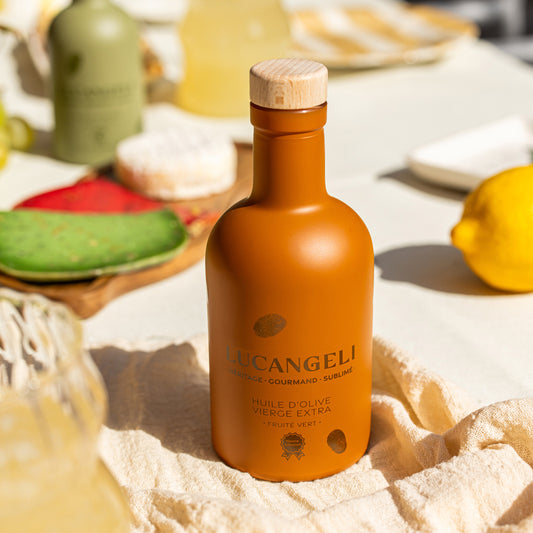
An oil with a green fruity organic profile, pressed from olives picked at the very start of the season, therefore shows a clear, clean bitterness. An oil with a ripe fruity organic profile, from olives picked later in the season, offers a softer bitterness that stays in the background.
What is pungency?
Pungency — sometimes called « peppery » or « bite » — is the warm, tingling sensation you feel in your throat a few seconds after swallowing the oil. It is distinct from bitterness: it comes from oleocanthal, another phenolic compound, and it always shows up at the back of the throat, never in the mouth.
In tasting panels, pungency is assessed separately from bitterness. It can show up as one, two or three successive « coughs », and that is precisely the criterion professional tasters use to quantify it.

---
What the Calabrian varieties tell us
The intensity of bitterness and pungency varies a great deal from one olive variety to another. In Calabria, two varieties illustrate that contrast perfectly.
Coratina — found in the olive groves of northern Calabria and neighbouring Puglia — is one of the varieties richest in polyphenols in the whole Italian peninsula. It produces an oil with an intense green fruitiness, a pronounced bitterness and a long, persistent pungency. It is an oil built for robust dishes: grilled meats, bitter vegetables such as rocket or radicchio, pulse soups, bruschetta.
Carolea, the emblematic variety of central and southern Calabria, gives the opposite: an oil with a more balanced profile — ripe fruitiness, moderate bitterness, short pungency. It is a versatile oil, suited to fish, mild vegetables, fresh cheeses and baking.
Understanding that difference means understanding why two bottles of organic Italian olive oil can have radically different profiles on the palate — and why one is not « better » than the other, simply suited to different uses.
Ripeness at harvest: the key variable
Whatever the variety, the harvest stage remains the most decisive factor. A Carolea picked at the very start of the season — as early as September, as sometimes happens in Calabria — can show a bitterness and a pungency as marked as a Coratina picked later. That is why the harvest date on the label is valuable information: it places you within the season and helps you anticipate the taste profile.
---
How to read bitterness and pungency when you buy
So you can find your way without having to taste every bottle before buying it, here are the indicators you can read straight from the label or the product page.
To explore both extremes in a single order, the discovery duo in 500 ml bottles lets you compare green fruity and ripe fruity side by side on the same dishes.
Bitterness and pungency: defect or quality?
European regulation EC 796/2002, which governs the classification of olive oils, lists the possible sensory defects: rancid, musty, winey, metallic, and so on. Bitterness and pungency do not appear there — they are never classified as defects. They may simply be judged « too intense » if they mask every other attribute, but in that case it is a question of balance, not of intrinsic quality.
An oil that doesn't bite, that isn't bitter, that slides through without leaving a trace on the palate: it can be good, but it cannot be young or rich in phenolic compounds. If you're looking for an intense profile, the presence of pungency is a guarantee — not a warning sign.
---
Matching intensity to the plate
The intensity of bitterness and pungency is not an obstacle to everyday use — it is a cooking tool. The principle is simple: the more delicate the dish, the milder the oil should be. The heartier the dish, the more intense the oil can be.
Uses by profile
- Green fruity oil, pronounced bitterness and pungency → pinzimonio (raw vegetables for dipping), bruschetta, pulse soup, grilled meats as a finish, rocket salad, ribollita.
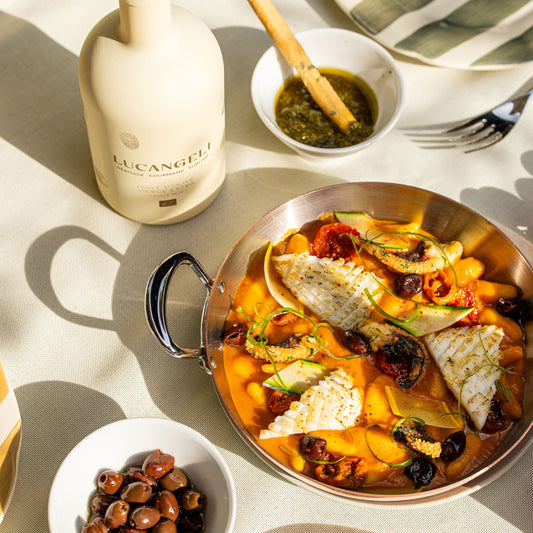
- Ripe fruity oil, moderate bitterness, short pungency → steamed fish, carpaccio, fresh cheeses, eggs, seasonal vegetables, olive oil desserts.
- Green fruity oil as a finish → pour a raw drizzle over an already cooked plate to bring intensity without heat.
- Ripe fruity oil for cooking → sauteed vegetables, risotto, the base of a soffritto — the heat softens the remaining bitterness further still.
The perfect trio in 200 ml keeps both main profiles within reach, so you can match the oil to the dish without ever compromising on either.
For establishments that want to offer an oil list or make this kind of tasting part of the dining-room experience, the professionals area sets out the available formats and supply terms.
---
Frequently asked questions
Why does my olive oil bite in my throat but not in my mouth?
That is precisely the definition of pungency. It always appears in the throat, never on the tongue or the lips. A peppery sensation in the mouth is a different matter: it can point to an oil that is too young or to a defect linked to fermentation. If the tingling is exclusively in the throat and appears after swallowing, you have an oil rich in oleocanthal — a natural compound of the fresh olive.
Does the bitterness of olive oil disappear when cooked?
Yes, partly. Heat breaks down the polyphenols responsible for bitterness and pungency. A very intense green fruity oil loses much of its bitterness as soon as it is heated. That is why cooks who use an intense oil for cooking often choose a milder version for raw finishing, so the aromatic profile stays intact on the plate.
Is an oil without bitterness a bad oil?
Not necessarily. A ripe fruity oil, from olives picked at full maturity, can be of excellent quality while showing very little bitterness. An oil that used to be bitter and no longer is — because it has aged or been badly stored — has, on the other hand, lost its phenolic compounds. So the difference lies in the bottle's history: if it was never bitter, that is a profile choice; if it was and no longer is, that is a sign of ageing.




 lucangeli.it