

The peroxide value of an olive oil measures its level of primary oxidation at the time of analysis. The lower this figure, the fresher and better preserved the oil. Yet, this parameter remains little known to the general public, even though it is one of the most reliable indicators for assessing the true quality of an extra virgin oil. Here's how to read it, what it reveals, and why looking at the best-before date is not enough.
What the Peroxide Value Measures
The Chemistry in Two Sentences
When olive oil is exposed to oxygen, light, or heat, its unsaturated fatty acids oxidize. This reaction produces peroxides, unstable molecules that are the first to form during the rancidification process. The peroxide value measures the quantity of these molecules present in the oil, expressed in milliequivalents of active oxygen per kilogram of oil (meq O2/kg). It is an indicator of primary oxidation: it captures the beginning of the process, before the oil develops perceptible rancid aromas in tasting.
The Legal Threshold and What It Really Means
European regulations set a maximum peroxide value of 20 meq O2/kg for an oil to be classified as extra virgin. This threshold is a limit, not a goal. An oil at 19 meq O2/kg is legally extra virgin, but it is already well advanced in its oxidation process. Higher quality oils show much lower values, often between 3 and 10 meq O2/kg at bottling. Here are four practical benchmarks for interpreting this figure:
- Below 7 meq O2/kg: very fresh oil, minimal oxidation.
- Between 7 and 12 meq O2/kg: good freshness, satisfactory quality.
- Between 12 and 20 meq O2/kg: legally acceptable, but advanced oxidation.
- Above 20 meq O2/kg: outside the extra virgin category.
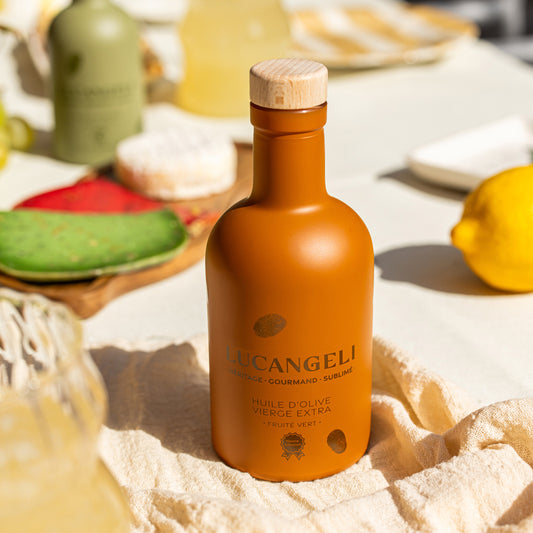
To compare two aromatic profiles resulting from the same freshness requirement, an organic green fruity oil and an organic ripe fruity oil illustrate well how oxidation control translates into the glass.
The Direct Link with Milling Time
The peroxide value begins to climb as soon as the olives are picked. Bruised, piled up, or stored too long before pressing, the fruits oxidize rapidly. Milling within 24 hours of harvest helps maintain a very low value. Beyond 48 hours, the value can double, even for healthy fruits. This is why the time between picking and pressing is one of the most decisive criteria for the final quality of an oil, long before the variety or the altitude of the olive grove.
What Happens After Bottling

The Value Evolves, Even in a Sealed Bottle
A low peroxide value at bottling guarantees nothing if storage conditions are poor. Light is the main enemy: a transparent bottle exposed to direct light can see its value increase rapidly. Heat also accelerates the process. This is why quality oils are packaged in opaque bottles or dark glass, and stored away from light and heat sources. The discovery duo in 500 ml bottles is designed for consumption within weeks of opening, which limits oxygen exposure.
What Happens After Opening
Once the bottle is opened, oxidation accelerates. Air comes into direct contact with the oil with each use. An opened bottle stored at room temperature, near a window or stove, can see its peroxide value increase rapidly. The best practice is to carefully reseal the bottle after each use, store it in a closed cupboard, and prefer small formats for regular consumption. The trio of organic oils in 200 ml perfectly follows this logic: three smaller bottles, to be opened successively.
The Special Case of Large Professional Formats
Restaurateurs and professionals who work with large volumes have an additional constraint: once a container is opened, the contact surface with air increases as the level decreases. The 5-liter container is suitable for establishments with rapid turnover. For larger volume projects or specific needs, the professional space allows formats to be adapted to the establishment's actual consumption.
The Carolea Variety and Peroxide Value in Calabria
Specific Behavior with Early Harvest
Carolea is the dominant olive variety in Calabria. Harvested in October, at the beginning of the season, it regularly achieves peroxide values below 7 meq O2/kg at bottling, well below the legal threshold of 20, provided that milling occurs within 24 hours of picking. This early harvest, combined with cold extraction, is what allows for oils that are both stable over time and expressive in taste. Delaying the harvest by two to three weeks is enough to significantly increase the value, even for healthy fruits.
How to Read the Label When the Value Is Not Displayed
European regulations do not require producers to mention the peroxide value on the label. To display it, the producer must also mention the free acidity and two spectrophotometric extinction coefficients (K232 and K270). Many prefer not to indicate anything. In the absence of this data, three elements compensate: the presence of a harvest date (and not just the best-before date), a DOP or PGI designation of origin, and the mention of cold extraction. The jeroboam of organic extra virgin oil is an example of a format that concentrates all these guarantees in an exclusive cuvée.
Frequently Asked Questions
What is the peroxide value of a good extra virgin olive oil?
The legal threshold is 20 meq O2/kg, but a superior quality oil generally has a value below 10 meq O2/kg at bottling. The best oils from an early harvest and rapid milling are often between 3 and 7 meq O2/kg.
Does the peroxide value change after purchasing the bottle?
Yes. The value evolves with time, light, and heat. A bottle stored in poor conditions can see its value increase rapidly, even before opening. After opening, oxidation accelerates with each contact with air. Storing the oil in a closed cupboard, away from light and heat, slows down this process.
Why is the peroxide value not always indicated on the label?
Because European regulations do not require it. To display the peroxide value, the producer must also mention the free acidity and two extinction coefficients. Many prefer not to indicate anything rather than provide a complete analytical table. The presence of a harvest date and a designation of origin is often more informative for the consumer.




 lucangeli.it