

Olive oil, a new marker of a restaurant's identity
For a long time, olive oil on a restaurant table was a formality: a generic bottle, with no specific origin, placed between the salt and pepper. Today, this detail has changed status. In gourmet establishments, charming hotels, and bistronomic restaurants, the olive oil bottle has become a communication tool in its own right.
A condiment treated like a grand cru
The movement is comparable to that of natural wine or premium spring water: catering professionals seek to tell a story through each product placed on the table. Organic extra virgin olive oil, from a specific terroir, with a dated harvest and an identifiable producer, meets this expectation. It says something about the establishment: its commitment to quality, its gastronomic curiosity, its respect for the product.
A green fruity organic olive oil with fresh grass and artichoke aromas, or a ripe fruity organic olive oil with sweet notes of tomato and almond, are not mere condiments: they are expressions of a terroir, Calabria, a region in southern Italy renowned for the quality of its olive groves.

What the bottle says about your establishment
A customer who enters a restaurant and sees a well-maintained olive oil bottle, with a clear label indicating the origin, olive variety, organic certification — that customer immediately perceives a level of excellence. It's a silent but powerful signal. Conversely, an olive oil without origin or of mediocre quality can harm the image of an otherwise well-executed dish.
The 200ml olive oil trio — green fruity, ripe fruity, and bergamot — allows an establishment to offer an in-table tasting, transforming a simple seasoning into an educational and memorable moment.
Screen-printed bottle: olive oil as a communication tool
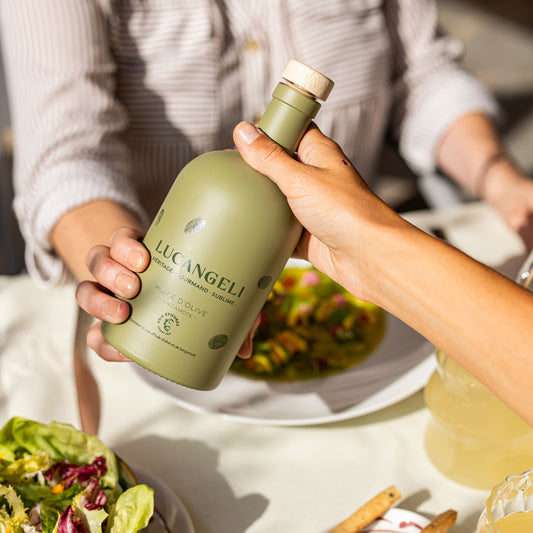
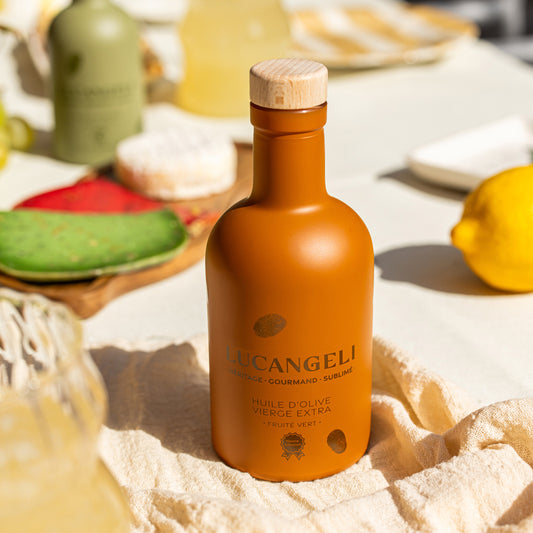
Beyond the intrinsic quality of the product, bottle personalization is a strong trend in high-end catering. A screen-printed bottle with the establishment's name or logo transforms a gourmet product into a branded item.
Screen printing: a detail that makes an impression
Screen printing is a technique of direct printing on glass, without a paper label. It gives the bottle a premium look, resistant to handling and humidity — ideal for in-room use. A screen-printed olive oil bottle with your restaurant's or hotel's name becomes an identity object: customers notice it, photograph it, talk about it.
This approach is particularly suitable for luxury hotels, gourmet restaurants, and establishments that wish to strengthen their brand image through every detail of the table. The discovery duo — 2 bottles of 500ml organic olive oil is an ideal format for in-room use, combining generosity and elegance.
A profitable investment for the image
Offering exceptional olive oil on the table is not an additional cost: it is an investment in the customer experience. Studies on gourmet catering show that diners remember details that stand out. An organic, certified olive oil, from an artisan producer, with a carefully designed bottle, contributes to the overall perception of quality of the establishment.
For establishments wishing to go further, the jeroboam of organic extra virgin olive oil — an exclusive limited edition format — is a spectacular table object, ideal for large tables or private events.
How to choose your olive oil for professional catering
Choosing an olive oil for professional use is not just about price. Several parameters come into play: organoleptic quality, certification, format, and consistency with the establishment's culinary identity.
Quality criteria to check
A professional quality extra virgin olive oil must meet several criteria:
- Organic certification: it guarantees the absence of pesticides and environmentally friendly agriculture. Ecocert certification (FR-BIO-01) is a reference in France.
- Geographical origin: an olive oil from a specific terroir — such as Calabria, a region in southern Italy — offers a distinct aromatic profile and complete traceability.
- Aromatic profile: green fruity (fresh grass, artichoke, slight bitterness) or ripe fruity (tomato, almond, sweetness) — the choice depends on the cuisine served and the dishes to accompany.
- Harvest date: a quality olive oil always indicates the harvest year on the label.
The bergamot olive oil — Épicures Argent 2023 is an example of a differentiating product: award-winning, from a rare citrus fruit cultivated almost exclusively in Calabria, it brings a unique aromatic signature to the table.

Formats suitable for catering
For professional use, the choice of format is strategic:
- 200ml: ideal for the table, allows for regular rotation and guarantees product freshness.
- 500ml: intermediate format, suitable for guest tables or high-volume restaurants.
- 1 liter and more: for cooking, large-quantity preparations. The 5L organic olive oil can is designed for professional kitchen use, with the same organic quality as table bottles.
Consistency between cuisine and table product
The olive oil placed on the table must be consistent with the cuisine served. A Mediterranean or Italian restaurant will benefit from offering Calabrian olive oil, in line with its identity. A French gourmet restaurant can choose bergamot olive oil for its original character and distinction.
The Gold Collection PGI balsamic vinegar can complement the table alongside olive oil, forming a premium condiment duo that enhances the tasting experience.





 lucangeli.it