

Why olive oil deserves a place in every service of your hotel
Olive oil is present in almost all hotel kitchens, but it often remains unseen: stored in the kitchen, used for cooking, never showcased to the customer. Yet, it is one of the rare products capable of seamlessly fitting into every moment of the hotel day — from breakfast to dinner, from buffet to in-room dining — with a consistency that few other ingredients can offer.
The question is not whether you should offer olive oil to your guests. The question is when, in what format, and with what variety you can do so smoothly, without overburdening your teams or complicating your organization.
Breakfast: the most underutilized moment
Breakfast is the service where olive oil is least expected, and therefore where it creates the most impact. In Mediterranean countries, dipping bread in quality olive oil in the morning is as natural a habit as buttering toast. For a hotel hosting international clientele or aiming to establish an Italian gastronomic identity, this is a direct opportunity.
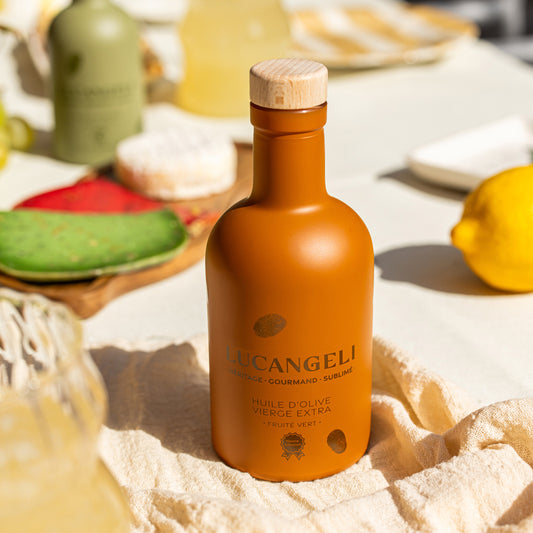
The presentation is simple: a small bottle placed on the table or on the buffet, next to the bread, with a legible label indicating the variety and origin. A mild fruity olive oil is the most suitable choice for this moment: its slight pungency and fresh almond notes do not upset palates unaccustomed to strong olive oil, and it pairs well with toasted bread as well as fresh cheeses or fruits.
The 200 ml capacity is ideal for this purpose: it allows for quick rotation, neat presentation, and freshness control. An open bottle at breakfast should be consumed within four to six weeks to maintain its organoleptic qualities.
The buffet: organization, rotation, and presentation
On a buffet, olive oil can serve multiple purposes simultaneously: condiment for raw vegetables, base for cold marinades, bread accompaniment, finishing touch for eggs or hot vegetables. Here are the recommended formats depending on the purpose:
- Bread and toast: 200 ml or 500 ml bottle, daily rotation.
- Raw vegetables and salads: 200 ml bottle, daily rotation.
- Hot vegetables for finishing: 200 ml or 500 ml bottle, daily rotation.
- Cooking in the kitchen: 5 L can, weekly rotation.
- Table presentation in the restaurant: 200 ml bottle or jeroboam, depending on the service.
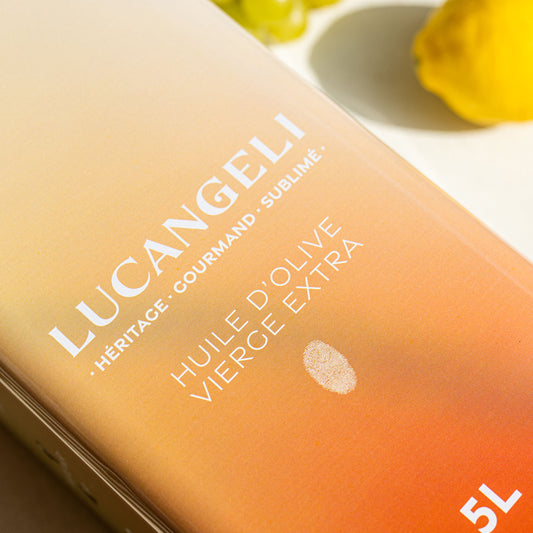
For establishments with a high volume of breakfast covers, the 5-liter organic olive oil can is the benchmark format for the kitchen. It reduces handling, lowers the cost per serving, and integrates into a controlled stock rotation circuit. In the dining room or on the buffet, it is decanted into smaller service bottles, marked with the opening date.

Room service: a discreet but memorable sign of quality
Room service is one of the rare moments when the guest is alone with the product. They read the label, observe the color, and smell before tasting. It is a context of unintentional tasting, and precisely for this reason, a well-chosen olive oil leaves a lasting impression.
For room service, two formats are relevant depending on the establishment's positioning. The discovery duo in 500 ml bottles is suitable for establishments wishing to offer two distinct profiles—green fruity and ripe fruity—to accompany a complete meal tray. The trio of 200 ml olive oils is an option for suites or long stays, where the diversity of profiles enhances the experience without complicating logistics.
For hotels that wish to go further, a Calabrian bergamot olive oil—obtained by co-crushing the fruit with olives, not by adding flavor—is a niche product that consistently sparks curiosity and conversation. It is a memorable differentiating element on a room service tray or a restaurant table.
Choosing the right variety according to your clientele's profile
Not all extra virgin olive oils are suitable for all hotel contexts. The choice of variety must consider your clientele's profile, the nature of your services, and your team's ability to explain the product.
Carolea: the universal choice for hospitality
Carolea is a Calabrian variety with a mild, ripe fruity profile. Its aromatic notes evoke fresh almond, ripe apple, and a slight buttery hint. Its pungency is discreet, its bitterness moderate. It is the most accessible variety for an international clientele uninitiated to strong olive oil.
Precisely for this reason, it is recommended for breakfast, buffet, and room service: it doesn't surprise, it seduces. A guest who has never consumed quality olive oil will not be put off by overly pronounced pungency, and will instead be pleasantly surprised by its smoothness and lingering taste. The 200 ml organic ripe fruity olive oil embodies this Carolea profile.
Coratina: reserved for gourmet restaurants
Coratina is the opposite of Carolea: intensely green fruity, distinct bitterness, pronounced pungency at the finish. It evokes raw artichoke, fresh grass, and green tomato. It is a finishing oil for gourmet restaurants, chefs who build dishes around its character, and guests who know what they are looking for.
For the hotel restaurant, offering both profiles in dining service—a Carolea and a Coratina—is a growing practice in gourmet establishments. This allows staff to recommend pairings according to the dish, and guests to choose according to their preferences. The 200 ml organic green fruity olive oil embodies this Coratina profile.
Variety and hotel service matching
Here are the three profiles to consider for organizing your supply:
- Carolea (ripe fruity) — almond, apple, slight pungency: recommended for breakfast, buffet, and room service. Recommended format: 200 ml or 500 ml.
- Coratina (green fruity) — artichoke, grass, pronounced pungency: recommended for gourmet restaurants and finishing touches. Recommended format: 200 ml.
- Organic blend — balanced and versatile profile: recommended for cooking in the kitchen. Recommended format: 5 L can.
Customization and sourcing: structuring your approach
The personalized bottle: a communication tool in its own right
An olive oil bottle bearing your establishment's name and logo is not a gadget. It's a communication medium placed on every table, visible at every service, photographed by your guests, and shared on social media. It tells the story of your identity, your attention to detail, and your commitment to the quality of the products served.
The personalized bottle service with your establishment's colors is available starting from 24 bottles, with a design created by the establishment. For a hotel that regularly replenishes its stock, this is a communication investment that pays off over the season. Production time should be anticipated: allow approximately two to three weeks between design validation and delivery.
Organizing year-round supply
The regularity of supply is as important as product quality. A hotel that changes its reference with each replenishment loses the consistency of its offering and its team's ability to accurately present the product.
Before listing an oil on your menu or buffet, check annual availability, delivery times, and minimum order requirements. For establishments wishing to establish a regular supply, negotiate volumes, and anticipate periods of high demand—especially during peak summer season and year-end—the dedicated space for hotel and restaurant professionals allows you to contact the sales department.
Completing the offer with other Italian products
Olive oil is not the only product that can enhance your buffet or room service. A DOP basil pesto with olive oil or a black olive tapenade with extra virgin olive oil naturally complements a breakfast table or an in-room aperitif tray, with the same logic of traceability and Italian origin.
For hotels that wish to build a coherent offering around Italian products, the jeroboam of organic extra virgin olive oil is a remarkable presentation format for the restaurant table or gourmet buffet: its 2.5-liter capacity and imposing size make it a table object in its own right, attracting attention and sparking conversation. The professionals' section allows you to define a supply adapted to your establishment's volume and pace.
Frequently Asked Questions
Which olive oil to choose for a four-star hotel buffet?
For a hotel buffet, choose an extra virgin olive oil with a mild, ripe fruity profile, from a variety like Carolea from Calabria. Its slight pungency and fresh almond notes are suitable for an international clientele uninitiated to strong olive oil. The 200 ml format is suitable for dining room presentation, with daily rotation to ensure freshness.
What olive oil format should be used for hotel room service?
For room service, the 200 ml format is the most suitable: it is easy to handle, presents well on a tray, and allows for quick rotation. For suites or long stays, a 500 ml format or a duo of two different profiles enhances the experience without complicating logistics. Always date the opening of each bottle.
How can I offer a personalized olive oil bottle for my hotel?
Customization is available starting from 24 bottles. The design is created by the establishment using the online configurator, or via the sales department for large-volume projects. Allow two to three weeks between design validation and delivery. This format is particularly suitable for hotels wishing to place a branded bottle on each restaurant table.




 lucangeli.it