


Why olive oil is at the heart of Italian focaccia
In focaccia, olive oil isn't one ingredient among others: it's the structuring ingredient. It comes in at three distinct moments, and each one has a different effect on the final result. Cooking blogs almost never say this, yet this is precisely where the texture is decided.
Oil in the dough: softness and keeping quality
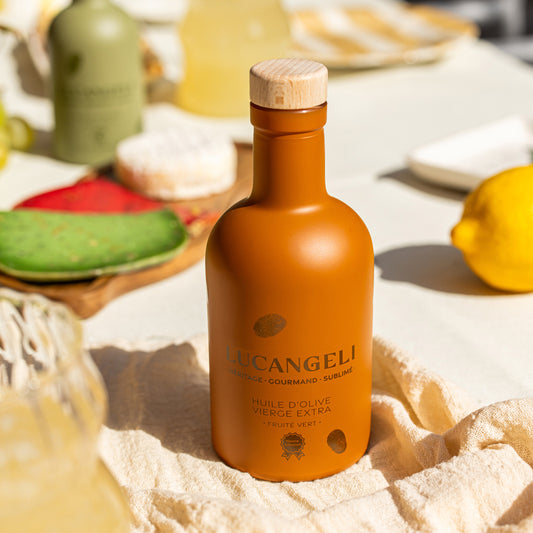
When you work it into the dough, the oil coats the gluten networks and slows down how quickly they firm up. The result: a softer crumb that stays moist for several hours after baking. For this step, an organic green fruity olive oil works very well — its herbaceous notes carry lightly into the dough without dominating.
Oil in the baking tin: the crust that makes all the difference

Before you lay the dough in, pour oil generously into the tin. It's this layer that creates the crisp, golden base you find in real Ligurian or Pugliese focaccia. Without this step, the bottom stays soft. Count on roughly 3 to 4 tablespoons for a 30 × 40 cm tin.
Oil on the surface before baking: aroma and colour
Just before it goes into the oven, drizzle the focaccia generously with oil, press with your fingertips to dig out the characteristic dimples, and scatter coarse salt over it. This is the step where the oil's aromatic profile comes through most directly, because the heat of the oven will spread its aromas through the whole kitchen. Use your best oil here, the one whose character you want to taste.
---
The recipe step by step: focaccia with green fruity olive oil
This recipe is calibrated for a standard 30 × 40 cm tin, giving around 8 to 10 portions. The resting time is long but non-negotiable: it's what gives the dough its lightness.
The ingredients
The steps
- Prepare the yeast. Dissolve the yeast and the sugar in 50 ml of lukewarm water. Leave to stand for 10 minutes, until the mixture foams.
- Form the dough. In a large bowl, mix the flour and the salt. Make a well, pour in the activated yeast, the remaining water and 2 tablespoons of oil. Knead for 10 minutes — by hand or in a stand mixer with the dough hook — until you get a smooth, slightly sticky dough.
- First rise. Cover the bowl with a damp cloth and leave to rise at room temperature for 1 hour 30, until the dough has doubled in volume.
- Prepare the tin. Pour 3 to 4 tablespoons of oil into the baking tin and spread it over the whole surface and the sides.
- Spread the dough. Transfer the dough into the tin and stretch it out to the edges with oiled hands. Don't aim for perfection: the irregularities are part of focaccia's character.
- Second rise. Cover again and leave to rest for 45 to 60 minutes. The dough should puff up further.
- Top it and bake. Preheat the oven to 220 °C. Press the surface with your fingers to create the typical dimples, drizzle with oil, scatter coarse salt and add your topping. Bake for 20 to 25 minutes, until the top is golden and the base is crisp.
- Serving. Let it cool for 5 minutes before cutting. A final drizzle of green fruity oil as you serve is strongly recommended.
---
Choosing the right oil and varying your September toppings
Green fruity or ripe fruity: what difference does it make in focaccia?
Green fruity oil, from olives harvested early, brings pungency on the finish, fresh grass notes and a light bitterness. In focaccia, these characteristics balance out the richness of the dough and lift the flavour of the bread. The Coratina variety, originally from Puglia and also grown in Calabria, is particularly well suited: its marked pungency and its herbaceous notes persist even after baking, which is rare.
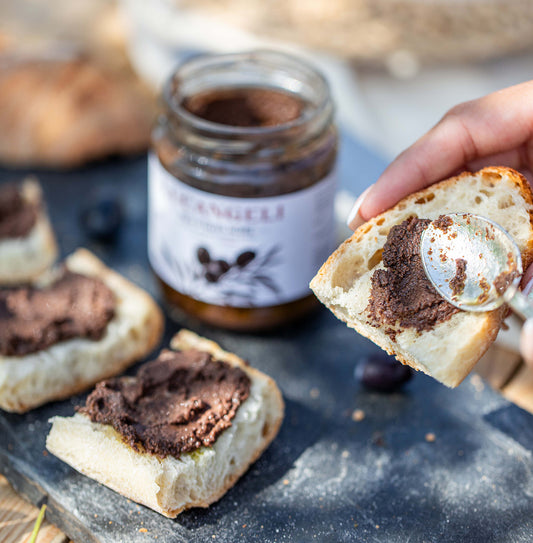
Ripe fruity oil gives a rounder focaccia in the mouth, with ripe fruit notes and a gentler pungency. It's a good choice if you're topping it with already intense ingredients, such as black olives or tapenade.
Three seasonal toppings for September
Rosemary and coarse salt. The simplest and most universal version. Rosemary stands up well to heat and perfumes the crumb. Add it before baking.
Cherry tomatoes and fleur de sel. End-of-season cherry tomatoes are still sweet and concentrated in September. Cut them in half and set them cut side up in the dimples. They caramelise lightly as they bake.
Black olives and red onion. A more generous topping, inspired by Pugliese focaccia. Use pitted black olives in olive oil: they're already in oil, which makes them easier to work in and stops them drying out in the oven.
A flavoured oil for variety
For a punchier focaccia, replace part of the surface oil with organic garlic and chilli olive oil, made by crushing the fruit together with the olives at the moment of extraction — and not by adding flavouring. The effect is immediate: the focaccia takes on a strongly southern character, ideal with an olive or sun-dried tomato topping.
---
Frequently asked questions about homemade focaccia
Why is my focaccia hard after baking?
Two common causes: a second rise that was too short, or not enough oil in the tin. Focaccia needs far more oil than ordinary bread to stay soft. If the base is hard, increase the amount of oil in the tin next time.
Can you make focaccia with any olive oil?
Technically yes, but the result differs a great deal depending on quality. A good extra virgin oil, with free acidity below 0.8%, gives a focaccia with a clean, lasting taste. An ordinary oil can mask flaws in the dough, but you find them again in the chew.
When should fresh herbs be added so they don't burn?
Rosemary stands up well to 220 °C for 20 to 25 minutes. Basil and tender herbs, on the other hand, should be added after baking, once the focaccia is out of the oven. Fresh basil on a still-warm focaccia releases its aromas without losing its colour.
---
If you want to go further into the pairings and uses of olive oil in the kitchen, Lucangeli's professionals section offers formats suited to restaurant or catering use, with packaging designed for regular use.






 lucangeli.it