


Fruity green and fruity ripe: two characteristics, two harvests
Extra virgin olive oil is not a uniform product. Depending on when the olives are harvested, the resulting oil presents very different aromatic profiles. This is known as "fruitiness": a sensory classification that allows oils to be distinguished according to their intensity, aromas, and mouthfeel. To explore these two universes, the organic olive oil trio is an excellent way to compare profiles side by side.
Fruity green: vibrancy and intensity
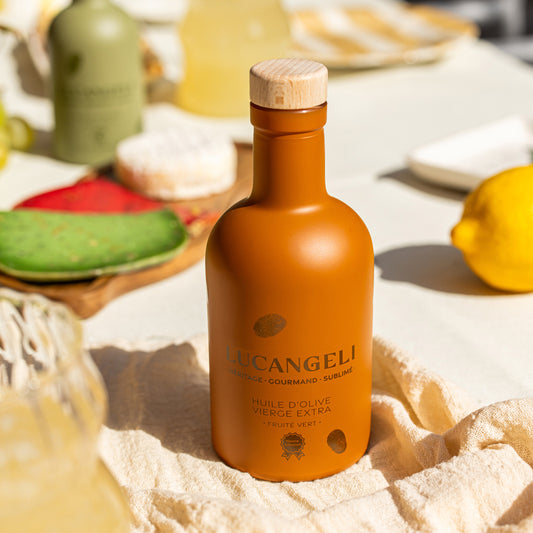
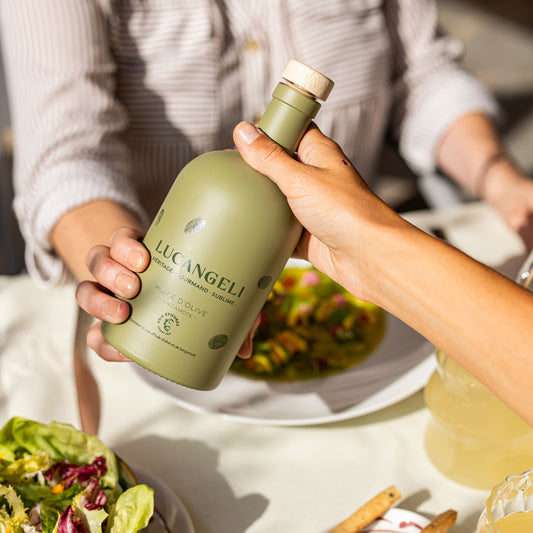
Fruity green oil is obtained from olives harvested early in the season, generally in October, when they are still green and firm. This oil is distinguished by an intense, slightly bitter and pungent flavor, with herbaceous notes reminiscent of fresh grass, raw artichoke, or green tomato. On the palate, it leaves a characteristic tingling sensation, a sign of quality oil harvested at the right maturity. Organic fruity green olive oil from Calabria perfectly embodies this profile: vibrant, frank, with a beautiful aromatic persistence.
Fruity ripe: sweetness and roundness
Fruity ripe oil comes from olives harvested later, when their color turns from green to dark purple. The resulting oil is softer, rounder, with aromas of ripe fruit, fresh almond, or butter. Bitterness is present but discreet, and the tingling sensation is almost absent. It is a more accessible oil, ideal for those discovering quality olive oil. Organic fruity ripe olive oil offers this characteristic sweetness of southern Italy, with a silky texture and persistent aromas.
How to choose your olive oil according to your dishes?

The choice between fruity green and fruity ripe depends primarily on the dish you wish to prepare. Each aromatic profile has its natural affinities with certain ingredients and cooking techniques.
For fresh and spring dishes
In spring, dishes are light: raw vegetable salads, vegetable carpaccios, fresh herb pasta, grilled fish. In these preparations, fruity green naturally stands out. Its intensity and vibrancy highlight the vegetal flavors without overpowering them. A drizzle of organic fruity green olive oil on steamed asparagus or a rocket salad transforms a simple dish into a memorable taste experience. For an original touch, bergamot olive oil brings a floral and citrus note that enhances spring dishes.
For stewed and comforting dishes
Stewed dishes, meat in sauce, roasted vegetables, or dried legume soups call more for fruity ripe. Its sweetness and roundness integrate harmoniously into long and rich preparations, without dominating other flavors. A drizzle of organic fruity ripe olive oil at the end of cooking on a chickpea soup or a mushroom risotto brings incomparable aromatic depth.
Raw or cooked: the right reflexes
Extra virgin olive oil can be used both raw and in gentle cooking. However, fruity green tolerates heat better than fruity ripe, whose delicate aromas can diminish at high temperatures. The golden rule: reserve fruity ripe for finishing and cold dressings, and use fruity green for pan-frying or oven cooking at moderate temperatures. For those who wish to discover both profiles, the organic olive oil trio allows you to explore the differences directly in your kitchen.
Olive oil in spring: pairings to adopt
Spring is the ideal season to rediscover olive oil in all its forms. Markets are brimming with new vegetables, desires to share return with the warmer days, and tables are set on terraces once again.
Seasonal vegetables and olive oil
Spring vegetables — asparagus, peas, broad beans, artichokes, spinach — have a delicate flavor that pairs perfectly with a well-chosen fruity green oil. A simple drizzle of raw oil on steamed or roasted vegetables is enough to reveal all their freshness. To accompany these vegetables in a spreadable version, black olive tapenade or DOP basil pesto with olive oil are valuable allies for composing generous and tasty plates.
Antipasti and sharing platters
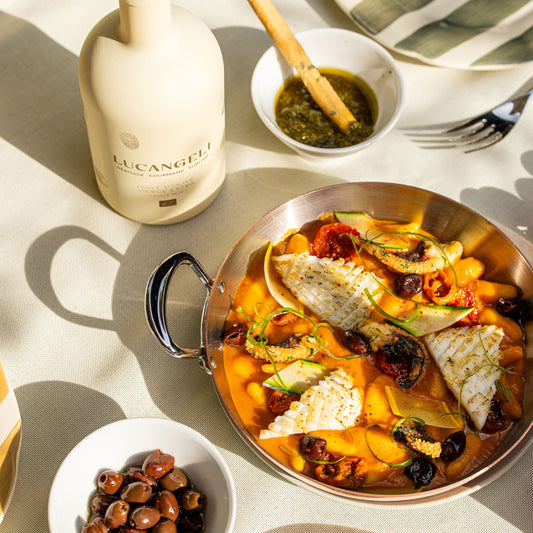
With the return of warmer days, outdoor aperitifs regain their rights. Sharing platters, inspired by the Italian tradition of antipasti, are the ideal occasion to showcase quality products. Pitted black olives with olive oil naturally find their place on these platters, alongside aged cheeses, cured meats, and toasted bread. To vary flavors and textures, the set of 4 tapenades offers a complete selection to compose a generous and friendly Italian aperitif.





 lucangeli.it