


Every year, from August onwards, fig trees in southern Italy enter full production. In Calabria, the fig is much more than a seasonal fruit: it's a local product, cultivated since antiquity, that holds a special place in Mediterranean cuisine. Fresh or dried, in savory or sweet versions, it pairs with a wide variety of ingredients and offers unexpected culinary possibilities. Let's take a closer look at an emblematic fruit of the Italian summer.
The Italian Fig: A Mediterranean Local Fruit
Emblematic Varieties and the Cosenza PDO Fig
The fig is one of the oldest fruits cultivated by humans in the Mediterranean basin. In Italy, there are dozens of varieties, but it is the Cosenza PDO fig — also known as Fico Dottato — that represents Calabrian excellence. Cultivated in the province of Cosenza, on the Tyrrhenian side of Calabria, this variety is distinguished by its elongated, teardrop shape, its thin yellow-beige skin when ripe, and its dense, almost honey-like flesh with small, barely perceptible seeds.
The history of this fig dates back to the era of Magna Graecia, when Greek colonies settled on the Calabrian coasts. The first traces of its cultivation and trade date back to the 16th century, and by the 19th century, Cosenza figs were already being exported beyond the borders of the Kingdom of Naples. Today, the Dottato fig from Cosenza benefits from a Protected Designation of Origin (PDO) that regulates its production and guarantees its authenticity. It is harvested between August and October, then traditionally processed in the localities of Belmonte Calabro and Amantea.
Fig Season: August to October
The fresh fig season primarily runs from August to October in Italy. Harvesting is entirely manual: the fruits are picked by hand when they reach their optimal degree of ripeness, often recognizable by the wilting of the stem and the golden color of the skin. For figs intended for drying, the process is even more meticulous: the fruits are left to dehydrate naturally on the plant, then dried on traditional cane supports (cannìzze) or in greenhouses.
Fresh figs should be consumed quickly, within two to three days of harvesting. Dried figs, on the other hand, can be stored for several months and enjoyed year-round. They are often stuffed with almonds, walnuts, or citrus zest, and sometimes coated in chocolate — a Calabrian confectionery tradition passed down from generation to generation.
Figs in Cuisine: Between Savory and Sweet

Savory Pairings: Cheeses, Meats, and Condiments
Fresh figs naturally integrate into savory preparations. Their sweet and slightly acidic taste creates an interesting contrast with aged cheeses: a few slices of fig on creamy burrata, a piece of Parmesan, or fresh goat cheese are enough to create an elegant appetizer. They also pair very well with strongly flavored meats — duck breast, prosciutto, bresaola — where they play the role of balancing richness and sweetness.
To enhance these pairings, a drizzle of Gold Collection PGI Balsamic Vinegar adds an aromatic depth that perfectly complements the sweetness of the fig. On an appetizer platter, figs also go very well with a black olive tapenade with extra virgin olive oil, whose intensity contrasts pleasantly with the fruit's roundness.
Sweet Pairings: Desserts and Gourmet Breakfasts
In sweet versions, figs naturally pair with nuts: almonds, hazelnuts, pistachios. This combination is at the heart of Calabrian confectionery tradition, where dried figs are stuffed with almonds or walnuts before being shaped into wreaths or braids. To enjoy these flavors daily, a slice of toast topped with fresh figs and an almond spread makes a simple and delicious breakfast or snack.
Figs also pair very well with hazelnuts. A Piedmont hazelnut spread combined with fresh figs cut in half offers a gourmet combination, ideal on toast or as an accompaniment to a cheese platter.
Figs and Olive Oil: A Mediterranean Marriage

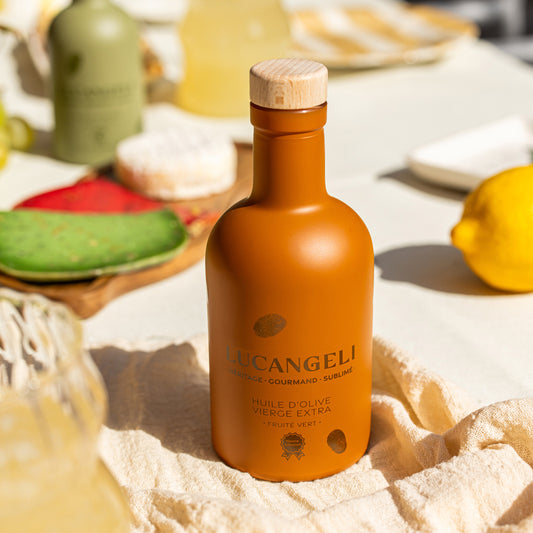
Olive oil is one of the fig's best allies in the kitchen. To roast figs in the oven, simply cut them in half, arrange them on a baking sheet, add a drizzle of organic ripe fruity olive oil and bake at 180°C for about ten minutes. The result is a caramelized, melting fruit with concentrated aromas, which can be served warm with fresh cheese or as an accompaniment to grilled meat.
For a fig vinaigrette, blend a ripe fig with a tablespoon of Silver Edition PGI Balsamic Vinegar, three tablespoons of olive oil, and a pinch of salt. This slightly sweet and tangy sauce perfectly complements summer salads, grilled vegetables, or a plate of arugula with Parmesan.
How to Cook Fresh or Dried Figs?
Raw, Roasted, or Candied: Preparation Methods
Fresh figs can be enjoyed in three main ways:
- Raw: Simply cut in half or into quarters, they can be served on a cheese platter, as an appetizer with cold cuts, or as a dessert with a drizzle of honey.
- Roasted: Baked or pan-fried with a little fat and optionally honey or balsamic vinegar, they develop caramelized aromas and a tender texture.
- Candied: Slowly cooked in syrup or made into chutney, they keep for several weeks and accompany both cheeses and cold meats.
Dried figs, on the other hand, can be used directly in pastries (cakes, cookies, tarts), as a snack, or as an ingredient in savory preparations (tagines, mixed salads, stuffings).
Simple Recipe Ideas for Summer
Here are three quick recipe ideas to make with fresh seasonal figs:
Fig, arugula, and Parmesan salad: Arrange arugula leaves on a plate, add fresh figs cut into quarters, Parmesan shavings, and crushed walnuts. Dress with a drizzle of organic green fruity olive oil, salt, and pepper. Simple, quick, and very summery.
Fig, goat cheese, and honey toast: Toast a slice of country bread, spread fresh goat cheese, arrange fig slices, and add a drizzle of honey. You can also replace the goat cheese with a pistachio spread for a more original and gourmet version.
Roasted figs: Cut the figs in half, arrange them on a baking sheet lined with parchment paper, add a drizzle of olive oil, and bake at 180°C for 10 to 12 minutes. Serve warm with fresh cheese or a scoop of vanilla ice cream.
Figs are a seasonal fruit not to be missed between August and October. Whether fresh or dried, they easily integrate into many recipes and pair with Mediterranean local products — olive oil, balsamic vinegar, nuts — for preparations that are as simple as they are elegant. To discover or offer a selection of Italian condiments and delicacies that pair perfectly with figs, the customizable gift box allows you to assemble a tailor-made selection according to your desires.



 lucangeli.it