

What is olive oil decantation?
Olive oil decantation refers to the natural process by which the oil, immediately after extraction, is left to rest to allow olive micro-particles, water, and impurities to settle at the bottom of the container. Unlike filtration, there is no mechanical intervention here: gravity does all the work. This traditional method, very common in southern Italy, aims to obtain clearer oil without altering its aromatic profile.
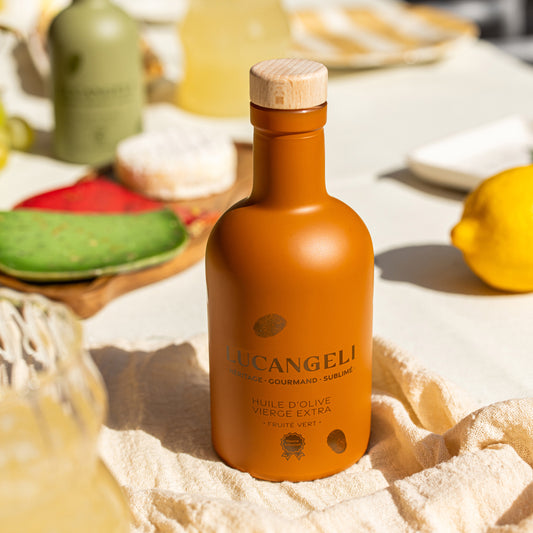
In Calabria, decantation is often favored for small-batch extra virgin olive oils, especially those from varieties like Carolea or Roggianella, to preserve the full richness of the terroir. To discover an example of artisanal oil made using this expertise, explore the 200 ml organic ripe fruity olive oil.
Why is decantation important?

Decantation plays a crucial role in stabilizing and ensuring the quality of olive oil:
- Preservation of aromas: Decanted oil retains more of its original aromas because it undergoes less manipulation.
- Less oxidation: Less agitated, the oil maintains optimal freshness for longer.
- Visual aspect: Decantation results in naturally clear oil, sometimes slightly cloudy but without thick sediment.
Some producers choose not to filter the oil after decantation to offer a more authentic tasting experience. However, this implies a natural sediment at the bottom of the bottle, proof of an artisanal method, not a defect.
To learn more about the diversity of oils and their production methods, check out the 200 ml organic olive oil trio and discover the richness of Italian terroirs.
Decantation or filtration: what are the differences?
Decantation
- Natural resting of the oil
- Preservation of aromas
- Possible presence of light sediment
Filtration
- Oil passes through a filter (paper, cellulose, or stainless steel)
- Completely clear appearance
- Fewer suspended particles
One choice is not better than the other: it all depends on your preferences and culinary use. For oil to be enjoyed raw, decantation often offers more character. For oil to be stored for a long time or used in restaurants, filtration may be preferable.
For professionals wishing to personalize their offerings, discover the personalized bottle service tailored to every need.
Practical list: how to recognize decanted oil

- The label mentions "natural decantation" or "unfiltered."
- The oil has a slight cloudiness or sediment at the bottom of the bottle.
- The taste is more intense, sometimes slightly vegetal.
- Artisanal origin or producer mentioned.
- Recent harvest date, a guarantee of freshness.
Frequently asked questions
What is olive oil decantation?
Olive oil decantation is a natural clarification method where the oil rests to allow particles to settle, without mechanical filtration.
What is the difference between decantation and filtration of olive oil?
Decantation relies on time and gravity, while filtration uses a filter to remove impurities. The former preserves more aromas, the latter yields clear oil.
Does decanted olive oil keep as well as filtered oil?
Decanted oil may show slight sediment and oxidize faster once opened. It is recommended to consume it within six months of opening.
To deepen your knowledge or discover other production methods, explore the professionals, cafés, hotels, restaurants section and discover solutions adapted to every use.




 lucangeli.it