

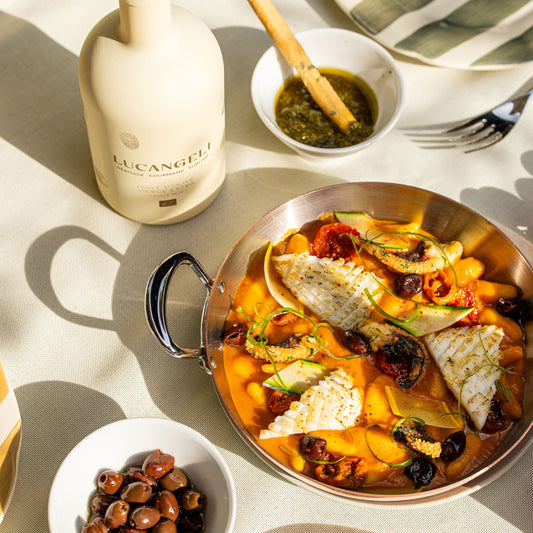
Extra virgin olive oil is one of the most widely used ingredients in Mediterranean cuisine, yet one of the most misunderstood when it comes to purchasing. Between vague labels, highly variable prices, and differences in taste depending on origin, it's not always easy to navigate. Here are the essential criteria for choosing quality olive oil, understanding what you're buying, and getting the most out of this essential condiment.
Understanding the labels
The "extra virgin" label: what it guarantees
The first thing to check on a bottle is the label extra virgin olive oil. This is the highest category in the European classification. It guarantees that the oil has been obtained solely by mechanical processes, without chemical treatment, and that its free acidity level is less than 0.8%. The lower this level, the fresher and higher quality the oil. A good artisanal extra virgin olive oil often has an acidity of less than 0.3%, which indicates careful harvesting and rapid processing after picking.
Cold extraction: a decisive criterion
The mention cold extraction (or "cold pressed") indicates that the oil has been extracted at a temperature below 27°C. This process preserves the aromas, color, and taste qualities of the oil. Conversely, hot extraction allows for a higher yield, but at the expense of organoleptic quality. When looking for a organic green fruity olive oil or a organic ripe fruity olive oil with character, always check for this mention on the label.
Harvest date, more reliable than best-before date
Unlike wine, olive oil does not improve with age. It oxidizes and loses its aromas. The harvest date is therefore a more precise indicator than a simple best-before date. An oil harvested in November and consumed within the following 12 to 18 months will be at its best. Beware of bottles without a vintage or with an older harvest date. To ensure freshness, opt for producers who clearly indicate the harvest vintage, as is the case for organic ripe fruity olive oil from Calabria.
Green fruity, ripe fruity: what's the difference?

Green fruity: intensity and freshness
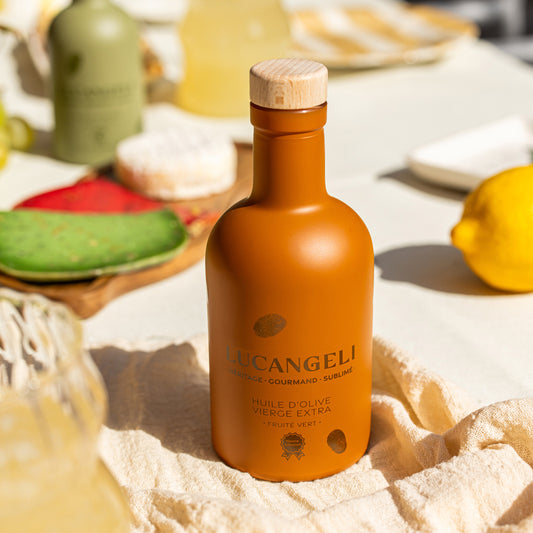
A so-called green fruity oil is produced from olives harvested early in the season, before their full ripeness. It is distinguished by intense aromas of fresh grass, artichoke, tomato leaf, and sometimes green almond. On the palate, it presents a slight bitterness and a pungent sensation at the back of the throat — a sign of freshness. This aromatic profile is particularly suitable for salads, carpaccios, raw vegetables, and cold dishes. The organic green fruity olive oil from Calabria is a good example of this style: lively, vegetal, with a beautiful aromatic persistence.
Ripe fruity: sweetness and roundness
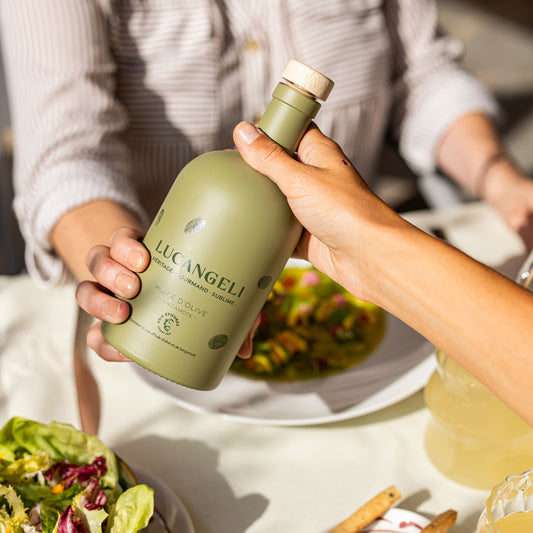
Conversely, a ripe fruity oil is obtained from olives harvested at full ripeness. It offers a softer profile, with notes of ripe fruit, fresh almond, butter, and sometimes hazelnut. Bitterness is almost absent, and the texture is more enveloping. This type of oil pairs perfectly with white meats, pasta, delicate fish, and desserts. The organic ripe fruity olive oil is ideal for those seeking a versatile and accessible everyday oil. For regular use in cooking, the ripe fruity olive oil 1L limited edition or the organic olive oil 5L can are practical formats to have on hand.
Flavored oils: a third path
Beyond the two main families, there are flavored olive oils that open up new taste perspectives. The infusion of citrus, herbs, or spices into a quality extra virgin oil allows for the creation of unique pairings. The bergamot olive oil, for example, combines the sweetness of a Calabrian oil with the floral and slightly acidic freshness of bergamot — a rare citrus fruit grown exclusively in Calabria. Awarded at the Épicures d'Argent 2023, it illustrates how a flavored oil can reach a level of finesse comparable to the best natural oils.
Terroir, organic certification, and buying tips
Geographical origin: a taste factor
Terroir plays a fundamental role in the aromatic profile of olive oil. The climate, soil type, altitude, and olive tree varieties cultivated in a given region directly influence the final taste. Italian oils, especially those from southern Italy — Calabria, Sicily, Puglia — are renowned for their assertive character and aromatic richness. Calabrian olive trees, often centuries old, produce olives with concentrated flavors, reflecting a sunny terroir and expertise passed down through generations. To explore these differences, the organic olive oil discovery duo allows for a side-by-side comparison of two expressions from the same terroir.
Organic certification: what it brings
An olive oil certified as organic farming guarantees that the olive trees have been cultivated without synthetic pesticides or chemical fertilizers. This has a direct impact on the quality of the fruit and, by extension, on that of the oil. Organic certification is issued by independent bodies (such as Ecocert in France) and involves regular controls. If you want an oil with complete traceability, from orchard to bottle, favor producers who clearly display their certification on the label. The Calabrian oils offered by Lucangeli are certified organic FR-BIO-01 by Ecocert, with direct traceability from producer to consumer.
How to properly store your olive oil

Once purchased, olive oil should be stored away from light, heat, and air. Prefer tinted glass bottles or metal cans, which provide better protection against oxidation. Avoid placing it near cooktops or in a cupboard exposed to daylight. A well-preserved oil retains all its taste qualities for 12 to 18 months after harvest. If you're still hesitating on your choice, the organic olive oil trio — green fruity, ripe fruity, and bergamot — is an excellent way to discover different aromatic profiles before finding the one that best suits your uses. To offer a carefully selected range, the customizable gift set allows you to freely combine oils and other regional products according to individual tastes.





 lucangeli.it