


Extra virgin olive oil is one of the most widely used condiments in Mediterranean cuisine, but also one of the most poorly chosen. A recent survey by UFC-Que Choisir reveals that out of 20 references analyzed, only 5 genuinely deserved the "extra" label. With shelves saturated with bottles featuring misleading labels, how can one find their way? This practical guide provides you with the keys to recognizing quality olive oil, understanding flavor profiles, and making the best use of it in your summer cooking.
Essential criteria for recognizing quality extra virgin olive oil

Not all olive oils are created equal. Behind the same label, very different products can be hidden in terms of taste, freshness, and production method. Here are the fundamental criteria to check before buying.
The "extra virgin" label: what does it really guarantee?
The extra virgin olive oil label is regulated at the European level. It certifies that the oil has been obtained solely by mechanical processes, without chemical treatment, and that it has no detectable taste defects by an accredited panel of experts. This is the highest quality category — above "virgin" oil and well above classic olive oil, which is often a blend of refined oil and a small percentage of virgin oil.
However, be careful: the "extra virgin" label alone does not guarantee excellence. As the UFC-Que Choisir survey shows, some oils bearing this label do not deserve it. Other criteria come into play.
Acidity level and cold extraction
The acidity level is one of the most reliable indicators of olive oil quality. For an extra virgin oil, it must be less than 0.8%. The lower this rate, the fresher and better treated the olives were at the time of harvesting and pressing. Some artisanal oils display a rate below 0.3%, a sign of remarkable quality.
Cold extraction is also a decisive criterion. It means that the oil was extracted at a temperature below 27°C, which helps preserve the full aromas and taste qualities of the olive. This mention must appear on the label.
Origin and quality labels
Geographical origin plays a major role in the aromatic profile of an olive oil. An oil from a specific terroir — like Calabria, in southern Italy — offers traceability and typicality that blends from several countries cannot guarantee.
Labels to look for on the label:
- PDO / DOP (Protected Designation of Origin): guarantees a strict link between the product and its origin terroir.
- PGI (Protected Geographical Indication): less restrictive geographical link, but still indicative.
- Organic label (AB / Ecocert): certifies the absence of pesticides and chemical fertilizers in olive tree cultivation.
Beware of vague mentions like "blend of oils from the European Union" or "EU/non-EU origin," which do not allow for any real traceability. To discover what an organic olive oil from an identified terroir can offer, the 500 ml discovery duo is a good way to compare the two Calabrian taste profiles side by side.
Green fruity or ripe fruity: how to choose according to your uses?
Once the quality criteria have been verified, the question of taste remains. In olive oil, we mainly distinguish two large aromatic families: green fruity and ripe fruity. This choice depends primarily on your culinary habits and the dishes you prepare.
Green fruity: freshness and vegetal character
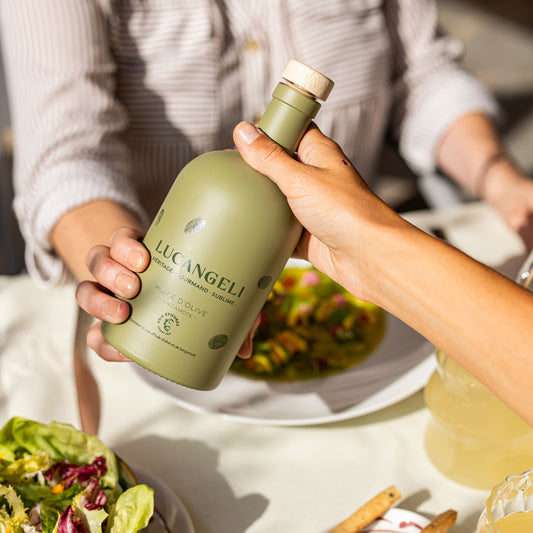
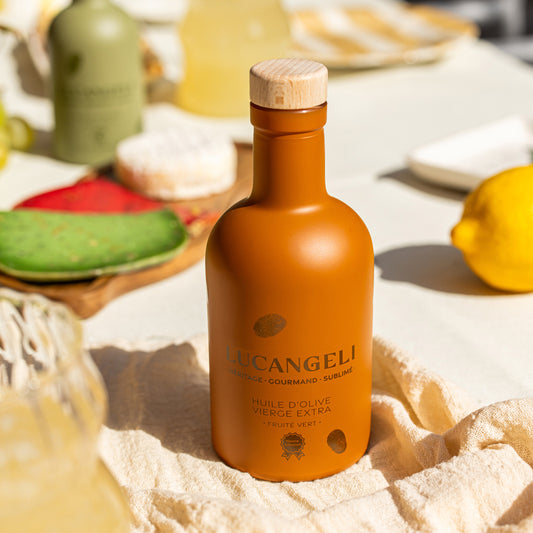
Olive oil with a green fruity profile is obtained from olives harvested at the beginning of the season, before their full ripeness. It is characterized by intense and vegetal aromas: fresh grass, artichoke, green pepper, sometimes a slight bitterness and a peppery sensation at the end of the mouth. It is an oil with character, which expresses itself fully raw.
It is ideal for seasoning mixed salads, raw or grilled vegetables, carpaccios, fresh cheeses, or bruschettas. In summer, it brings immediate freshness to all cold preparations. Organic green fruity olive oil from Calabria perfectly illustrates this profile: hand-harvested on the Calabrian hills, it offers a rare aromatic intensity.
Ripe fruity: sweetness and roundness in the mouth
The ripe fruity profile corresponds to olives harvested at full maturity, when they turn black. The resulting oil is softer, rounder, with aromas of fresh almond, butter, sometimes red fruits or flowers. Bitterness is very discreet, the texture silky.
It is the versatile oil par excellence: it is suitable for both gentle cooking and seasoning delicate dishes. It wonderfully accompanies fish, pasta, roasted vegetables, white meats, or even olive oil-based desserts. Organic ripe fruity olive oil is a reference for those looking for an accessible and refined Italian olive oil for everyday use.

Which oil for which dish in summer?
In summer cooking, both profiles have their place:
- Tomato salad, mozzarella, raw vegetables → green fruity, for its intensity and freshness.
- Cold pasta, rice, legumes → ripe fruity, for its sweetness and roundness.
- Grilled fish, white meat → ripe fruity, so as not to mask delicate flavors.
- Bruschetta, tartines, antipasti → green fruity or bergamot olive oil, for an original aromatic touch.
- Everyday cooking, large consumption → the 5L organic olive oil container, practical and economical.
For those who wish to explore both profiles before choosing, the organic olive oil trio allows you to discover the different aromatic expressions of the same Calabrian oil.
How to properly store your olive oil and use it daily
Choosing a good olive oil is not enough: it must also be stored correctly to preserve its aromas and taste quality over time.
Storage rules
Olive oil is sensitive to three factors: light, heat, and oxidation. To store it in good conditions:
- Store it in a closed cupboard, away from direct light and heat sources (oven, stovetops).
- Prefer tinted glass bottles or stainless steel containers over transparent ones.
- Close the cap tightly after each use.
- Consume it within 3 to 4 months of opening to fully enjoy its aromas.
- Check the harvest date on the label: olive oil is ideally consumed within 18 months of harvest.
For regular family consumption or professional cooking, the 1L ripe fruity olive oil offers a good balance between practicality and quality.
Olive oil in summer cooking
In summer, olive oil is everywhere: in marinades for grilling, light vinaigrettes, cold sauces, antipasti dips, or even frozen desserts. It advantageously replaces butter in many preparations and brings an aromatic dimension that neutral oils cannot offer.
Some practical uses for the season:
- Express marinade: olive oil + garlic + fresh herbs + lemon juice, for meats and vegetables before cooking.
- Mediterranean vinaigrette: green fruity olive oil + balsamic vinegar + mustard + salt.
- Finishing on the plate: a drizzle of ripe fruity olive oil on a hot dish just before serving, to reveal the aromas.
- Bruschetta, tartines, antipasti: bergamot olive oil on grilled bread, with sun-dried tomatoes or olives.
Extra virgin olive oil is a living product, whose quality is read as much on the label as in the mouth. Taking the time to choose it means ensuring that every dish — from the simplest to the most elaborate — is sublimated.





 lucangeli.it