


Which olive oil for a zucchini carpaccio?
Zucchini carpaccio with olive oil is the ultimate no-cook Italian summer starter: ten minutes of preparation, thinly sliced raw zucchini, and carefully selected olive oil to bring out all the freshness of the vegetable. The answer is simple: green fruity. But the choice of variety and the timing of addition make all the difference.
Green fruity or ripe fruity: what's the difference for raw zucchini
An organic green fruity olive oil is obtained from olives harvested early, still green or just turning purple. It presents a frank attack, a clear bitterness, and a pungency at the end of the palate. For raw zucchini, whose flesh is sweet, watery, and slightly sugary, this contrast is exactly what's needed: the oil awakens the vegetable without overpowering it.
An oil with a ripe fruity profile, on the other hand, is rounder, softer, with notes of ripe fruit and almond. It is better suited for cooked vegetables, white meats, or desserts. On raw zucchini, it tends to fade behind the sweetness of the vegetable and make the overall dish a bit flat.
The Carolea variety: the Calabrian asset

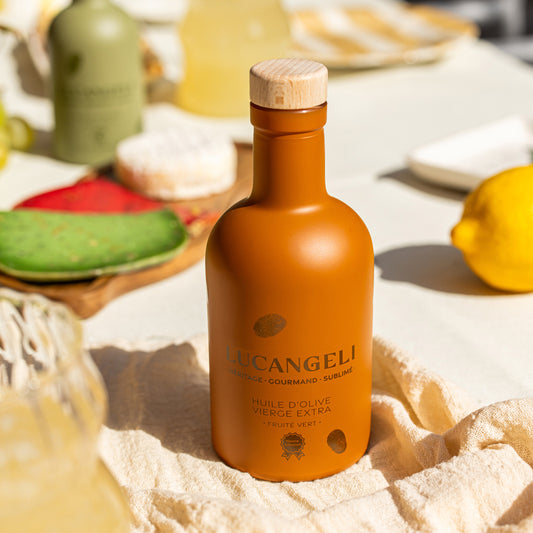
The Carolea variety, grown mainly in Calabria, is harvested between mid-October and mid-November at an early stage of ripeness—olives still green to purplish. This early harvest gives it a pronounced pungency and bitterness, characteristics that create a striking contrast with the natural sweetness of raw zucchini. This is precisely the profile found in the organic olive oils from Calabria selected by Lucangeli.
For professional chefs who wish to integrate this type of oil into their menu, the professionals section allows for bulk orders adapted to the restaurant industry.
Zucchini carpaccio with olive oil recipe
Ingredients for 4 people
- 3 firm, young zucchinis (about 600g, less than 20 cm long)
- 4 tablespoons of organic green fruity olive oil, to be added in two stages
- 60g block of Parmesan, for shavings
- 1 yellow lemon, juice and zest
- 1 pinch of sea salt
- Freshly ground black pepper
- 1 small handful of fresh basil
- 30g pine nuts, dry-toasted
Step-by-step preparation
- Wash the zucchini without peeling. Trim the ends.
- Slice lengthwise with a mandoline set to 1 to 2 mm, to obtain wide ribbons. Otherwise, use a vegetable peeler.
- Arrange the slices in slightly overlapping layers on plates or a large platter.
- Prepare the marinade: mix the lemon juice, zest, 2 tablespoons of olive oil, sea salt, and pepper. Pour over the zucchini.
- Let rest for 15 to 20 minutes at room temperature. Beyond 30 minutes, the zucchini softens.
- Meanwhile, dry-toast the pine nuts in a pan over medium heat, stirring for 2 to 3 minutes. Set aside.
- Prepare Parmesan shavings with a peeler from a block at room temperature.
- Just before serving, add the shavings, pine nuts, chopped basil, and drizzle with the remaining 2 tablespoons of olive oil. It is this second addition of oil, raw and as a finishing touch, that gives the dish its full aromatic intensity.
Why add oil in two stages?
The first dose of oil goes into the marinade: it emulsifies with the lemon and slightly penetrates the zucchini flesh during resting. The second dose, poured just before serving, remains on the surface and releases all its aromas to the nose and palate from the first bite. This two-stage approach is the difference between a bland carpaccio and one with character.
To vary the pleasures, a few pitted black olives in extra virgin olive oil arranged on the dish provide an umami note and an additional texture. A spoonful of DOP basil pesto as a base, under the zucchini slices, transforms the starter into a more substantial dish.
Variations and pairings to go further
The version with yellow and green zucchini

Alternating green and yellow zucchini slices creates a visually very elegant result. Both varieties have a similar taste profile, but yellow zucchini is slightly sweeter and less watery. The green fruity oil expresses itself even better.
The version with burrata
Placing a burrata in the center of the dish, surrounded by marinated zucchini slices, transforms the starter into a light main course. Drizzle the olive oil over the burrata just before serving. The 500ml organic olive oil discovery duo allows you to test both profiles—green fruity and ripe fruity—to find the one that best suits each use.
The aperitif version
Cut the zucchini into thin rounds rather than ribbons, arrange them on a board with olives, a few Parmesan shavings, and a bowl of olive oil for dipping. The 200ml olive oil trio is ideal for offering several profiles at the table and letting everyone choose.
Frequently asked questions
Can raw zucchini be eaten in carpaccio?
Yes, zucchini can be perfectly eaten raw, provided you choose young and firm zucchinis, less than 20 cm long. Large, overripe zucchinis can have a slight bitterness when raw and an unpleasantly spongy texture. The short marinade with lemon and olive oil slightly tenderizes the slices without cooking them.
Which olive oil to choose for a raw zucchini carpaccio?
A green fruity olive oil, obtained from early-harvested olives, is the best choice. Its bitterness and pungency contrast with the sweetness of raw zucchini and give the dish depth. A ripe fruity oil, which is rounder and softer, fades behind the vegetable and is better suited for cooked preparations.
How long should zucchini be marinated for carpaccio?
15 to 20 minutes is enough to slightly tenderize the slices and develop the aromas. Beyond 30 minutes, the zucchini starts to release water and loses its crunchy texture. For a carpaccio served immediately, 10 minutes of marinating already makes a noticeable difference.



 lucangeli.it