


Why September minestrone is different from all the others
In Italy, minestrone isn't a fixed recipe. It's a seasonal logic: you use what you have, in the proportions that feel right, with whatever olive oil is within reach. But September sets its own rules, and they're generous.
Choosing the vegetables is a question of season
In late September, the market offers an exceptional window: field-grown courgettes and tomatoes are still there, green beans are finishing their season, peppers reach full ripeness, and autumn's first carrots and celery stalks arrive. It's this combination — summer and autumn at the same time — that makes September minestrone richer than July's and livelier than October's.
For this recipe, you'll use:
- 2 medium courgettes, diced
- 2 very ripe tomatoes, deseeded and crushed
- 1 red pepper, finely diced
- 150 g green beans, trimmed and cut into 3 cm lengths
- 2 carrots, sliced into rounds
- 2 celery stalks, thinly sliced
- 1 yellow onion, finely chopped
- 2 garlic cloves, crushed
- 150 g cooked white beans (cannellini, tinned or cooked the day before)
- 80 g small pasta (ditali or pasta mista)
- 1.2 L homemade or no-added-salt vegetable stock
- Salt, black pepper
- A few fresh basil leaves (end of season)
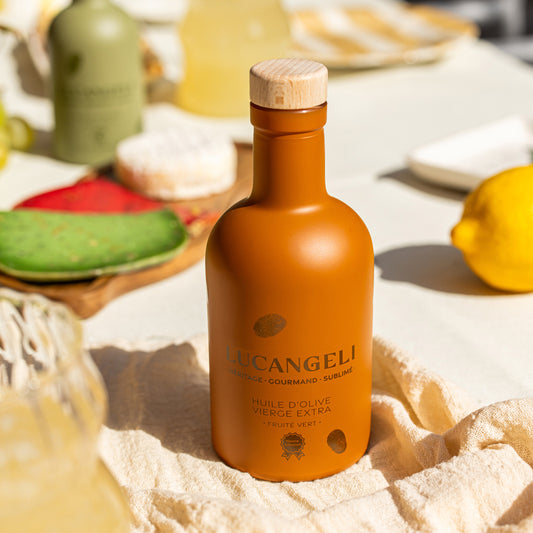
- Organic green fruity olive oil to finish — allow 1 tablespoon per bowl
Pulses — cannellini beans here — are the soul of Calabrian minestrone. They thicken the broth naturally when you crush a few of them against the side of the pot during cooking.
Green fruity olive oil: for finishing, not for cooking
This is the point most recipes never mention. In southern Italian minestrone, olive oil comes in twice: first at the start of the recipe, to soften the onion and the garlic — any good-quality oil will do there — and a second time to finish, raw, over the hot bowl, just before serving.
It's this second use that deserves all your attention. A green fruity olive oil, pressed from olives harvested early in the season — often from varieties like Carolea or Frantoio — develops aromas of fresh grass and raw artichoke on contact with the steam from the broth, along with a light peppery bite on the finish. That contrast between the mildness of the broth and the pungency of the oil is exactly what Calabrian cooks are after. A ripe fruity oil, rounder, doesn't produce the same effect: it blends in but it doesn't cut through.
The exact dose for this result: 1 generous tablespoon per bowl, poured in a circular drizzle over the surface, just before bringing it to the table.
---
The Calabrian minestrone recipe, step by step

Preparation (15 minutes) and cooking (35 minutes)
Heat 2 tablespoons of olive oil in a large pot over medium heat. Soften the onion and the garlic for 3 to 4 minutes, until translucent but not coloured.
Add the carrots and the celery and sweat them for 3 minutes, stirring. Then stir in the pepper and the courgette, followed by the crushed tomatoes. Mix and let it all cook down for 5 minutes over high heat to reduce slightly.
Pour in the hot vegetable stock, bring to the boil, then lower the heat. Add the green beans and the white beans. Leave to simmer for 15 minutes.
Halfway through cooking, crush 3 to 4 spoonfuls of white beans against the side of the pot: this thickens the broth without adding any fat or flour.
Add the pasta and cook it for the time given on the packet, minus 1 minute (it carries on cooking off the heat). Adjust the seasoning and add the torn basil leaves.
Finishing with olive oil

Serve immediately in warmed soup bowls. Drizzle one tablespoon of organic green fruity olive oil over each bowl, without stirring it in. It's this raw, uncooked drizzle that brings all the aromatic complexity. Don't skip this step.
If you want to build yourself a small cellar of two complementary oils — a green fruity one for sharp finishes and a ripe fruity one for gentler preparations — the discovery duo lets you compare the two profiles in 500 ml each.
---
Variations, tips and mistakes to avoid
The southern variations
Calabrian minestrone allows for several variations depending on the family and the season:
The most characteristic Calabrian variation remains minestrone with a crouton and green fruity oil: bread soaked in broth and raw oil gives a texture and a depth no other soup can match.
Common mistakes to avoid
Don't heat the finishing oil. This is the most widespread mistake. If you pour the oil in and then reheat the soup, all the volatile aromas disappear. Green fruity oil is always poured raw, at the last moment, over the bowl already served.
Overcooking the vegetables. Southern minestrone isn't a creamy soup. The vegetables should keep a bit of bite. Watch the pasta in particular: it needs to stay al dente.
Forgetting the garlic. In the Calabrian tradition, garlic isn't optional. It's what builds the base of the flavour. If you want a milder taste, crush it rather than chopping it finely — it will perfume the dish without dominating it.
Neglecting the pulses. Cannellini beans crushed during cooking thicken the broth and give it body. Without that step, the result stays light, closer to a thin soup.
If you cook regularly for several people, or you're looking to keep a large quantity of quality oil within reach, the olive oil trio lets you test the three profiles — green fruity, ripe fruity — on the same recipes to find your favourite.
For restaurateurs and hospitality professionals who want to add this recipe to their autumn menu or work on their extra virgin olive oil sourcing, the professionals area is available, with the formats and terms suited to each establishment.
---
Frequently asked questions
Can you make the minestrone the day before?
Yes, and it's even recommended: the soup is better reheated the next day, once the flavours have come together. The finishing olive oil, on the other hand, is always poured at the moment of serving, never during storage. If the pasta has swollen too much, take it out of the broth before storing and add fresh pasta when you reheat.
Can you use a ripe fruity olive oil instead of a green fruity one?
Yes, but the result is different. Ripe fruity oil, rounder and less pungent, blends further into the broth rather than cutting through it. It's a gentler option, ideal if you're not used to the peppery bite of green fruity oil. For an authentic Calabrian minestrone, green fruity oil is the one traditionally used to finish — its pungency and its grassy aromas are precisely what define this dish.
How can you tell whether a green fruity oil is good quality before buying it?
Three simple indicators: the words "extra virgin" are mandatory to guarantee that free acidity is below 0.8% and that the oil has passed an organoleptic panel test. The word "organic" guarantees that no synthetic treatments were used on the olive trees. Finally, a harvest date visible on the label — and not just a best-before date — is the sign of a producer who stands behind the traceability of their oil. Those three elements together rule out the majority of the industrial oils on the market.



 lucangeli.it