


Calabrian bergamot: an uncommon citrus
Bergamot (*Citrus bergamia*) grows almost exclusively on a coastal strip in the province of Reggio Calabria, between the city and Locri, on the Ionian Sea. This territory accounts for most of the world's production. The fruit itself isn't eaten fresh: its peel and juice are intensely bitter, but they carry aromas of rare complexity — floral, slightly resinous, with a bright acidity that recalls both lemon and bitter orange.
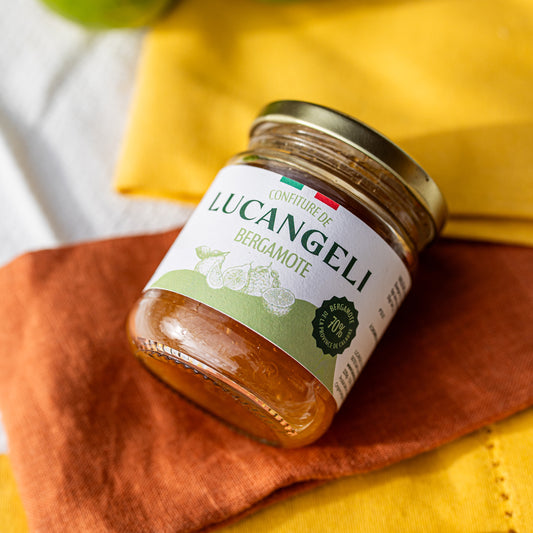
Turned into artisanal jam, bergamot loses much of its bitterness while keeping its aromatic signature. It's exactly this profile — sweet up front, complex and slightly bitter on the finish — that makes it a cooking ingredient in its own right, far beyond breakfast.
The bergamot harvest begins in November in Calabria, but artisanal jams are available all year round from the previous season's production. October is the ideal moment to bring this condiment into your autumn cooking, even before the fresh fruit arrives.
If you want to go further into the whole range of bergamot products available, the bergamot spread — Épicures d'Or 2024 and the organic pure bergamot juice round it out with very different profiles.
7 ways to use bergamot jam in autumn cooking

With cheese
It's the most obvious pairing and yet the most underused. Bergamot jam works remarkably well with:
- Blue cheeses (gorgonzola, roquefort): the bergamot's residual bitterness balances the salt and the creaminess of the cheese.
- Fresh or aged goat cheeses: the bergamot's floral note extends the lactic freshness.
- Aged hard cheeses (comté, pecorino stagionato): the jam's sweetness contrasts with the power of the aged cheese.
A teaspoon set straight on the cheese board, with no attempt to mix it in, is enough. Serve it alongside the hazelnut spread too for a complete sweet-and-savoury board.
In an autumn vinaigrette
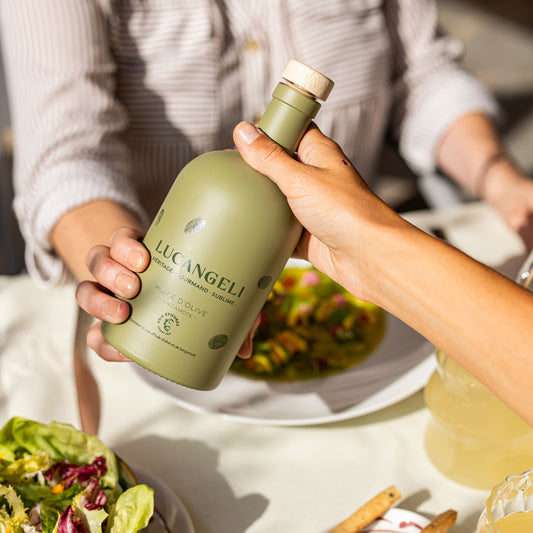
Dilute a teaspoon of bergamot jam into a vinaigrette made with balsamic vinegar from the Silver collection and ripe-fruity olive oil. The result is a lightly sweet, tangy and fragrant dressing, perfect for endive, radicchio or rocket salads, all very much in season in October.
The ratio is simple: one part jam, two parts balsamic vinegar, four parts olive oil. Whisk it all together and adjust to your taste.
As a glaze for white meat and poultry
Bergamot jam behaves like a natural gastrique on white meats. For a roast chicken or a veal chop:
- Mix two tablespoons of bergamot jam with one tablespoon of water and a pinch of salt.
- Brush it onto the meat at the end of cooking, five to ten minutes before taking it out of the oven.
- Let it caramelise lightly: the skin turns golden and the meat takes on an amber glaze with a floral scent.
This works especially well on guinea fowl and quail, two autumn birds whose natural bitterness answers that of bergamot.
On an autumn bruschetta
Keep it simple: a slice of grilled country bread, rubbed with garlic, spread with a thin layer of bergamot jam, and topped with a thin slice of Italian prosciutto crudo or bresaola. The bergamot's acidity cuts through the saltiness of the cured meat.
Plant-based version: swap the cured meat for a good black olive tapenade and a few walnuts. The combination is unexpected and convincing.
In autumn baking
Bergamot jam slots easily into home baking. A few concrete ideas:
- Use it instead of orange marmalade in a citrus loaf cake: the aromatic depth is clearly superior.
- Stir a spoonful into the almond cream of a tart to add a floral note.
- Use it as a filling in a roll cake or a layer cake, paired with a cream made from almond spread: almond and bergamot have a natural aromatic affinity.
The quantities are small: one or two tablespoons are enough to perfume a whole cake without taking over.
With dark chocolate
The bergamot-chocolate pairing is a classic in confectionery (Earl Grey tea made it popular), but it stays rare in home cooking. Melt 70% dark chocolate in a bain-marie, spread it over a sheet of baking paper, drop about ten dots of bergamot jam on the surface and let it set in the fridge. You get a kind of mendiant scented with Calabrian citrus, very simple and very effective.
This works just as well on a platter of petits fours as it does as an edible gift. The Solaire gift box — juice, olive oil and bergamot spreads — gives an idea of what the full range can offer in terms of aromatic experience.
Alongside a charcuterie board
On an autumn antipasti board, bergamot jam is a far better choice than gherkins or industrial chutneys. It brings a citrus freshness that cleans the palate between two slices of fatty cured meat. Pair it with the pitted black olives and the sun-dried tomato spread to build a complete board with flavours from southern Italy.
How to measure out and store bergamot jam

Bergamot jam has a higher aromatic intensity than most fruit jams. In cooking, always start with a small amount — a teaspoon — and adjust to the result you want. Here are a few practical benchmarks:
- Alongside cheese: one teaspoon per serving, served next to it and not mixed in.
- As a glaze or marinade: one to two tablespoons for four servings.
- In a vinaigrette: one teaspoon for two servings.
- In baking: one to two tablespoons for a cake serving six to eight.
Once opened, keep the jar in the fridge and use it within four weeks. Bergamot oxidises quickly in open air and its aromas fade.
To discover the bergamot jam on the site, you can also find it featured in the professionals section if you're looking for formats suited to a restaurant service or a hotel breakfast spread.
Frequently asked questions about bergamot jam in cooking
Is bergamot jam very bitter to eat?
No. Cooking it with sugar considerably softens the natural bitterness of fresh bergamot. A light bitter note stays on the finish, but that's precisely what sets it apart from a classic orange marmalade and makes it interesting in cooking.
Can you use bergamot jam instead of the juice in a recipe?
Not directly, because the textures and the concentrations are different. You can, however, dilute a tablespoon of jam in a little hot water to get a bergamot syrup you can use like the juice. For cooking that needs clean acidity, the organic pure bergamot juice is a better fit.
How do you recognise a good artisanal bergamot jam?
The ingredient list should be short: bergamot, sugar, sometimes a little lemon juice. The absence of colourings, industrial gelling agents or artificial flavourings is a good indicator. The colour should be golden to amber, never too translucent or too dark. The scent when you open the jar should be immediately recognisable: floral, slightly resinous, distinct from any other citrus.




 lucangeli.it