

When you sit down at a restaurant, it's common to see a bottle of olive oil gracing the table. This often-overlooked element can, however, be a real asset for a establishment's identity and customer experience. Discover how the olive oil bottle can become a symbol of your establishment and offer a unique experience to your customers.
The olive oil bottle: a front-of-house service not to be neglected

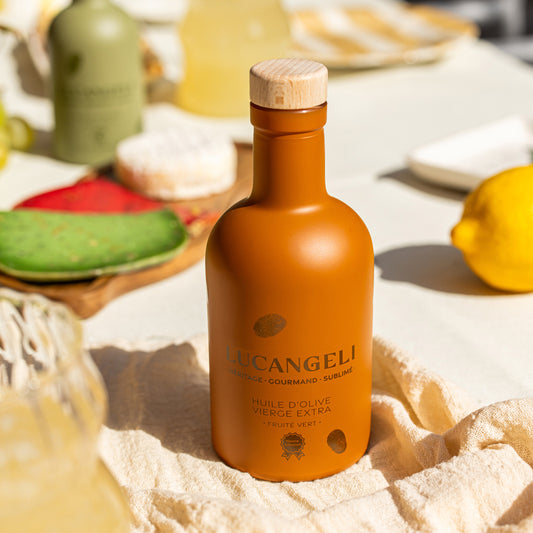
In many restaurants, the olive oil bottle is simply placed on the table, without much emphasis. Yet, serving oil in the dining room can be a real experience for customers. Offering an elegant glass bottle, with a personalized label bearing the establishment's name, provides a more refined service and highlights the quality and origin of the olive oil. For establishments looking to go further, a 200 ml organic green fruity olive oil or a 200 ml organic ripe fruity olive oil provides an immediately identifiable taste signature.
Choosing the right oil for front-of-house service
The choice of olive oil for front-of-house service deserves special attention. An extra virgin oil, from an identified Italian variety, tells a story that your customers can make their own. Carolea, an emblematic Calabrian variety, for example, produces a mild ripe fruity oil, ideal for accompanying bread without overpowering the flavors. For cooking and bulk preparations, the 5 L container for cooking allows for cost management without compromising on quality.
Careful presentation on the table
The bottle on the table is not a detail. It is visible as soon as the customer is seated, even before the menu is placed. An opaque or tinted glass bottle protects the oil from light and indicates attention to preservation. A non-drip spout prevents spills on the tablecloth and facilitates dosing. These two points, often overlooked in mid-range establishments, are systematically present in Michelin-starred restaurants.
The bread and oil ritual: creating a memorable moment

The bread and oil ritual is an Italian culinary tradition dating back centuries. It involves dipping bread in olive oil before tasting it. Reimagining this ritual in the dining room, with a carefully chosen bottle and quality oil, creates a strong taste memory that your customers will associate with your establishment. This moment, which precedes the appetizer, sets the tone for the entire meal.
Accompanying the oil with a simple presentation
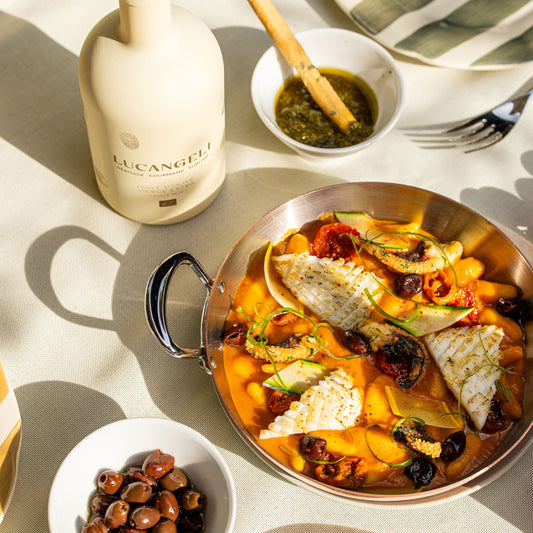
The bread and oil ritual benefits from being accompanied by one or two complementary elements. A black olive tapenade or a few pitted black olives in olive oil placed in a small dish are enough to transform an ordinary amuse-bouche into an Italian-style welcome moment. The material cost remains controlled, and the effect on the perception of the establishment is immediate.
Training the front-of-house team in oil service
Serving oil in the dining room is not to be improvised. A team member capable of explaining the origin of the oil, its variety, and its taste profile in a few sentences transforms a mundane gesture into a sales act. This training does not require long hours: a clear product sheet, given to each new employee, is sufficient. Consult the professionals' area to access resources dedicated to restaurant teams.
The personalized bottle: a brand identity tool
The olive oil bottle on the table can become a real identity tool for your establishment. By opting for a personalized bottle, you create a strong link between your brand and your customers. Personalization is available starting from 24 bottles, with a design created directly by the establishment on the online configurator. The personalization lead time needs to be anticipated: allow several weeks between design validation and delivery. It's better to start the process well in advance of an opening or a dining room renovation.
What personalization says about your establishment
A bottle bearing the name or logo of your restaurant sends a clear signal to your customers: you have chosen your oil, you stand by it, you are proud of it. It's exactly the same message as a carefully curated wine list or thoughtfully selected tableware. The personalized bottle is not a gadget; it's an editorial statement about your gastronomic identity.
Three establishments, three uses of the personalized bottle
- The gourmet restaurant: a sober bottle, black and gold label, placed on each table before service. The oil is presented orally by the waiter along with the bread.
- The four-star hotel: the personalized bottle is present at breakfast and in the hotel restaurant. It reinforces the consistency of the visual identity across all touchpoints.
- The neighborhood trattoria: a simple bottle, label illustrated by a local graphic designer, which tells the story of the house. Customers photograph it and share it.
For a professional project or a large volume, our personalization service is available to study your request and assist you in choosing the format and design.
Standard bottle or personalized bottle: what really changes
Here are the six criteria to compare before making your choice:
- Visual identity: neutral for a standard bottle, strong and in the establishment's name for a personalized bottle.
- Minimum order: none for a standard bottle, 24 bottles for a personalized bottle.
- Lead time: immediate for a standard bottle, several weeks for a personalized bottle.
- Impact on customer experience: limited for a standard bottle, high for a personalized bottle.
- Cost: low for a standard bottle, moderate and amortized over time for a personalized bottle.
- Signal sent to the customer: functional for a standard bottle, gastronomic and committed for a personalized bottle.
Frequently Asked Questions
How can I place a personalized olive oil bottle on my restaurant tables?
The process is simple: choose your oil, create your design on the online configurator, validate your order starting from 24 bottles, and anticipate a production lead time of several weeks. The sales department will assist you with custom projects or large volumes.
Which olive oil should I choose for table service in a restaurant?
Opt for an extra virgin oil of identified origin, in a small capacity (200 to 500 ml) to ensure freshness and stock rotation. A ripe fruity oil suits most tables; a green fruity oil offers more character and is suitable for Mediterranean or plant-based cuisines.
Does having an olive oil bottle on the table truly improve the customer experience?
Yes, provided it is accompanied by a minimum of presentation: quality oil, a clean pourer, good bread, and a server capable of saying a few words about it. This simple ritual, rooted in Italian tradition, is one of the most accessible customer experience levers in catering.
Conclusion
The olive oil bottle on the restaurant table is not an insignificant accessory. Well-chosen, well-presented, and, even better, personalized with your establishment's colors, it becomes a complete identity tool. It tells the story of your cuisine, creates a welcoming ritual, and justifies a high-end positioning without additional front-of-house effort. It is one of the most profitable investments in terms of customer experience, for a controlled material cost.



 lucangeli.it