


In a professional kitchen, olive oil is not a single ingredient: it's at least two distinct products, with two roles, two formats, and two moments of use. Knowing how to distinguish, measure, and source them correctly is one of the most profitable decisions you can make for your menu.
Two oils in your kitchen, not just one
The most common mistake in restaurants is using the same oil for everything: pan-frying, oven roasting, and plate finishing. This single choice is either an economic waste or a culinary impoverishment, depending on how you apply it.
Cooking oil: criteria and formats
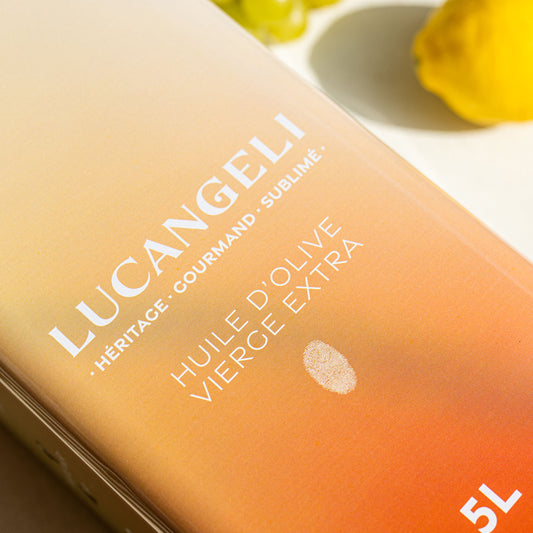
For high-heat cooking, sautéing, 180°C oven roasting, and long marinades, you need a stable, neutral-tasting extra virgin olive oil available in large volumes. The 5-liter organic olive oil container is the go-to format for this purpose: it limits handling, reduces cost per portion, and easily integrates into a stock rotation system.
The ingredient cost per portion for standard cooking is calculated as follows: a 5 L container yields approximately 400 portions of 12 ml (one tablespoon). As an indication, quality extra virgin olive oil in a professional container costs between €0.03 and €0.06 per cooking portion, depending on the volume ordered and replenishment frequency.
For this purpose, traceability remains important: certified organic extra virgin olive oil from a single origin allows you to answer your customers' questions about provenance and enhance your menu without additional communication costs.
Finishing oil: the touch that makes a difference
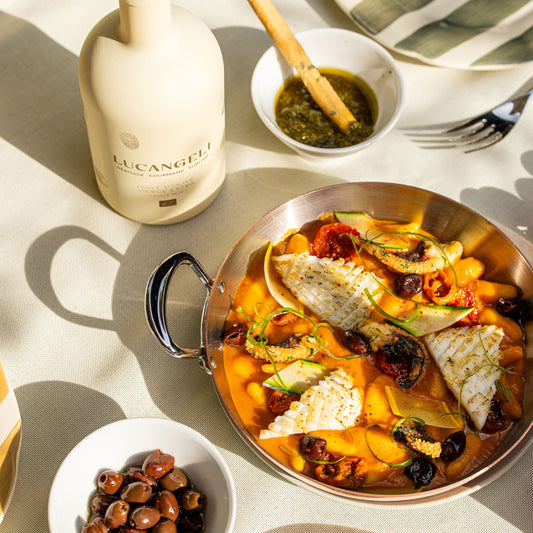
Finishing is when olive oil fully expresses its character. A drizzle poured onto the plate, off the heat, on a perfectly seared fish, a velvety legume soup, or sliced red meat: this is where the variety, origin, and vintage become perceptible to the diner.
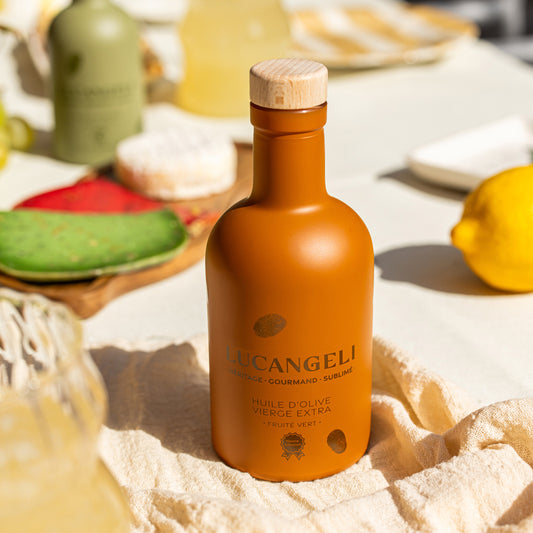
For this purpose, the 200 ml organic green fruity olive oil is the appropriate format: small capacity, fast rotation, preserved quality after opening. An opened bottle in service should be consumed within four to six weeks to maintain its organoleptic qualities.
The finishing dose in gourmet restaurants is between 5 and 8 ml per plate. At this dosage, a 200 ml bottle covers between 25 and 40 covers. This is a controllable ingredient cost, with an immediate taste and visual impact.
Managing rotation and preventing oxidation
Oxidation is the primary enemy of olive oil in professional kitchens. A poorly re-sealed bottle, exposed to light or stored near a heat source, loses its qualities within a few days. The basic rules are simple:
- Store containers and bottles in a cool place, away from direct light.
- Never transfer to a transparent container without an airtight lid.
- Date the opening of each finishing bottle.
- Prefer several small bottles opened successively rather than one large bottle that has been open for too long.
For high-volume establishments, the jeroboam of organic extra virgin olive oil (3 liters) represents an interesting intermediate format: it is suitable for table service, presentation on tables, or the finishing station of a medium-sized kitchen brigade, with sufficient rotation to guarantee freshness.
Choosing the variety according to the dish: a professional pairing guide

Not all extra virgin olive oils are alike. The olive variety, harvest date, and geographical origin determine the aromatic profile, bitterness intensity, and pungency level. In gourmet cooking, this choice is as precise as that of a vinegar or a stock.
Coratina: power and character for bold dishes
Coratina is a Calabrian variety with an intense green fruitiness, distinct bitterness, and pronounced pungency at the finish. Its aromatic profile evokes raw artichoke, fresh grass, and sometimes green tomato. It is a finishing oil for dishes that can carry it: grilled red meats, pureed legumes, aged cheeses, beef carpaccios.
Used cold, as a final drizzle, Coratina adds a taste tension that enhances rich or fatty preparations. It is not suitable for delicate fish or white vegetables, where its pungency would overpower the main ingredient.
Carolea: sweetness and versatility for delicate preparations
Carolea is the other major variety from Calabria. Its profile is the opposite of Coratina: sweet ripe fruitiness, light pungency, discreet bitterness. It evokes ripe apple, fresh almond, and a slight hint of butter. It is the universal finishing oil, one that you can use on a sea bass fillet, a cauliflower cream, a risotto, or a citrus dessert without risking unbalancing the plate.
The 200 ml organic ripe fruity olive oil expresses this Carolea profile: round, accessible, suitable for a wide range of preparations. For chefs who wish to offer two distinct finishing oils to their brigade, the 200 ml olive oil trio allows them to test the profiles before defining the establishment's permanent references.
Variety and usage correspondence in restaurants
Here are the three profiles to remember for organizing your supply:
- Coratina (intense green fruitiness, artichoke, grass, pronounced pungency): ideal as a finish for red meats, legumes, aged cheeses, and carpaccio. Recommended format: 200 ml bottle.
- Carolea (sweet ripe fruitiness, apple, almond, light pungency): ideal as a finish for fish, white vegetables, risotto, and citrus desserts. Recommended format: 200 ml bottle.
- Organic blend (balanced and versatile profile, moderate pungency): recommended for cooking, marinades, and hot sauces. Recommended format: 5 L container.
Building a signature dish around olive oil
A signature dish with olive oil is not built by adding a drizzle of oil to an existing plate. It is built by starting with the variety, its aromatic profile, and choosing the other components of the dish to resonate with it.
The three-step method
The process is as follows:
- Choose the variety first. Taste the oil alone, at room temperature, in a spoon. Identify the dominant notes: herbaceous, fruity, spicy, buttery. This profile will guide the choice of proteins, vegetables, and sauces.
- Define the moment of use. Is the oil used for cooking, emulsifying, finishing, or table presentation? Each moment calls for a different intensity and a different dosage.
- Calibrate the dose per plate. In gastronomy, less is more. A well-placed drizzle of 5 to 8 ml, poured in a spiral or a line, has more impact than a generous pour that drowns out other flavors.
Olive oil for table presentation
An olive oil bottle placed on the table sends a strong signal to the diner: that of the establishment's quality, attention to detail, and the origin of the products served. A generic bottle tells no story. An identified bottle, with a named variety and precise origin, becomes an element of the meal's narrative.
For establishments wishing to go further, the customized bottle in the establishment's colors is an option available from 24 bottles, with a design created by the establishment. This is a communication investment that pays off over the duration of the season.
Sourcing and supplier relationship
The regularity of supply is as important as product quality. A signature dish built on a specific oil cannot change its reference with each reorder. Before featuring an oil on your menu, check annual availability, delivery times, and minimum order conditions.
The dedicated area for restaurant professionals allows you to contact sales for regular supply, volume negotiation, and anticipation of peak demand periods, especially at year-end.
Frequently Asked Questions
Which olive oil to choose for cooking in a restaurant?
For medium to high-heat cooking, choose an extra virgin olive oil in a large format (5 L container), from a single origin for traceability. Avoid using your finishing oil for cooking: it's an economic and gustatory waste. Reserve quality bottles for finishing and service.
How to calculate the ingredient cost of olive oil per portion in a restaurant?
Allow between 5 and 8 ml per plate for finishing, and between 10 and 15 ml for pan-frying. A 5 L container covers approximately 330 to 500 finishing portions. Divide the purchase price of the container by the number of portions to get your unit cost. This calculation must be included in your technical sheet from the dish's conception.
Can two different olive oils be offered for table service?
Yes, and this is a growing practice in gourmet restaurants. Offering an intense green fruity oil (Coratina type) and a sweet ripe fruity oil (Carolea type) allows diners to choose according to their preferences, and the chef to recommend the pairing according to the dish. It's also a sales and differentiation argument that enhances the menu without significant additional cost.





 lucangeli.it