

The Aperitivo, a True Italian Ritual
In Italy, the aperitivo is much more than just a pre-dinner drink. It's a moment of the day deeply rooted in Italian culture, usually between 6 PM and 8 PM, bringing together family and friends around a drink and a table laden with small bites to share. This ritual, practiced from north to south of the peninsula, varies by region but always relies on the same values: conviviality, quality products, and the pleasure of taking one's time.
The Art of Taking Time
The Italian aperitivo isn't just about quickly nibbling on a few appetizers. It's a true moment of pause, where one settles in, chats, and savors. The antipasti board placed in the center of the table becomes the pretext for conversation. Each product is tasted, commented on, and shared. It's this deliberate slowness, this care taken in selecting the dishes, that distinguishes the aperitivo from a simple aperitif.
What Distinguishes the Aperitivo from the Classic Aperitif
Unlike the classic aperitif, often limited to a few chips and peanuts, the Italian aperitivo is characterized by the diversity and generosity of its table. Marinated olives, tapenades, aged cheeses, grilled vegetables, fine cured meats, artisanal spreads: everything is designed to offer a complete palette of flavors. The quality of the products takes precedence over quantity. A set of 4 artisanal tapenades placed on the table is enough to transform an ordinary aperitif into a memorable moment.
The Essentials for a Successful Antipasti Board
Composing a successful antipasti board requires a bit of method. It's not about randomly piling up products, but about building a balance between flavors, textures, and colors. Here are the essential elements to bring together.
The Basics: Olives, Tapenades, and Spreads
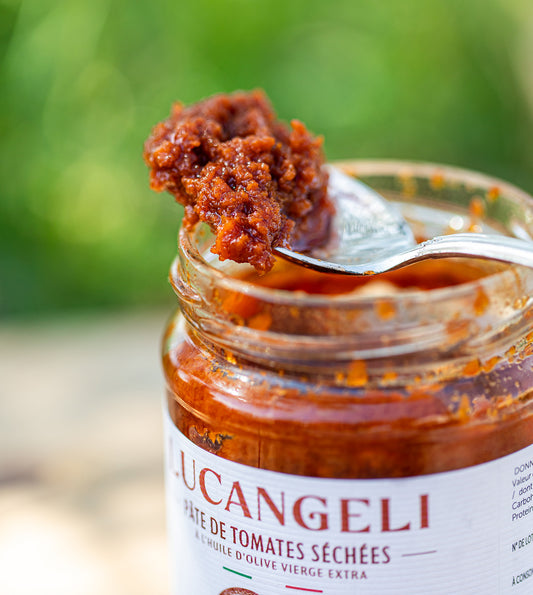
Olives are the backbone of any antipasti board. Choose quality ones, preserved in good olive oil. Pitted black olives in extra virgin olive oil are ideal: melting, flavorful, they complement all the other elements of the board. Alongside the olives, tapenades and spreads add depth. The black olive tapenade, intense and velvety, pairs perfectly with toasted bread or grissini. The sun-dried tomato tapenade, milder and slightly sweet, brings a sunny Mediterranean note. For lovers of herbaceous freshness, DOP basil pesto is a must-have: prepared with DOP Genoese basil and olive oil, it enhances both toasts and raw vegetables.
Condiments That Make All the Difference
Beyond the basics, it's the condiments that give character to an antipasti board. Capers, marinated chilies, artichokes in oil, candied peppers: each addition enriches the taste palette. The important thing is to vary the intensities of sweet, savory, and tangy so that each bite is a discovery. Also consider offering different bases: grilled country bread, grissini, crackers, bruschetta. These elements allow you to modulate combinations and invite guests to create their own bites.
How to Arrange and Present Your Board
The presentation of an antipasti board plays an important role in the overall experience. Use a large wooden board or slate as a base. First, arrange the larger elements (cheeses, cured meats, small bowls of tapenades), then fill the spaces with olives, marinated vegetables, and fresh herbs. Play with colors: the red of sun-dried tomatoes, the green of pesto, the black of olives, the white of cheeses. A well-arranged board entices even before being tasted. Provide small spoons for spreads and toothpicks for olives.
Enhance Your Board with Artisan Local Products
The difference between an ordinary antipasti board and a memorable one often lies in the quality of the products used. Artisan local products, made using traditional methods, bring a depth of flavor that industrial products cannot replicate.
Olive Oil, the Ingredient That Changes Everything

Olive oil is the soul of Italian cuisine, and it plays a central role in the composition of an antipasti board. It's used to preserve olives, season grilled vegetables, drizzle over burrata, and dip bread. Choosing quality olive oil radically changes the result. The organic green fruity olive oil, with its herbaceous and slightly peppery notes, is ideal for seasoning raw vegetables and fresh cheeses. The organic ripe fruity olive oil, softer and rounder, is perfect for drizzling over olives or accompanying bread. Both are organically grown and produced in Calabria, respecting family traditions.
Balsamic Vinegar for Tangy Touches

Balsamic vinegar is another key condiment to enhance an antipasti board. A few drops on a slice of aged cheese, on fresh strawberries, or on grilled vegetables are enough to transform the dish. The IGP Gold Collection balsamic vinegar from Modena, aged in wooden barrels, offers a perfect balance between sweetness and acidity. Its IGP (Protected Geographical Indication) guarantees its origin and traditional production method. It's a product to have on your table for special occasions as well as for everyday aperitifs.
Composing an Italian aperitif is above all a matter of selection and balance. By choosing quality artisan products — olives, tapenades, pesto, olive oil, balsamic vinegar — you offer your guests an authentic culinary experience, rooted in the traditions of Italian terroir. Whether it's for the Fête de la Musique, a dinner on the terrace, or a simple aperitif with friends, the Italian antipasti board is the ideal formula for sharing a moment of sincere gourmet delight.




 lucangeli.it