


What is a dried tomato? Origins and terroir
The dried tomato, or pomodori secchi in Italian, is an ancient product born in the southern regions of Italy, where the sun is generous and summers are long. In Calabria, Sicily and Campania, families used to dry tomatoes on wooden racks, exposed to the August heat, to preserve them throughout the winter. This simple gesture, passed down from generation to generation, is the origin of an ingredient now essential to Italian gastronomy.

A thousand-year-old Calabrian tradition
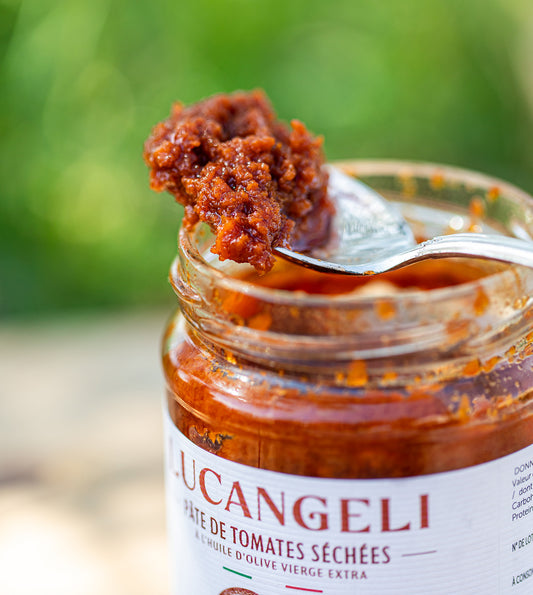
In Calabria, dried tomatoes hold a special place in the local culinary culture. The varieties used are often elongated, fleshy, and low-water tomatoes — ideal for drying. Under the effect of the sun and salt, they lose their water while concentrating their aromas. The result is a tomato with an intense flavor, slightly acidic and sweet at the same time, with a supple texture when preserved in a good organic ripe fruity olive oil.
Sun-dried or oven-dried: what's the difference?
Traditionally, tomatoes are sun-dried for several days. This natural process preserves the aromas and gives them a slightly leathery texture, ideal for rehydration before use. Today, oven-dried tomatoes are also available, offering a softer texture. Oil-preserved dried tomatoes, on the other hand, are ready to use: preserved in a green fruity organic olive oil, they remain soft and fragrant, ready to be incorporated directly into your preparations.
How to choose and store dried tomatoes?
Given the diversity of products available, it's not always easy to know what to choose. Here are the essential criteria for choosing your dried tomatoes well and getting the most out of them.
Quality criteria to know
A good dried tomato should have a deep red color, without excessive blackening. Its texture should be soft (if oil-preserved) or slightly firm (if plain). The smell should be fruity and concentrated, without fermenting notes. For ingredients, choose products with a short list: tomatoes, olive oil, salt, herbs. Avoid artificial preservatives and low-quality oils. For a successful aperitif, an artisanal dried tomato tapenade, prepared from local tomatoes and olive oil, offers a practical and tasty alternative.
Plain dried tomatoes or oil-preserved: which to choose?
Plain dried tomatoes (without oil) keep longer and are ideal for rehydration before use in sauces or stews. Oil-preserved dried tomatoes are softer and directly usable: on toast, in a salad, on a pizza, or as an accompaniment to an aperitif platter. For a complete platter, combine them with a black olive tapenade and pitted black olives in olive oil for a Mediterranean-inspired aperitif.
How to store dried tomatoes?
Plain dried tomatoes should be stored in a dry place away from light, in an airtight jar. Once opened, oil-preserved dried tomatoes should be kept in the refrigerator and consumed within two to three weeks. Make sure they are always covered with oil to prevent oxidation. If you prepare your own homemade dried tomatoes, use quality olive oil for preservation: this directly influences the final taste.
How to use dried tomatoes in Italian cuisine?
The dried tomato is a versatile ingredient that can be incorporated into many preparations, from the simplest to the most elaborate. Here are the main ways to use it.
As an aperitif: spreads and sharing platters
The Italian aperitif is the ideal occasion to showcase dried tomatoes. As tapenade on toasted bread slices, mixed with fresh cheese, or simply arranged on a platter with other spreads, they add a touch of character and color. To create a complete platter effortlessly, the set of 4 tapenades allows you to vary the flavors: dried tomatoes, black olives, and other local specialties, all ready to serve.

In pasta, risottos, and hot dishes
Dried tomatoes are a choice ingredient to enrich hot dishes. In a pasta dish, they are a good alternative to classic tomato sauce: simply sauté them in a pan with a drizzle of olive oil, garlic, and a few basil leaves to get a quick and flavorful sauce. They also pair very well with DOP basil pesto for a dish combining Ligurian and Calabrian flavors. In a risotto, they bring a depth of taste that fresh tomatoes cannot match.
In salads, on bruschetta, and as a garnish
In summer, dried tomatoes naturally find their way into mixed salads: with arugula, mozzarella, pine nuts, and a drizzle of IGP balsamic vinegar Modena Gold Collection, they create a fresh and refined starter. On bruschetta, they pair perfectly with olive oil and goat cheese. They can also garnish savory tarts, quiches, or homemade focaccias to add a summery and gourmet touch.
The dried tomato is more than just a condiment: it's a concentrate of sunshine and artisanal savoir-faire, inherited from the culinary traditions of southern Italy. Whether used as an aperitif, in a pasta dish, or in a salad, it brings an unparalleled intensity of taste to every preparation. To discover other Italian local specialties to give or treat yourself, the customizable gift box allows you to gather the best gastronomic gems in one go.




 lucangeli.it