


What the label really tells you about black olive tapenade
An artisanal Italian black olive tapenade can be recognized in a few seconds on the label: the ingredient list is short, olives come first, and extra virgin olive oil is the only fat used. Everything else is secondary.
The proportion of olives, the first criterion to check
In industrial tapenade, olives sometimes account for less than 50% of the total weight. The rest is filled with water, thickeners, or refined vegetable oils. In artisanal spreads, the proportion of olives generally exceeds 70%, sometimes 80%. This ratio determines the intensity of the flavor and the final texture.
For easy comparison, here are the five criteria to read in order on the label:
- Proportion of olives: 70% and more for an artisanal product, often less than 50% for an industrial product.
- Fat: extra virgin olive oil for artisanal, refined vegetable oil for industrial.
- Preservatives: none or salt only for artisanal, E202, E211, or citric acid for industrial.
- Length of ingredient list: 3 to 6 ingredients for artisanal, 8 to 15 for industrial.
- Olive variety mentioned: yes, often, for artisanal; rarely for industrial.
The olive variety, an indicator of traceability
A tapenade that mentions the olive variety used is a sign of serious traceability. The Carolea variety, cultivated in southern Italy, particularly in Calabria, yields a fleshy black olive, not very bitter, with notes of black fruit and a slight herbaceous hint. It is one of the most used varieties in spreads from the southern part of the peninsula. Conversely, a label that simply mentions "black olives" without specifying the origin or variety does not allow for any verification.
Extra virgin olive oil, not a minor detail
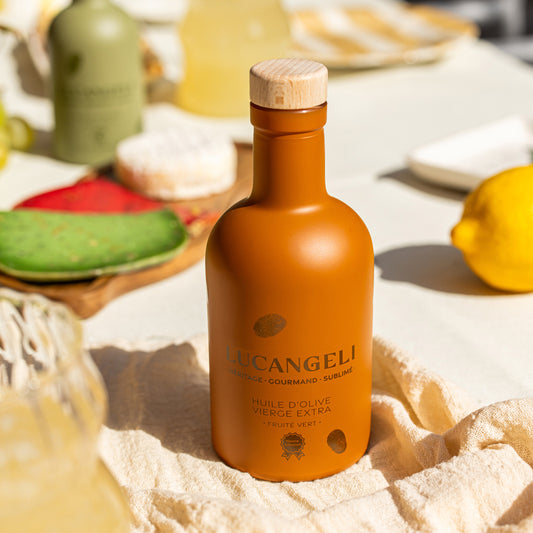
Extra virgin olive oil plays two roles in tapenade: it binds the ingredients and carries the aromas. A green fruity olive oil will bring a slight bitterness and pungency at the end of the palate, which balances the roundness of black olives. A refined oil, on the other hand, adds nothing in terms of taste: it just fills. This is why two tapenades with the same proportion of olives can have very different aromatic profiles depending on the oil used.
Uses of black olive tapenade beyond toast

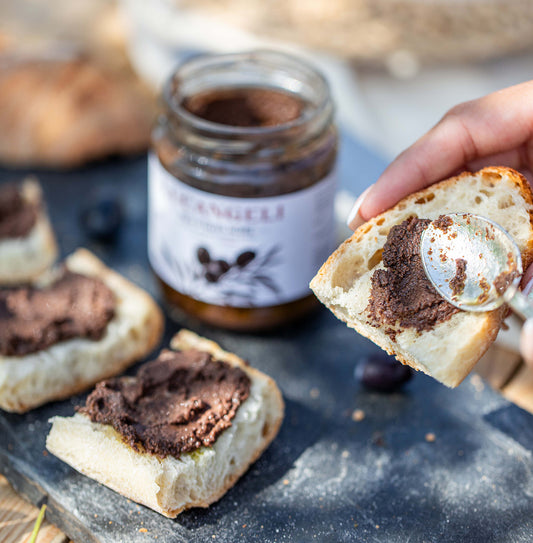
Black olive tapenade is often confined to aperitifs, spread on toast or crackers. This is a perfectly valid use, but it is far from the only one.
In everyday cooking
Here are four practical uses that transform an ordinary dish:
- On hot pasta: a tablespoon of black olive caviar mixed with spaghetti, a drizzle of olive oil, and lemon zest. No additional cooking needed, the heat of the pasta is enough to release the aromas.
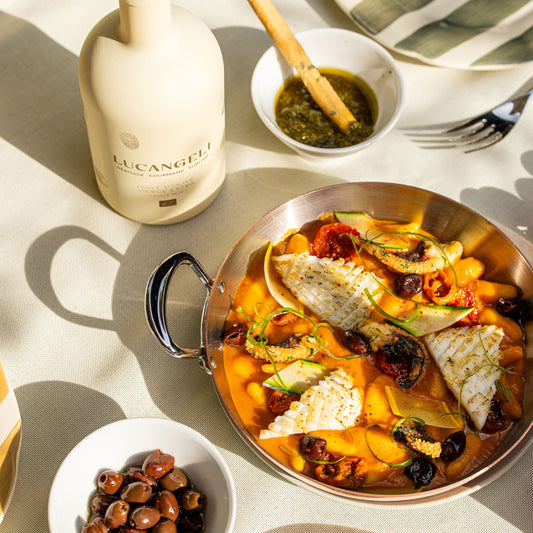
- As a crust on fish: spread the tapenade on a sea bream or sea bass fillet before baking. It forms a lightly crispy crust that protects the flesh and adds character.
- In a vinaigrette: half a teaspoon in an olive oil vinaigrette effectively replaces mustard for grilled vegetable salads.
- On a summer bruschetta: grilled bread, tapenade, diced fresh tomatoes, a few basil leaves. Simple, quick, seasonal.
In professional kitchens
In restaurant kitchens, black olive tapenade is used as a sauce base, as a plating element, or as a table condiment. Some chefs incorporate it into an olive oil emulsion to top a tuna carpaccio, or use it as a base for a savory tart before adding seasonal vegetables. The smooth texture of an artisanal tapenade without chunks allows for precise plating with a piping bag or spoon. Restaurateurs who wish to include Italian spreads on their menu can consult the professionals section for suitable formats and conditions.
Combine several spreads for an aperitif platter
A successful aperitif platter plays on contrasts. Intense and slightly bitter black olive tapenade pairs well with a milder and sweeter sun-dried tomato spread, or with a fresh and herbaceous DOP basil pesto. To create a complete platter without searching for each product separately, an aperitif sharing kit combines several Italian spreads in one box.
Storing and serving artisanal black olive tapenade
Before opening
Artisanal tapenade without preservatives should be stored at room temperature, away from light, until the date indicated on the jar. The shelf life is generally shorter than that of an industrial product: this is a sign of quality, not a defect.
After opening
Once opened, store the tapenade in the refrigerator and consume within 5 to 7 days. To extend preservation, pour a drizzle of extra virgin olive oil over the surface before closing the jar: the oil forms a barrier that limits oxidation. Pitted black olives preserved in oil follow the same principle.
Serving temperature
Remove the tapenade from the refrigerator 15 to 20 minutes before serving. At room temperature, the aromas are better released, and the texture becomes more pliable, easier to spread.
Frequently Asked Questions
What is the difference between tapenade and olive caviar?
Both terms refer to the same preparation: crushed olives with olive oil. The term "olive caviar" is often used for finer, smoother textured versions, while "tapenade" can refer to coarser preparations with chunks. In Italy, it's called "pate di olive" or "crema di olive". The composition remains identical: olives, extra virgin olive oil, sometimes capers or anchovies depending on the recipe.
Can black olive tapenade be used to cook pasta?
Yes, it's one of the simplest and most effective uses. A tablespoon mixed with hot pasta and a drizzle of olive oil is enough to create a complete dish. No additional cooking is needed: the heat of the pasta releases the tapenade's aromas without altering them.
How to recognize quality black olive tapenade in a store?
Read the ingredient list in order: olives should come first, extra virgin olive oil should be the only fat, and the list should be short. If you see water, thickeners, or refined vegetable oils, it's an industrial product. The mention of the olive variety and geographical origin is an additional indicator of traceability.




 lucangeli.it