


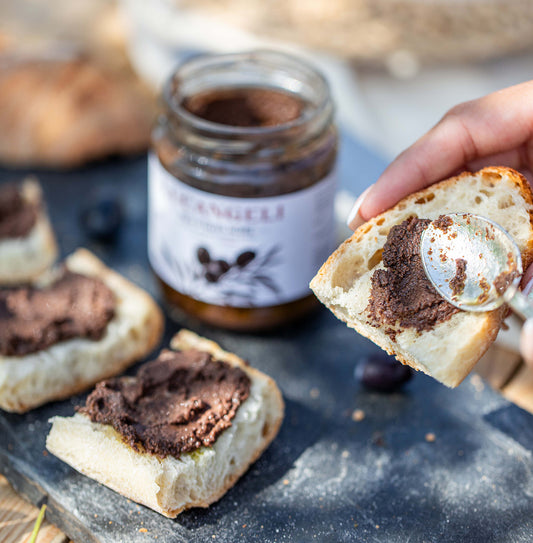
Black olive tapenade is a Mediterranean condiment made from crushed black olives, olive oil, and capers. If well-chosen, it goes far beyond just an appetizer on toast: it can enhance grilled dishes, enrich pasta sauces, fill tarts, or accompany fish. But you need to know how to read a label and understand what distinguishes artisanal tapenade from an industrial preparation.
What distinguishes artisanal tapenade from industrial tapenade

Black olive tapenade is composed of crushed black olives, extra virgin olive oil, capers, sometimes anchovies, garlic, and aromatic herbs. On paper, the ingredient list for artisanal and industrial tapenades might seem identical. In practice, two manufacturing decisions change everything: the method of preserving the olives and the role played by the olive oil.
The olives: brine or olive oil?
This is the first question to ask. Brined olives are preserved in a solution of water and salt. They undergo lactic fermentation which alters their taste and texture even before being crushed. The result on the palate is more acidic, sometimes bitter, with a less distinct texture. Pitted black olives in olive oil, on the other hand, are preserved in extra virgin olive oil from the moment they are jarred. This method preserves their natural aromatic profile and texture. This fundamental difference explains why two tapenades with seemingly identical ingredients do not taste at all the same.
Olive oil: binder or filler?
In industrial tapenade, olive oil is often used to increase the volume of the preparation at a lower cost. It is added in large quantities, sometimes with poor quality oil, which dilutes the flavors of the olives. In artisanal tapenade, olive oil acts as a binder: it is chosen for its aromatic profile and measured to reveal the other ingredients without overpowering them. A green fruity organic olive oil brings herbaceous notes and a slight pungency that naturally complement the bitterness of black olives.
What the label says
Five points to check before buying:
- The proportion of olives is indicated as a percentage: a quality tapenade contains at least 50% olives.
- The type of olive preservation is specified: olive oil or brine.
- The olive oil used is identified: extra virgin, and ideally of Italian origin.
- The ingredient list is short: capers, anchovies, garlic, herbs. No starch, no thickener, no artificial flavor.
- The manufacturing date or lot number is legible.
To quickly compare: an artisanal tapenade uses olives preserved in olive oil, an extra virgin oil used as a binder, a proportion of olives greater than 50%, and no additives. An industrial tapenade most often uses brined olives, a common quality oil in volume, a variable proportion of olives, and sometimes thickeners or flavorings.
5 uses for black olive tapenade in summer cooking
Tapenade is not limited to appetizers. Here are five ways to incorporate it into your summer cooking:
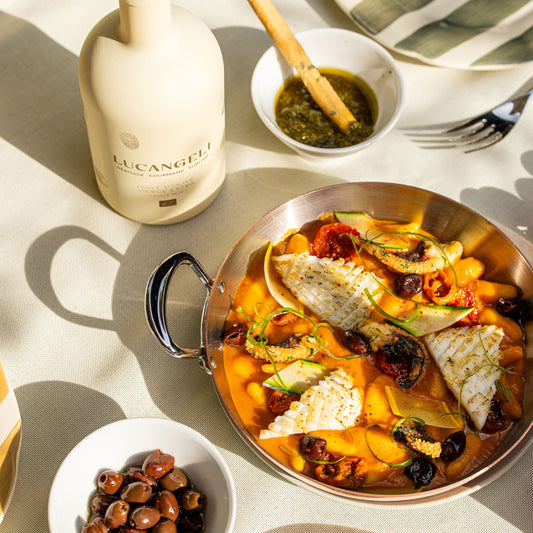
- On grilled fish or white meat. A spoonful of tapenade placed on a sea bream fillet or a grilled chicken breast adds immediate aromatic depth. The bitterness of the olives contrasts with the cooking juices. Pair it with a few drops of Gold collection IGP balsamic vinegar from Modena for a balanced sweet and savory pairing.
- As a base for a Provençal tart. Spread a thin layer of tapenade on shortcrust pastry before adding cherry tomatoes, zucchini slices, and a few basil leaves. Tapenade is an excellent alternative to crème fraîche and provides an umami base without making the tart heavy.
- As a quick pasta sauce. Dilute two tablespoons of tapenade in a little pasta cooking water, add a drizzle of olive oil, and some halved cherry tomatoes. This sauce is ready in two minutes, with no cooking required. Sun-dried tomato paste can complement this base for more richness.
- As a marinade for grilled vegetables. Mix a spoonful of tapenade with olive oil and a little minced garlic. Brush eggplant or zucchini slices before grilling them. The tapenade caramelizes slightly with the heat and forms an aromatic crust.
- On a composed appetizer platter. Pair black olive tapenade with DOP basil pesto and other spreads for a complete Mediterranean platter. The four-spread appetizer kit allows you to vary flavors without multiple purchases.
How to properly store and portion tapenade
Once opened, artisanal tapenade can be stored in the refrigerator, with the jar closed, for five to seven days. To prevent surface oxidation, pour a drizzle of olive oil over the tapenade before closing the jar: the oil forms a thin protective layer that slows down contact with air.
For portioning, one teaspoon is enough as a finish on a hot dish. For spreading on bread, count one tablespoon per person. Tapenade is concentrated in flavor: a common mistake is to add too much, which overwhelms the other ingredients of the dish rather than highlighting them.
Catering professionals wishing to include Italian spreads on their menu can consult the professional section for formats and conditions suitable for kitchen or service use.
To offer an assortment of Italian products, the customizable gift set allows you to combine tapenade, oils, and vinegars according to the recipient's tastes.
Frequently asked questions
What is the difference between black olive tapenade and black olive caviar?
The two terms often refer to the same product: black olives crushed with olive oil and aromatics. The difference lies in the texture: tapenade is traditionally coarser, with olive pieces still perceptible, while olive caviar is more finely crushed to obtain a smooth paste. In practice, both are used in the same way.
Can black olive tapenade be used to cook pasta?
Yes, it's one of its simplest and most effective uses. Two tablespoons of tapenade diluted in pasta cooking water make a quick sauce, with no additional cooking. Add a drizzle of olive oil as a finish to bind the sauce.
How can you tell if a tapenade is good quality before buying it?
Read the label: the proportion of olives should be indicated and exceed 50%, the olives should be preserved in olive oil and not in brine, and the ingredient list should be short, without thickeners or artificial flavors. The color should be dark and uniform, without grayish reflections that indicate oxidation.




 lucangeli.it