

Spaghetti aglio e olio is made in 15 minutes with six ingredients. But if the result is bland or oily, it's almost always the olive oil that's to blame: poor quality, wrong variety, or added at the wrong time. Here's how to choose the right oil and use it correctly so this Calabrian cucina povera dish lives up to its reputation.
Olive oil, the main ingredient — not a condiment

In most recipes, olive oil is a cooking medium or a finishing touch. In spaghetti aglio e olio, it is the sauce. There is no tomato, no cream, no cheese to mask its flaws or amplify its qualities. Everything depends on it.
This is why a quality extra virgin olive oil radically changes the result. A refined oil or an anonymous blend will yield greasy, characterless pasta. A fresh, fruity oil from an identified variety will produce a dish with depth, a slight bitterness on the finish, and that subtle spiciness that is the hallmark of southern Italy.
Which olive variety to choose and why
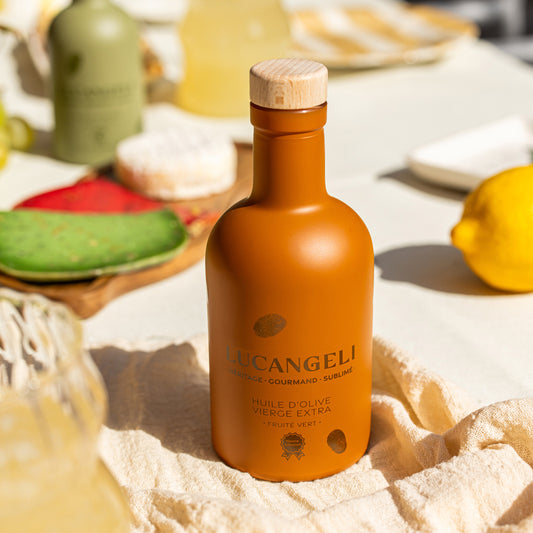
The Carolea variety is one of the most cultivated in Calabria. It produces an oil with a pronounced green fruitiness, with notes of fresh grass, artichoke, and a frank pungency on the finish. This is precisely the profile that suits spaghetti aglio e olio: the oil's slight bitterness complements the peperoncino's spiciness, and the green fruitiness stands up to the garlic without being overwhelmed.
A riper, softer, and rounder fruity oil will be suitable if you prefer a less assertive result. The discovery duo of two 500 ml bottles allows you to compare the two profiles on the same dish and find the one that suits your palate.
Avoid: so-called mild or light oils, which have often been refined and have lost their aromas. The label should mention extra virgin and, ideally, a precise geographical origin.
The two-step technique: cooking and cold finishing
This is the point that almost all recipes omit, and yet it's what makes the difference between decent pasta and remarkable pasta.
First step, cooking. Pour half the oil into a cold pan with the sliced garlic. Heat over medium heat, not high. The garlic should slowly infuse until golden blond. At this stage, the oil has absorbed the aromas of garlic and chili. It has become a condiment.
Second step, cold finishing. Once the pasta is in the pan and emulsified with the cooking water, remove the pan from the heat. Then incorporate the rest of the cold oil, stirring. The residual heat is enough to integrate it without degrading it. The aromas of the green fruitiness, which disappear at high temperatures, remain intact. It is this finishing oil that gives the dish its character.

If you want to go even further with the Calabrian version, an organic garlic and chili olive oil used only as a finish intensifies the aromatic profile without making the dish heavy.
The spaghetti aglio e olio recipe, step by step
Ingredients for 4 people
Here are the ingredients needed for 4 people:
- 400 g of durum wheat semolina spaghetti, bronze-drawn if possible
- 8 tablespoons of extra virgin green fruity olive oil, half for cooking, half for finishing
- 5 to 6 cloves of garlic, thinly sliced, never pressed
- 1 to 2 dried peperoncino, Calabrian preferably
- 10 g coarse sea salt per liter of cooking water
- 1 bunch of fresh flat-leaf parsley, optional, added off the heat
- 1 cup reserved cooking water, essential for the emulsion
Preparation
- Bring a large pot of water to a boil. Season generously: the water should taste like the sea. Plunge the spaghetti in and cook 2 minutes less than the time indicated on the package.
- Meanwhile, pour half the oil into a large cold pan. Add the sliced garlic and crumbled peperoncino. Heat over medium heat. Let infuse for 2 to 3 minutes until the garlic is golden blond. Remove the pan from the heat if the garlic threatens to brown.
- Before draining the pasta, reserve a full cup of cooking water. This is the secret ingredient for the emulsion.
- Transfer the spaghetti directly to the pan. Return to medium heat. Pour in 2 to 3 ladles of cooking water and stir vigorously for 1 to 2 minutes. The starch binds the oil and water into a silky sauce.
- Remove the pan from the heat. Stir in the remaining cold oil. Sprinkle with chopped parsley. Serve immediately on preheated shallow plates.
Variations and mistakes to avoid
The Calabrian version with peperoncino
The most authentic version from southern Italy adds a dried Calabrian peperoncino, which is fleshier and less aggressive than bird's eye chili. It infuses in the oil with the garlic and provides a gradual warmth, not a brutal spiciness. For an even more pronounced version, a garlic and chili flavored oil used as a finish is a good substitute for dried peperoncino.
A less known variation consists of adding some finely chopped pitted black olives as a finish. Black olive tapenade with extra virgin olive oil can directly play this role; half a teaspoon is enough to add depth without making it heavy.
The 4 most common mistakes
- Burnt garlic. Burnt garlic is bitter. You must constantly monitor it and remove the pan from the heat as soon as the color turns golden. Residual heat continues to cook it.
- Forgetting the cooking water. Without starchy cooking water, the oil and pasta won't emulsify. The result is oily and the pasta sticks together. Always reserve a cup before draining.
- Adding all the oil at once. All the oil during cooking destroys the delicate aromas of green fruitiness. The two-step technique is essential for an aromatic result.
- Overcooked pasta. The spaghetti finishes cooking in the pan. Draining al dente, i.e., 2 minutes before the indicated time, is non-negotiable.
To explore other ways to use olive oil in Italian cuisine, DOP basil pesto with olive oil is a versatile base that works well in cold pasta dishes and summer vinaigrettes. And if you're looking to build an oil cellar for all uses, organic ripe fruity olive oil ideally complements green fruity oil for milder preparations.
Restaurant owners and culinary professionals who wish to work with Calabrian olive oils can consult the dedicated professional section for formats adapted to kitchen use.
Frequently asked questions
What kind of olive oil should I use for spaghetti aglio e olio?
A green fruity extra virgin olive oil, from a variety like Carolea from Calabria, is ideal. It brings a slight bitterness and pungency on the finish that complements the garlic and chili. Use it in two stages: half for cooking to infuse the garlic, the other half cold as a finish to preserve the aromas.
Why are my spaghetti aglio e olio oily and not creamy?
Because the cooking water was forgotten or used in insufficient quantity. The starch in the cooking water is what allows the oil and water to emulsify. Reserve at least one full cup before draining, and gradually pour it into the pan while stirring vigorously.
Can peperoncino be replaced by chili oil in aglio e olio?
Yes, and it's even an interesting option for precisely dosing the spiciness. A garlic and chili olive oil used only as a finish, off the heat, gives a finer result than a dried chili infused during cooking. Heat does not degrade the aromas of flavored oil if it is added after removing the pan from the heat.





 lucangeli.it