


Why Italian black olive tapenade earns its place in food service
Italian black olive tapenade wins people over with its honest taste and its versatility. It finds a place on the menu in restaurants, hotels and catering businesses, whether as antipasti, as a side or as a signature ingredient. Knowing how to work it in and how to present it lets you play up your venue's Mediterranean roots while answering a growing demand for authenticity.
To get your selection right, focus on a tapenade made from pitted black olives, extra virgin olive oil, anchovies and capers, with no artificial flavorings. An artisanal product, made from Italian varieties such as Taggiasca or Leccino, will make the difference with customers who pay attention to origin and quality.
For something a little more original, the set of four tapenades lets you vary the flavors for aperitivo or on a sharing board.

Selection criteria and logistics management
Key points for choosing your black olive tapenade
- Origin and olive variety: Favor recognized Italian origins, such as Liguria or Calabria.
- Production method: Go for a traditional recipe with no added preservatives or flavorings.
- Packaging: Choose formats suited to professional use (500 g to 1 kg jars).
- Shelf life: Check how long the product keeps once opened.
- Traceability: Ask for a detailed product spec sheet.
The black olive tapenade with extra virgin olive oil meets these requirements, with a short ingredient list and a smooth texture that professional kitchens appreciate.
Logistics management in food service
- Storage: Keep the tapenade cool, away from light and air.
- Rotation: Plan for quick turnover on the menu to guarantee freshness.
- Ordering: Anticipate your needs, especially in high season or around events.
For large volumes or regular needs, the professionals area lets you centralize your orders and streamline supply management.
Showcasing tapenade on the menu and in the dining room
Ideas for putting black olive tapenade forward
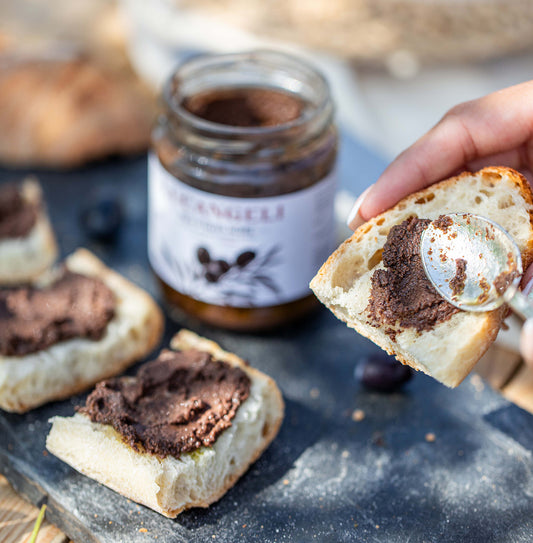
- Serve it as an amuse-bouche, on toasted bread, to open the meal.
- Work it into an antipasti board, alongside other spreads.
- Use it as a sauce base for pasta or white meats.
- Suggest a pairing with a DOP basil pesto for a bit of variety.
One detail worth keeping in mind: the origin and the olive variety can be mentioned on the menu, which showcases your sourcing and sparks your guests' curiosity. As an example, Taggiasca, a Ligurian olive, is sought after for its mildness and its long finish.
Checklist for a successful rollout
- Choose an artisanal Italian tapenade
- Match the format to the pace of service
- Highlight the origin and the variety on the menu
- Train the front-of-house team on presentation
- Rotate your stock regularly
Frequently asked questions
How do you choose a black olive tapenade suited to food service?
Favor an artisanal recipe, a clearly identified Italian origin and a professional format. Check the ingredient list and the traceability.
Which formats are recommended for food service?
Jars of 500 g to 1 kg strike a good balance between convenience and freshness. They make stock management easier and limit waste.
How do you showcase black olive tapenade on the menu?
Mention the origin and the olive variety, suggest original pairings and serve it as antipasti or on a sharing board.


 lucangeli.it