

What sets a DOP basil pesto apart from an ordinary pesto in foodservice
The pesto market is vast and uneven. Between low-cost industrial sauces and certified artisan products, the quality gap is considerable — and noticeable on the plate. For an establishment that cares about its menu, the DOP mark (Denominazione di Origine Protetta, the Italian equivalent of the French AOP) is not a marketing detail: it commits the producer to a precise specification, audited by an independent certification body.
The specification behind the Pesto di Genova DOP designation
Pesto di Genova DOP is an Italian designation currently going through official recognition, and its production protocol has been formalised for several years. It imposes a strict composition:
- Genoese IGP basil (Ocimum basilicum L., Pra ecotype, Liguria): at least 25% of the finished product
- Extra virgin olive oil from Italy or Liguria
- Parmigiano Reggiano DOP or Grana Padano DOP
- Pecorino DOP (Fiore Sardo or Pecorino Romano)
- Garlic, pine nuts, sea salt
- No colourings, no artificial preservatives, no added starch
This composition stands in clear contrast to the standard pestos on the market, which often use ordinary basil with no controlled origin, generic cheeses, sunflower oil as a filler and sometimes thickeners. The DOP basil pesto with olive oil selected by the house follows that protocol in full: this is what your teams need to be able to explain to a guest who asks.
Why the DOP mark changes the experience on the plate in practice
Genoese IGP basil from Pra is harvested very young, before the leaves reach five centimetres. This practice produces a sweet, slightly aniseed aroma, without the bitterness associated with supermarket pestos. The difference is immediate when you taste it: less herbaceous aggression, more roundness, a clearly longer aromatic finish.
In a professional kitchen, this translates into a sauce that holds better on the plate, that does not darken as quickly once opened, and that calls for more precise dosing — because the intensity is concentrated. One gram of DOP pesto delivers more than one gram of generic pesto. That is a factor to build into your food cost calculation.
---
Formats, food cost and stock management in a professional kitchen

Which formats to choose depending on service volume
DOP pesto for foodservice comes in several formats depending on use. The table below gives the key benchmarks to guide your choice:
For a 40-cover restaurant serving pesto on two dishes on the menu, a format of 180 to 200 g per service is generally suitable, with a weekly delivery. Beyond three jars open at the same time, go for 500 g formats to limit waste.
Calculating food cost per portion and optimal rotation
The standard dose of DOP pesto in a plate of pasta is 20 to 30 g. For a 180 g jar, that means 6 to 9 portions. The cost per portion depends on the purchase price you negotiate, but the usual order of magnitude for an artisan DOP pesto in the hospitality trade is between €0.40 and €0.80 per portion, depending on format and supplier.
That cost is significantly higher than an industrial pesto, but it feeds directly into the perceived value of the dish. A "tagliatelle with DOP pesto from Genoa, Genoese IGP basil" justifies a selling price €2 to €4 above the equivalent with no mention of origin — provided the menu and the staff do the communication work.
For stock rotation, a few practical rules apply:
- Never hold more than two weeks of consumption at a time: DOP pesto is a living product that evolves quickly once opened.
- Always cover it with a film of olive oil after use and seal it tightly.
- Label every open jar with the opening date and the best-before date.
- For buffet service or a cold counter, never leave pesto at room temperature for more than two hours.
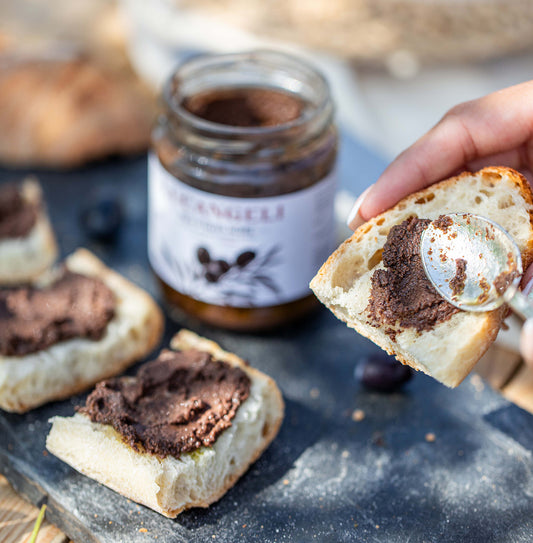
The pitted black olives in olive oil and the sun-dried tomato tapenade share similar constraints once opened: grouping them into the same order lets you optimise deliveries and cut shipping costs.
---
Making the most of DOP pesto front of house and on the menu

How to turn it into a point of difference on your menu
Most establishments that use a quality pesto get no commercial benefit from it because they do not say so. Yet the mention on the menu is the first lever. A few wordings that work in practice:
- "Fresh pasta with DOP pesto from Genoa, IGP basil from Pra": precise, traceable, reassuring
- "Risotto with DOP pesto, Parmigiano Reggiano shavings": lifts the perception of the dish straight away
- "Bruschetta with DOP pesto from Liguria": anchors the product geographically
These wordings work because they answer a growing expectation among guests: knowing where the products come from. They also create an entry point for upselling: a guest who orders a dish with DOP pesto is often curious to learn more, and trained staff can turn that interest into a memorable experience.
The aperitif spreads kit can support this positioning for aperitif service or buffets: pesto, black olive tapenade and sun-dried tomato tapenade form a coherent map of southern Italian flavours that guests read immediately.
Training the front-of-house team and structuring professional orders
Standing out with DOP pesto only works if the front-of-house team can explain it in one sentence. Training servers does not take a full module: three points are enough.
- The designation: DOP means the basil, the cheeses and the production method are controlled and certified in Italy.
- The origin of the basil: Genoese IGP, harvested young in the Pra area of Liguria, which gives it its characteristic sweetness.
- The difference from standard pesto: no colouring, no thickener, a more concentrated aromatic intensity.
Once memorised, those three elements answer nine out of ten questions from an interested guest. They can be put on a laminated product sheet in the kitchen or the pantry.
For establishments that want to go further — tailoring their fine-food offer, building an Italian condiments menu or setting up a regular supply of certified products — the professionals area is the way to get in touch with the sales team. Professional orders come with terms adapted to volume and a dedicated contact for restocking and lead times.
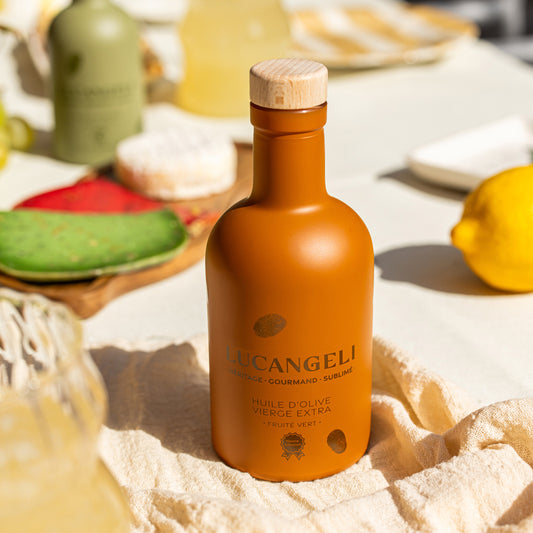
Bottle personalisation can also be part of an Italian table strategy: an olive oil bottle screen-printed in the establishment's colours, placed next to the DOP pesto on the table or in a guest gift box, reinforces the consistency of your culinary identity and creates a tangible memory for guests.
For establishments working on desserts and breakfast, the 100% pistachio paste in a 1 kg format offers the same traceable step up in quality, to be added to the same professional order to optimise delivery.
---
Frequently asked questions
How long does an opened DOP pesto keep in a professional kitchen?
A jar of DOP pesto that has been opened and properly covered with olive oil keeps for 3 to 7 days in the fridge, depending on the format. Labelling the opening date is mandatory under HACCP obligations. Beyond that, the colour turns brown and the aroma degrades: the product can no longer be served.
How can you tell a real DOP pesto from a so-called "traditional" pesto on the hospitality market?
The DOP mark (or AOP in French) must appear explicitly on the label, together with the red and yellow European logo. The ingredient list must mention Genoese IGP basil or basil from Liguria in first or second place, and must not contain potato starch, corn starch or sunflower oil in a dominant proportion. A "traditional" pesto without those details is not a DOP pesto.
From what volume is it worth negotiating a regular DOP pesto supply with a specialist supplier?
From two or three orders a month, a structured supply arrangement lets you stabilise prices, secure availability and get logistics terms adapted to your needs — shipping costs in particular. For establishments using less than one jar per service, ordering as needed often stays more flexible. The dedicated professional service is there to define the form of collaboration best suited to your volume and service frequency.





 lucangeli.it