


The Aperitivo, a True Italian Tradition
Much More Than Just an Aperitif
In Italy, the aperitivo is not just a quick drink before dinner. It's a social ritual deeply rooted in the country's culture, a moment suspended between the workday and the evening meal. In the streets of Naples, Palermo, or Reggio Calabria, terraces come alive from 6 PM: boards are brought out, bottles are uncorked, and people share. This tradition, called aperitivo, is based on a simple principle—offering guests a selection of tasty small bites, antipasti, which whet the appetite without being too heavy.
This moment of sharing has largely spread to France, where the Italian aperitif board has become one of the most popular ways to entertain. Easy to prepare, visually generous, and adaptable to all occasions, it's equally appealing for an aperitif dinner with friends or a family meal on the weekend.
The Essential Ingredients for an Italian Board
A successful Italian aperitif board relies on a balance of several ingredient families. You'll generally find:
- Italian cured meats: prosciutto, coppa, bresaola, mortadella—count 80 to 100g per person.
- Cheeses: aged Parmesan, Gorgonzola, burrata, or Pecorino, depending on taste.
- Condiments and spreads: olives, tapenades, pestos, sun-dried tomatoes—this is often where the quality of the board shines.
- Carriers: grissini, toasted bread, focaccia in small pieces.
- Fresh or marinated vegetables: cherry tomatoes, artichokes, fennel.
The quality of the condiments is often what distinguishes an ordinary board from a memorable one. A well-chosen set of 4 tapenades can transform a simple platter into a true culinary journey.
Condiments and Spreads: The Soul of the Board
Tapenades, Pestos, and Spreads
Condiments are the heart of an Italian aperitif board. They bring intense flavors, creamy textures, and colors that make the board irresistible. Among the essentials:
Sun-dried tomato tapenade is a classic from southern Italy. Made from sun-dried tomatoes, it concentrates the warm and sweet aromas of the Mediterranean summer. It can be spread on toasted bread, accompany burrata, or enhance a slice of cured meat. The sun-dried tomato tapenade from Lucangeli is prepared according to Calabrian traditions, using tomatoes from the southern Italian terroir.
Black olive tapenade brings a more intense and slightly bitter note, characteristic of Mediterranean olives. It pairs perfectly with hard cheese or a drizzle of olive oil. The black olive tapenade is made from pitted black olives with extra virgin olive oil, for a velvety texture and authentic taste.
Pesto is another pillar of the Italian board. DOP basil pesto—made with Protected Designation of Origin basil and olive oil—can be used as a spread on grissini, as an accompaniment to fresh vegetables, or to top bruschetta. Its herbaceous and fresh taste balances the bolder flavors of cured meats.
Olive Oil and Balsamic Vinegar, the Finishing Touches That Make All the Difference
Two liquid condiments deserve a place of honor on your board: olive oil and balsamic vinegar. These are the finishing touches that elevate the whole.

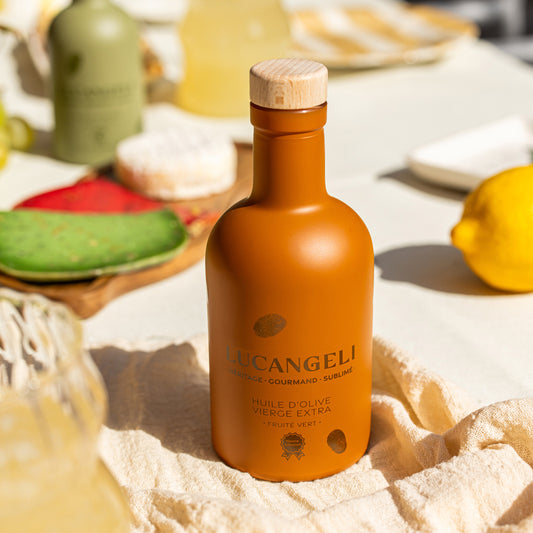
Extra virgin olive oil is used to drizzle over burrata, dress cherry tomatoes, or dip grissini. The choice of aromatic profile is important: a green fruity organic olive oil with vegetal and peppery notes suits fresh cheeses and vegetables, while a ripe fruity organic olive oil with softer, fruitier aromas ideally accompanies cured meats and spreads.
Modena PGI balsamic vinegar is the other great classic of the Italian table. A few drops are enough to transform a slice of Parmesan or a strawberry into an exceptional bite. The Gold collection PGI balsamic vinegar, aged in wooden barrels, offers a syrupy texture and a balance of sweetness and acidity. For a more accessible everyday version, the Silver collection PGI balsamic vinegar is ideal for lightly seasoning the board.
How to Arrange and Serve Your Italian Aperitif Board
Arrangement and Presentation
The presentation of an Italian aperitif board follows a few simple rules that make all the visual difference:
- Start with the bulky items: arrange small bowls of condiments (olives, tapenades, pesto) first, spreading them across the board to create anchor points.
- Add the cheeses in pieces or slices, spacing them from the cured meats.
- Drape the cured meats in rosettes or light folds to create movement.
- Fill the spaces with grissini, cherry tomatoes, marinated vegetables, and fresh fruits (figs, grapes in summer).
- Finish with liquid condiments: a drizzle of green fruity organic olive oil on the burrata, a few drops of balsamic vinegar on the Parmesan.
The goal is to alternate colors—the red of sun-dried tomatoes, the green of pesto, the black of olives, the golden of Parmesan—for a visually generous and appetizing board.
Pairings and Quantities
For an aperitif dinner, count approximately 5 to 7 antipasti per person. For a classic aperitif (before a meal), 3 to 4 bites are sufficient. Here's a practical guide for 6 people:
- 400 to 500g of cured meats (3 varieties)
- 300g of cheeses (2 to 3 types)
- 2 to 3 spreads or tapenades
- 1 bottle of olive oil and a small bottle of balsamic vinegar
- Bread, grissini, and crackers in free quantity
As for drinks, a chilled Prosecco, a Pinot Grigio, or a young Chianti naturally pair with the flavors of the board. For a non-alcoholic option, sparkling water with a lemon slice and a few basil leaves perfectly fits the spirit of the aperitivo.

To offer an Italian board as a gift or to create a custom assortment, the customizable gift box allows you to select products according to your preferences and those of your guests—a beautiful way to share the flavors of the Calabrian terroir.




 lucangeli.it