


Basil pesto is an iconic sauce in Italian cuisine, originating from the Liguria region. Its freshness and aroma make it a must-have for summer dishes. But how do you choose and use it in cooking to fully appreciate all its flavors? In this article, we reveal everything you need to know about basil pesto, as well as our tips for making the most of it.
What is basil pesto?

Basil pesto is a sauce made from fresh basil, olive oil, pine nuts, Parmesan cheese, and garlic. Traditionally, it is prepared by hand by crushing all the ingredients in a marble mortar with a wooden pestle. This artisanal method preserves all the flavors of basil, which is a delicate ingredient.
There are many variations of basil pesto, notably pesto Genovese, originating from the city of Genoa, which is the most well-known. But each region has its own recipe, with different proportions and ingredients. For example, Calabria, a region in southern Italy, often uses Pecorino instead of Parmesan in its pesto.
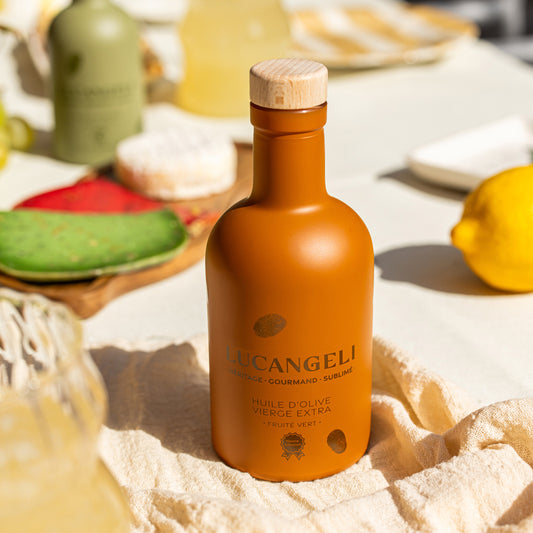
At Lucangeli, we are proud to offer you a DOP basil pesto, meaning it is made with ingredients recognized as typical of the Liguria region. The basil used is grown locally, and the organic green fruity olive oil comes from our organic olive trees, to guarantee exceptional quality and authenticity.
Criteria for choosing your basil pesto
To choose a good basil pesto, it is important to look at the list of ingredients. Indeed, some pestos may contain lower quality ingredients, such as sunflower oil instead of olive oil, or even additives and preservatives. A good DOP basil pesto should only contain natural ingredients: fresh basil, extra virgin olive oil, pine nuts, Parmesan or Pecorino, garlic, and salt.
Fresh or jarred: what's the difference?
The first distinction to make is between fresh pesto (to be stored in the refrigerator) and pesto sold at room temperature on the shelf. Only the first guarantees optimal quality, as the latter has often been pasteurized or contains preservatives that alter the flavor of the basil. Always opt for a pesto made with fresh basil, whose aromas are much more intense than those of dried basil. For an even more delicious result, choose a pesto made with an organic green fruity olive oil, whose herbaceous freshness enhances the basil.
Read the ingredient list
The traditional Genovese pesto recipe contains only 7 ingredients: basil, extra virgin olive oil, pine nuts, PDO Parmesan or PDO Grana Padano, Pecorino, garlic, and salt. Any pesto containing other ingredients or additives deviates from the original recipe. Also check the quality of the olive oil used: a quality oil brings a herbaceous freshness that enhances the basil and gives the pesto all its aromatic depth.
Pesto preservation
Quality pesto should be kept cool and away from light. Once opened, remember to cover the surface with a drizzle of olive oil to prevent oxidation and preserve the beautiful green color of the basil. You can also freeze your pesto in portions in ice cube trays to enjoy it all year round. Our DOP basil pesto can be easily stored in the refrigerator after opening, covered with a drizzle of olive oil.
How to use basil pesto in cooking?
Basil pesto is a very versatile sauce. Here are the main ways to use it to enhance your dishes, especially during the summer season.
For pasta: the golden rule
Basil pesto is always used cold, never heated directly. Simply mix one or two tablespoons of pesto with al dente cooked pasta, adding a little cooking water to bind the sauce. The ideal pasta shapes are trofie, trenette, or linguine, whose texture holds the sauce well. You can enrich the dish with green beans and potatoes, as in the traditional Genoese recipe. For optimal results, use our DOP basil pesto made with extra virgin olive oil.

As a spread and aperitif
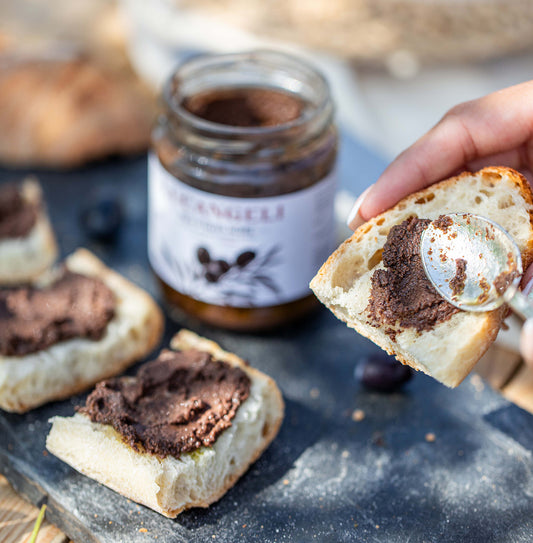
Basil pesto is excellent as a spread on toasted bread or crackers. For a successful summer aperitif, pair it with other Mediterranean spreads: a sun-dried tomato tapenade, a black olive tapenade with extra virgin olive oil, or even pitted black olives with olive oil. The set of 4 tapenades is ideal for creating a beautiful platter to share with friends or family.
Other uses in cooking
Basil pesto is not limited to pasta. It pairs wonderfully with grilled vegetables (zucchini, eggplant, peppers), white fish, or poultry. It can also be incorporated into a vinaigrette by adding a drizzle of balsamic vinegar and a little extra olive oil. In summer, it is perfect for sprucing up a rocket salad with fresh tomatoes and mozzarella. Also consider using it as a base for a white pizza, by adding it raw after baking.
How to make your own pesto?
If you want to prepare your own Italian pesto sauce, the recipe is simple and quick. Here are the ingredients for a successful homemade pesto:
- 50 g fresh basil leaves
- 50 g pine nuts
- 2 cloves of garlic
- 50 g grated Parmesan cheese
- 10 cl of organic green fruity olive oil
- Salt and pepper
In a mortar or food processor, crush the basil leaves with the pine nuts and garlic. Then add the grated Parmesan and the olive oil in a stream, mixing until a smooth sauce is obtained. Season to your preference. The secret to good homemade pesto lies in the quality of the olive oil: a fresh, herbaceous green fruity oil brings an incomparable aromatic dimension.
If you prefer to save time without sacrificing quality, our DOP basil pesto is made according to the traditional recipe, with DOP basil and extra virgin olive oil. A ready-to-use product, faithful to the authentic flavors of Italy.
To give as a gift or to treat yourself, you can also create a gift set with a selection of exceptional Italian products: pesto, tapenades, olive oils… A lovely gourmet gesture to celebrate summer and the flavors of the South.




 lucangeli.it