


Understanding PDO basil pesto: origins and marks of authenticity
PDO basil pesto, which comes from Genoa, is a symbol of Ligurian cooking. But what sets a real PDO pesto apart from a plain basil sauce? To carry the PDO designation (Denominazione di Origine Protetta), pesto has to be made with Genoese basil, extra virgin olive oil, pine nuts, Parmesan, pecorino, garlic and salt, with no artificial flavourings or preservatives at all. That set of rules guarantees a fresh, green, slightly peppery flavour, a world away from industrial sauces.
To check whether a pesto is authentic, always look at the origin of the basil and the ingredient list. The PDO mark is a sign that tradition has been respected, as is the absence of sunflower oil or potato, both often used in industrial versions.
For an artisan version, you can taste the PDO basil pesto with olive oil, an example that stays true to the demands of tradition.
To go further, see how personalising Italian products can add something to your experience in the kitchen on the personalised bottles page.
How do you choose and store a quality pesto?

The criteria to look for
- PDO basil: chosen for its unique fragrance, it should be at the top of the list.
- Extra virgin olive oil: never rapeseed or sunflower oil.
- Pine nuts: they bring the texture and the roundness.
- Parmesan and pecorino: the balance between these two cheeses is the signature of a real Genoese pesto.
Avoid sauces where basil is a minor ingredient or replaced by other herbs. The texture should stay smooth, neither too runny nor too stiff.
Storage tips
Artisan pesto contains no preservatives: once opened, keep it chilled and use it quickly. A drizzle of olive oil on top helps preserve its green colour and its freshness.
For even more variety, think about adding the set of four spreads to your aperitifs or your back-to-school meals.
Using PDO basil pesto in the kitchen: ideas and mistakes to avoid

The great classics to try
- Simply stir it through al dente pasta, with a spoonful of cooking water to bind the sauce.
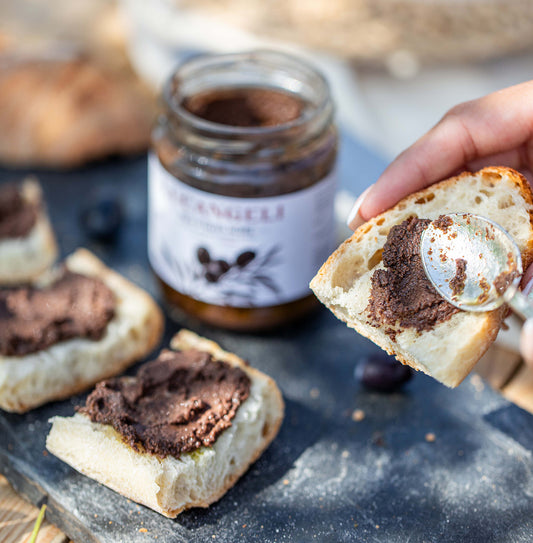
- Spread it on toasted bread for an aperitif bruschetta.
- Add it as a finishing touch to a tomato and mozzarella salad.
For an aperitif with a twist, serve the pesto alongside sun-dried tomato tapenade and pitted black olives in olive oil.
Common mistakes
- Heating the pesto: cooking destroys the aromas of the fresh basil, so always add it off the heat.
- Using too much: pesto is intense, a small amount is enough.
- Forgetting the season: in September, go for pairings with tomatoes, courgettes and fresh pasta.
The one thing nobody else can write
The PDO basil pesto offered by the house is shipped every week from Liguria to guarantee the best possible freshness, which is how you get the authentic taste of Genoese basil, even outside Italy.
Frequently asked questions
How do you recognize a real PDO basil pesto?
Read the ingredient list carefully: Genoese basil, extra virgin olive oil, pine nuts, Parmesan, pecorino, garlic, salt, with no additives or preservatives.
How do you use PDO basil pesto in a back-to-school meal?
Add it to pasta, bruschetta or a tomato salad for a touch of Italian freshness.
Can you freeze PDO basil pesto?
Yes, artisan pesto freezes very well in small containers, which keeps all of its flavour.




 lucangeli.it