


The origins of chocolate hazelnut spread
Chocolate hazelnut spread has its roots in the Piedmontese tradition, where the local hazelnut, Tonda Gentile delle Langhe, is renowned for its delicate flavor. In the 19th century, Italian chocolate makers perfected the art of combining roasted hazelnuts and cocoa, giving birth to a treat that now delights palates worldwide. Italy, and particularly Piedmont, remains the benchmark for quality spreads, far removed from standardized industrial products.
Chocolate hazelnut spread is distinguished by a high content of dried fruit, a smooth texture without palm oil, and an intense taste that enhances both a slice of bread and an Italian dessert recipe. To discover other flavors from the peninsula, explore the artisanal pistachio spread, or the bergamot spread, Épicures d'Or 2024 winner.

How to choose a good chocolate hazelnut spread
Essential criteria
- Hazelnut percentage: The higher the proportion of hazelnuts, the more fragrant the spread.
- Cocoa quality: Good cocoa guarantees a deep and balanced flavor.
- Composition: Choose spreads without palm oil, additives, or preservatives.
- Origin: Piedmontese hazelnuts with PGI (Protected Geographical Indication) are a benchmark of quality.
For an authentic experience, opt for a Piedmont hazelnut spread or a Piedmont chocolate hazelnut spread.
The irreplicable element: artisanal distinction
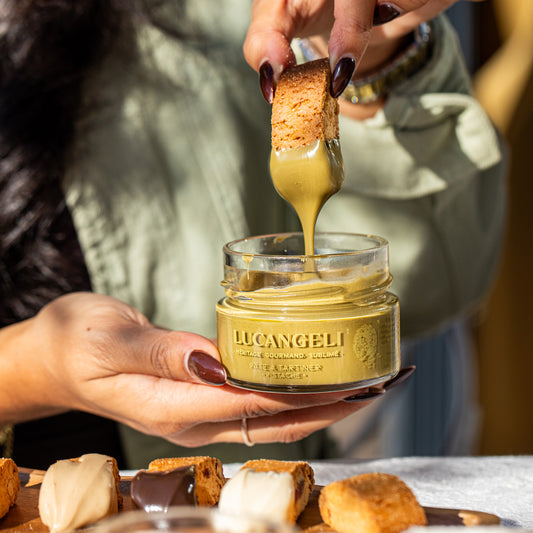
Some Italian spreads are made in small family workshops, using the traditional stone-grinding method. This expertise guarantees a unique texture and unrivaled aromatic intensity. Lucangeli offers a chocolate hazelnut spread made using this process, without palm oil and with 45% selected hazelnuts.

Gourmet ideas for using chocolate hazelnut spread
Italian classics to revisit
- On a slice of brioche: The ultimate Italian breakfast.
- In a crepe or piadina: For a gourmet street food break.
- As a crostata filling: The famous Italian jam tart can also be twisted with a chocolate hazelnut spread.
- To stuff shortbread cookies: Baci di dama or homemade biscotti take on a new dimension.
- In a revisited tiramisù: Replace part of the mascarpone with a little spread for an original touch.
Also discover the set of five Italian spreads to vary pleasures and create desserts to share.
Frequently asked questions about chocolate hazelnut spread
What is the difference between an artisanal and industrial spread?
Artisanal spreads have a higher hazelnut percentage, a short ingredient list, and are made with respect for raw materials. Industrial versions often rely on added palm oil or sugar to reduce costs.
Can chocolate hazelnut spread be used in baking?
Yes, it integrates perfectly into cake, cookie, or cream recipes. For professionals, the 100% Piedmont hazelnut paste, 1kg offers a pure and versatile alternative.
How to store an artisanal spread?
Keep it at room temperature, away from light and heat. Stir it if the oily phase rises to the top, which is a sign of a natural composition without emulsifiers.
For customization enthusiasts, discover how to create a gourmet gift box or design your own bottle on the configurator.




 lucangeli.it