

Dipping a piece of bread into a small dish of olive oil is one of the simplest and most heartfelt gestures of the Mediterranean table. But between a successful dip and a memorable experience, there are a few choices to make: the right container, the right oil, the right quantity. Here's how to set up this ritual in your home.
Choosing the container: cruet, bowl, or carafe?

The container you pour the oil into affects both the presentation and the quality of what you serve. It's not just an aesthetic detail: it's a matter of preservation and use.
The table cruet, practical but needs monitoring
The classic cruet is the most common. It's practical for dispensing, but it has a real drawback: the oil sometimes stays in it for several days, or even weeks, exposed to light and air. Extra virgin oil starts to oxidize as soon as it's opened. If you use a cruet, rinse it and refresh the oil at least once a week, and never leave it in direct sunlight on the table.
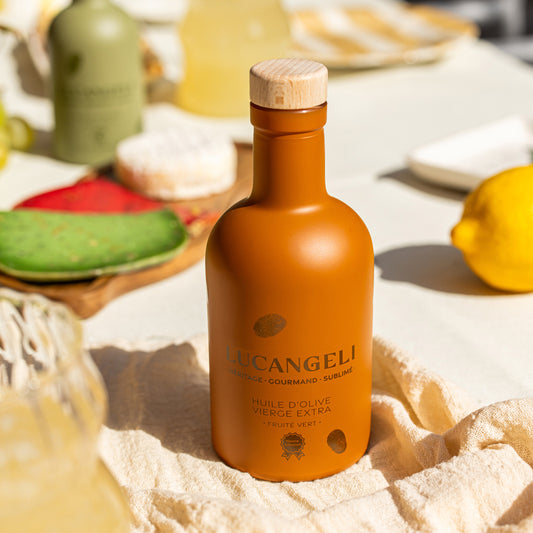
For daily use, prefer a cruet with a non-drip spout and a dark glass bottle of organic green fruity oil, which protects the oil from light.
The bowl, the choice for tasting
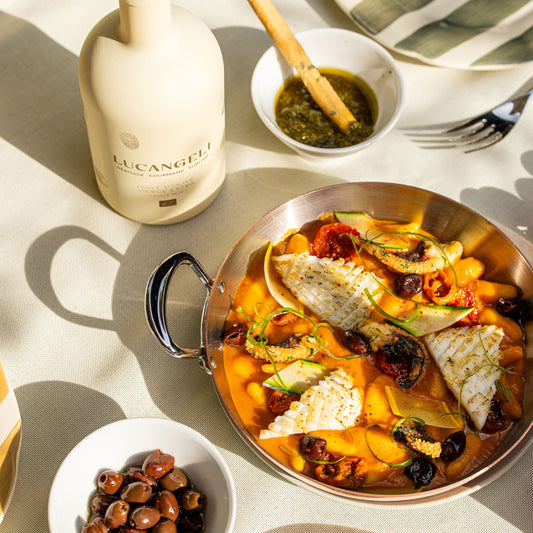
For a meal where oil is highlighted — a dinner with friends, a refined aperitif — the bowl is the best choice. You pour a small amount of oil just before serving, directly from the bottle. The oil is fresh, unoxidized, and the presentation is clean.
A white ceramic or terracotta bowl enhances the color of the oil: the golden green of a green fruity oil from Calabria or the amber gold of a 200 ml organic ripe fruity oil. Plan for one bowl per two people, with about two tablespoons of oil per person.
The carafe or bottle directly on the table
In trattorias in southern Italy, oil often arrives in a small glass carafe or directly in its original bottle. This is the most honest solution: everyone helps themselves, the bottle speaks for itself. If you have curious guests, it's also an opportunity to start a conversation about the origin, variety, and vintage. For an event or a guest table, a bottle with your name created using the configurator transforms this simple gesture into a memory.
What oil to choose for this moment?

Not all extra virgin olive oils are equally suited to the bread-dipping ritual. The aromatic profile changes everything.
Green fruity or ripe fruity: two different experiences
Green fruity oil is made from olives harvested before full maturity. It is characterized by vegetal notes — fresh grass, artichoke, tomato leaf — with a marked bitterness and pungency at the finish. It is a distinctive oil that makes its presence felt on bread. It is perfect for grilled bruschetta, where the oil is intended to be the main character.
Ripe fruity oil comes from olives harvested at full maturity. It offers softer notes: ripe tomato, almond, vegetable butter. The pungency is discreet. It is the ideal oil for dipping at the table, as it complements the bread without overpowering it.
In Calabria, the Carolea variety — cultivated notably in the Cosenza region and the Sibari plain — provides precisely this ripe fruity profile: round, sweet, with a beautiful aromatic persistence. It is the dominant variety in the olive groves of this area. In contrast, Roggianella, a rarer Calabrian variety, produces an oil with an intense green fruity flavor and a pronounced pungency at the finish — perfect for bruschetta where you want to feel the oil vibrate on the grilled bread.
To summarize the two profiles:
- Green fruity: notes of fresh grass, artichoke, tomato leaf. Marked pungency. Ideal for grilled bruschetta and raw fish.
- Ripe fruity: notes of ripe tomato, almond, vegetable butter. Discreet pungency. Ideal for dipping, white bread, and soft cheeses.
To discover both profiles in a single order, the trio of 200 ml organic olive oils allows you to compare them side by side.
Flavored oils, for varied pleasures
Once the ritual is established, you can evolve it with infused oils. Bergamot olive oil — obtained by co-milling the fruit with the olives, not by adding flavor — brings a fresh and slightly floral citrus note that is surprisingly pleasant on country bread or focaccia. It received the Épicure d'Argent 2023 award.
Italian bruschetta and dipping: two rituals, two ways to experience oil
Bruschetta, a Calabrian gesture
In Calabria, bruschetta is not a restaurant appetizer: it's a daily gesture. A slice of country bread grilled over coals or under the broiler, rubbed with garlic, drizzled with green fruity oil directly from the bottle. The oil is poured generously, without restraint. Salt comes after, never before. This ritual is practiced during the olive harvest, in October and November, when the new oil arrives at the mill: it's Calabrian fettunta, literally "oiled slice."
To complement the bruschetta, a few pitted black olives in olive oil or a spoonful of black olive tapenade are enough to create a complete appetizer.
French-style dipping
Dipping is softer, more convivial. A small bowl of oil in the center of the table, bread to share, sometimes a drizzle of balsamic vinegar or a few herbs. It's an aperitif or meal-starter ritual, less codified than bruschetta, but just as sincere. Ripe fruity oil is better suited for this: it's accessible, round, and doesn't surprise uninitiated palates.
Bruschetta or dipping: key differences
Here are the six points that distinguish the two rituals:
- Origin: bruschetta comes from Southern Italy (Calabria, Tuscany); dipping is a more widespread French and Mediterranean practice.
- Bread: grilled and rubbed with garlic for bruschetta; fresh and ungrilled for dipping.
- Recommended oil: pungent green fruity for bruschetta; mild ripe fruity for dipping.
- Moment: bruschetta is practiced during harvest or for evening meals; dipping for aperitifs or at the start of a meal.
- Oil quantity: generous and poured directly for bruschetta; measured in a bowl for dipping.
- Accompaniments: tomato, salt, garlic for bruschetta; herbs, balsamic, olives for dipping.
For establishments wishing to offer this ritual to their customers, the professional area allows for bulk orders and benefits from support in choosing oils and formats.
Frequently Asked Questions
How much olive oil should I plan for dipping bread at the table?
Count about two tablespoons per person for an individual bowl, or four to five tablespoons for a bowl shared between two. Pour just before serving, not in advance, to preserve the aromas.
Can olive oil be put in a cruet and left for several days?
Yes, but not indefinitely. Extra virgin oil oxidizes on contact with air and light. In a tightly closed dark glass cruet, it can be kept correctly for a week at room temperature. Beyond that, the aromas fade. Refresh the oil regularly and never leave the cruet in direct sunlight.
What is the difference between infused oil and flavored oil?
Infused oil — or co-milled oil — is produced by milling olives with the flavoring fruit (bergamot, lemon, basil) during the trituration process. The aromas are naturally integrated into the oil. Flavored oil is a neutral oil to which aromas are added after extraction. The taste result and quality are not comparable: infused oil is more complex and more stable.



 lucangeli.it