


Why compare Italian spreads in 2026?
With so many spreads coming out of Italy, it's easy to get lost: Sicilian pistachio, PGI Piedmont hazelnut, Calabrian almond, or the new cocoa-bergamot pairing — every jar has its own story and its own use. But how do you tell an artisanal speciality from an industrial spread? What should you look at before buying, and for what uses?
This guide gives you a detailed comparison and practical advice for choosing according to your tastes, your budget and your cravings. You'll also find recommendations for tasting them properly, plus links to our trade and personalisation offers, in case you want to go further than a slice of toast.
Discover the artisanal pistachio spread
Explore the Piedmont hazelnut spread
What to look for in an Italian spread

1. The main ingredient: pistachio, hazelnut, almond or cocoa?
The base of the spread defines its texture, its taste and its use:
- Pistachio: green colour, intense flavour, ideal on bread or brioche, perfect in pastry.
- PGI Piedmont hazelnut: rounded aroma, creamy texture, the benchmark for gourmets.
- Almond: mild and light, often more fluid, perfect for breakfast or crêpes.
- Cocoa-hazelnut: the most indulgent, for chocolate lovers.
- Bergamot: an award-winning newcomer (Épicures d'Or 2024), citrus meets sweetness.
2. Origin, certifications and artisanal production
- Go for spreads that state where the nuts come from (Sicily, Piedmont, Calabria).
- Check for certifications such as PGI for Piedmont hazelnut or PDO for Bronte pistachio.
- An artisanal producer keeps the ingredient list down to the essentials: nuts, sugar, sometimes milk, never palm oil.
3. Texture, size and use
- Smooth or grainy texture: an artisanal spread often keeps a slight grain.
- Size: classic jar (200 g, 250 g) or 1 kg purée for the greediest among us, or for the trade.
- Use: on toast, as a crêpe filling, inside a panettone, in home baking.
Discover the cocoa-hazelnut spread
2026 comparison table of Italian spreads

For very large formats or for the trade, the 1 kg pistachio purée and the 1 kg hazelnut purée cover professional needs.
How do you enjoy and store an Italian spread?
Tasting tips
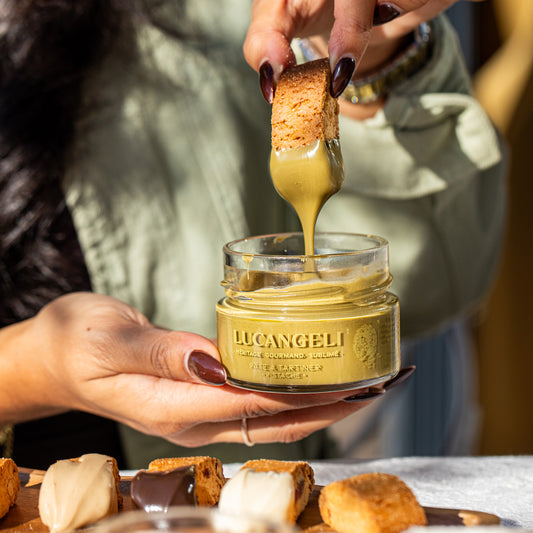
- Enjoy it at room temperature on bread, brioche or a crêpe.
- Use it to fill a panettone or a rolled cake for a festive touch.
- Try it as a topping on ice cream or stirred into plain yoghurt.
- For the trade: filling for house-made pastries.
Storage
- Close the jar properly after each use.
- Keep it away from light and heat.
- Some products (1 kg purées) need to be refrigerated once opened.
A word on personalisation and our trade offer
If you want to offer a one-of-a-kind experience, you can put together a spread gift box. For large events, personalised boxes or batches are available through our trade service or the configurator.
Frequently asked questions
What is the best Italian spread in 2026?
It all depends on your tastes: pistachio wins you over with its originality, PGI Piedmont hazelnut with its tradition, bergamot with its award-winning citrus twist (Épicures d'Or 2024).
Where can you buy a real, high-quality Italian spread?
Go for specialist delicatessens or sites that are upfront about origin, ingredients and artisanal production, such as these authentic Italian spreads.
Can you personalise a box of Italian spreads?
Yes, you can put together a made-to-measure box or have a batch personalised for a gift or an event using the gift box configurator.




 lucangeli.it