


Why choose an Italian almond butter in September?
Italian almond butter is a staple of southern Italy's sweet pantry. In September, the almond harvest is in full swing in the regions of Sicily and Calabria, giving products a rare freshness. Choosing an almond butter of Italian origin means rediscovering the finesse of local varieties such as Tuono or Avola, traditionally used in pastry and family cooking.
To be sure of the quality, check the label: a real Italian almond butter must contain 100% almonds, with no additives and no added oil. Some producers, like those in the South, even offer 1 kg formats suited to enthusiasts and professionals. For an even more personal experience, discover the 100 percent almond butter, 1 kg or explore our personalisation service to create a made-to-measure gift box.
How do you use Italian almond butter properly?

Italian almond butter stands out for its fine, smooth texture. It works just as well in sweet preparations as in savoury ones:
- Spread it on a slice of rustic bread for an Italian-style breakfast.
- Stir it into a cake batter or a dessert cream for an incomparably soft result.
- Add a spoonful to a salad dressing for an original touch of sweetness.
- Use it as a base for homemade biscuits or amaretti.
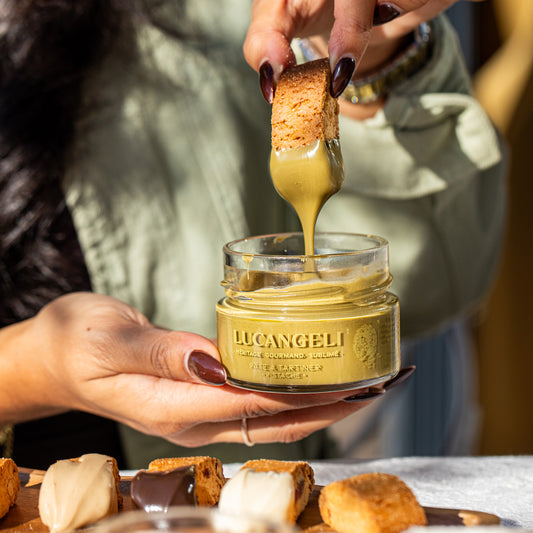
For variety, pair almond butter with a pistachio spread or a Piedmont hazelnut spread, and put together a gourmet gift box to give or to share. Professionals can also personalise their creations with the gift box configurator.
The one-of-a-kind element: the Tuono almond variety
Little known outside Italy, Tuono is an almond variety grown mainly in Calabria and Sicily. Its thin shell and mild flavour make it ideal for a delicate butter with no bitterness. Italian artisans favour Tuono for the way it pairs with citrus, such as pure Calabrian bergamot juice, or with balsamic vinegars for original sweet-and-savoury recipes.
Practical list: how do you recognise a real Italian almond butter?
- A single ingredient: 100% Italian almonds.
- An even texture, with no excessive oil separation.
- A mild flavour, with no bitterness or aftertaste.
- The variety (Tuono, Avola) or the region of origin mentioned.
- Formats suited to gourmet uses (200 g to 1 kg).
Frequently asked questions
What is the difference between an Italian almond butter and a standard almond butter?
Italian almond butter is made from local varieties, often milder, with no added oil or sugar. Its texture and aroma are more refined.
How do you store almond butter once opened?
It is best kept in an airtight jar, away from light and heat. A quick stir before each use brings the texture back to perfect.
Can almond butter be used in savoury cooking?

Yes, it works very well in sauces, in vinaigrettes or as a finishing touch on roasted vegetables. For more ideas, discover the spreads and tapenades in the range.




 lucangeli.it