


Integrating quality olive oil into a hotel breakfast is one of the simplest ways to elevate the customer experience. Here's how to choose the right oil, present it, and manage it in stock.
Breakfast is the first meal your guest has at your establishment. It's often the last memory they take with them. In hotels around the Mediterranean, olive oil has been part of the service for generations: a drizzle on toasted bread, a small bowl placed next to fresh cheese, a clearly labeled bottle on the buffet. In France, this practice is still rare, even though it's a mark of distinction immediately recognized by customers accustomed to quality dining.
Why olive oil belongs at a hotel breakfast
A practice rooted in Mediterranean culture
In Italy, Spain, Greece, and Lebanon, savory breakfast with olive oil is a daily practice. A slice of bread rubbed with tomato and drizzled with oil, a light bruschetta, fresh cheese accompanied by a drizzle of oil: these uses are natural for a large part of your international clientele. Offering organic extra virgin olive oil at breakfast meets an expectation that many guests don't dare express but immediately recognize.
A clear sign of quality for everyone
The presence of a clearly identified olive oil, with its origin, variety, and vintage, sends a clear message about your establishment's commitment to excellence. This is not a minor detail: it's a positioning marker. A guest who sees a bottle of Calabrian olive oil on the buffet understands that the establishment cares about the provenance of what it serves. This signal applies to oil as much as to coffee, bread, or butter.
The difference between cooking oil and serving oil
Not all olive oils are equally suitable for table service at breakfast. A cooking oil, often excessively filtered and without character, has no gustatory interest. An extra virgin oil, from an identified variety, offers an aromatic profile that is perceived from the first tasting. For breakfast service, a mature fruity oil is generally preferable: its delicate notes of ripe fruit, almond, and cooked artichoke are better suited for a time of day when palates are not yet fully awakened.
Choosing the right oil for morning service
The Carolea variety: a profile adapted to breakfast
The Carolea variety, cultivated in Calabria in the provinces of Cosenza and Catanzaro, produces an oil with a mild, mature fruitiness and moderate pungency. It is precisely this characteristic that makes it suitable for breakfast service: its pungency does not surprise palates unaccustomed to olive oil first thing in the morning. Unlike a Coratina or Frantoio, whose bitterness and pungency can be pronounced, Carolea blends naturally into a calm and delicate mealtime.
Green fruity or mature fruity: which to choose?
For a general buffet, mature fruity is the most versatile choice. For an establishment that wants to offer two oils and introduce its guests to tasting, combining an organic green fruity oil and a mature fruity oil provides an educational and memorable introduction. Here are the two profiles in summary:
- Green fruity: notes of fresh grass and raw artichoke, pronounced bitterness, lively pungency. Ideal on toasted bread, aged cheese, or fresh tomatoes.
- Mature fruity: notes of almond, ripe fruit, sweetness, moderate pungency. Ideal on bread, fresh cheese, yogurt, or eggs.
Formats and capacities: what works in hospitality
The choice of format depends on the volume of covers served and the service method. Here are the most suitable formats:

- 200 ml bottle: ideal for individualized table service or a neat presentation on the buffet. It's easily replenished and limits oxidation once opened.
- 500 ml bottle: suitable for small establishments or room service. The discovery duo in two 500 ml bottles allows you to offer both profiles without tying up significant stock.
- 5-liter container: for establishments serving more than 30 covers at breakfast. A 5-liter container covers approximately 10 days of service for a 50-cover hotel, at 8 to 10 ml per portion. This is the most economical format per liter, provided you have a suitable serving container and regularly replenish the decanted oil.
- 3-liter Jeroboam: a presentation format that creates a strong visual impact on a buffet or guest table. It is suitable for establishments that want to make olive oil both a decorative element and a service item.
Presenting and serving olive oil at breakfast
Buffet presentation
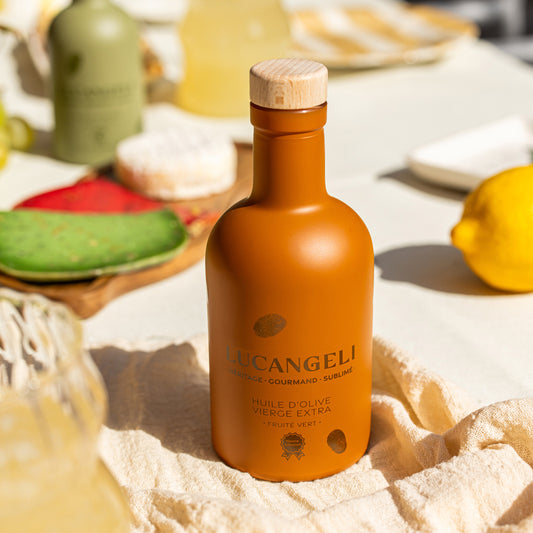
On a buffet, olive oil should be identified. A legible label indicating the origin, variety, and aromatic profile allows the customer to understand what they are tasting. Avoid anonymous carafes: they convey no information and do not enhance the product. An original bottle, placed on a small tray with a tasting cup and a few slices of toasted bread, is enough to create a distinct dining experience.
For establishments that wish to go further, a bottle personalized with your name or logo reinforces the establishment's identity and transforms a service product into a communication tool. Personalization is available starting from 24 bottles, with a design created directly on the online configurator.

Table service
For table service at breakfast, olive oil is presented in a bottle with a drip-free pourer. This technical detail is important: oil spilling on the tablecloth or tray creates an immediate negative impression. The pourer allows for precise dosing, around 8 to 10 ml per serving, and maintains the cleanliness of the service.
Serving temperature should also be monitored. Olive oil stored in a cold pantry may show slight cloudiness or partial crystallization. This phenomenon is natural and does not affect quality, but it can surprise an unsuspecting customer. Take the bottle out at least 30 minutes before service so the oil can regain its fluidity and usual appearance.
Pairing olive oil with other breakfast products
Olive oil at breakfast is not limited to bread. It naturally pairs with several elements of a quality buffet. On fresh cheese or ricotta, a drizzle of mature fruity oil and some fresh herbs are enough to transform an ordinary plate. On scrambled or soft-boiled eggs, a green fruity oil as a finishing touch adds a vegetal note that enhances the dish. On plain yogurt, a mild oil with honey and nuts makes an original and memorable proposition.
To complement the breakfast table with Italian spreads, pistachio spread, Piedmont hazelnut spread, or Calabrian bergamot spread are consistent accompaniments to a quality Italian approach. These products are available to professionals via the dedicated area for cafes, hotels, and restaurants.
Frequently asked questions
What olive oil should I choose for a hotel breakfast buffet?
For a general buffet, a mature fruity extra virgin olive oil is the most suitable choice. Its mild profile and notes of almond and ripe fruit suit most palates, including those not accustomed to olive oil in the morning. The Carolea variety from Calabria is particularly well suited for this use, due to its moderate pungency.
What olive oil format is most suitable for a 50-room hotel?
For a 50-room hotel with an average occupancy rate, a 5-liter container covers approximately 10 days of breakfast service, at 8 to 10 ml per portion. For presentation on the buffet, it is recommended to decant the oil into a serving bottle with a drip-free pourer. For establishments that desire a refined presentation, 200 ml or 500 ml bottles are more suitable.
How can I offer personalized olive oil with my hotel's name?
Personalization of an olive oil bottle is available starting from 24 bottles. The design is created by the establishment using an online configurator. For a professional project or a large volume, the Lucangeli professional space allows you to contact the sales department for tailor-made support.





 lucangeli.it