

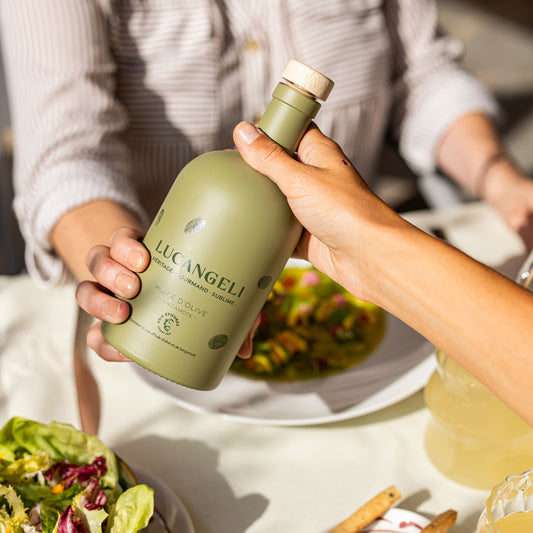
If you're a fan of Italian cuisine, you know how much organic green fruity olive oil or organic ripe fruity olive oil can transform a dish. But did you know there are fundamental differences between these two aromatic profiles? Let's discover together the secrets of fruity olive oil and how to choose the right bottle for your recipes.
What is fruity in olive oil?

The term "fruity" refers to the aromatic profile of an extra virgin olive oil, directly linked to the maturity stage of the olives at harvest time. The earlier the olives are harvested, the more intense and vegetal the oil will be. The later they are harvested, the softer and rounder the oil will be. It is this simple principle that distinguishes green fruity from ripe fruity — and that makes all the difference on the plate. To explore these two profiles side by side, the 500ml olive oil discovery duo is an excellent way to start.
Green fruity: intensity and freshness
Organic green fruity olive oil is obtained from olives harvested early, usually between September and October, when they are still green. The result is an oil with a strong character: herbaceous aromas, notes of raw artichoke, tomato leaf, and a slight pungency at the end of the mouth — that tingling sensation in the throat that is the signature of great olive oils. This intense profile is perfect for dishes that need to be seasoned or that can handle a strong-flavored oil.
Ripe fruity: sweetness and roundness
Conversely, organic ripe fruity olive oil is made from olives harvested at full maturity, between November and December. The darker olives yield a softer oil, with aromas of ripe fruit, fresh almond, and hazelnut. The pungency is almost absent, and the texture in the mouth is rounder and more enveloping. This oil is suitable for a wide variety of dishes, especially delicate preparations that should not be dominated by the taste of the oil.
How to choose your olive oil according to the dishes?
The choice between green fruity and ripe fruity is not a question of quality — both are first-rate extra virgin olive oils — but rather of culinary harmony. As with wine, each oil has its favorite dishes.
Dishes that pair with green fruity
Green fruity oil is ideal for dishes that benefit from a vegetal and pungent touch. It pairs perfectly with raw vegetable salads, bruschetta, vegetable soups, pasta with garlic and oil, or grilled fish. It is also perfect to accompany a sun-dried tomato tapenade on toasted bread slices, or to finish a dish of seasonal vegetables. Its intensity awakens flavors without overpowering them.
Dishes that pair with ripe fruity
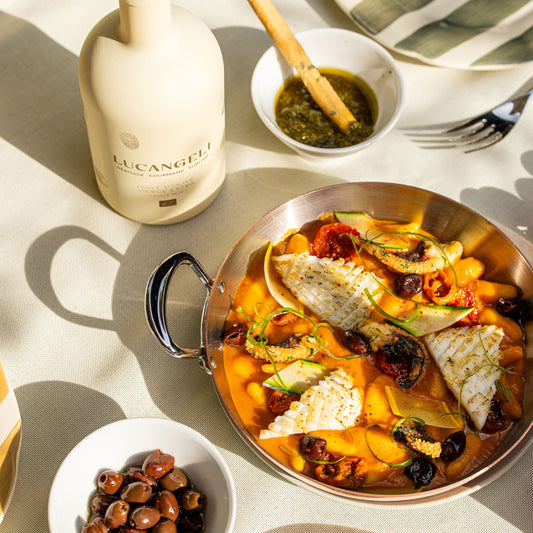
Ripe fruity oil, being milder, is better suited for delicate preparations. It will enhance a fish carpaccio, fresh pasta with cream, steamed vegetables, or roasted white meat. It can also be used very well as a finishing touch on a risotto or a creamy soup. For a refined aperitif, pair it with a black olive tapenade or a DOP basil pesto: the oil's sweetness perfectly balances the condiments' intensity.
Calabrian Italian olive oil: an exceptional terroir

Calabria, a sun-drenched, sea-kissed region in southern Italy, is one of the historical cradles of olive cultivation. Its olive groves, clinging to the hills between sea and mountains, produce oils of great aromatic complexity. It is in this landscape that the oils offered by the family business Lucangeli were born, with particular attention paid to each stage of production. To discover the entire range, the organic olive oil trio brings together the three emblematic profiles in a single box.
Hand harvesting, a guarantee of quality
The quality of an olive oil begins in the fields. Hand harvesting allows only the olives at the ideal stage of maturity to be selected, without damaging the fruit. This traditional method, slower and more costly than mechanical harvesting, guarantees an oil of great aromatic finesse. The olives are then pressed quickly after picking, cold, to preserve all their qualities. It is this attention to detail that distinguishes artisanal olive oil from industrial oil.
What if you dared to try bergamot oil?
Beyond green fruity and ripe fruity, there is a third option, more original and typically Calabrian: bergamot olive oil. Bergamot, an emblematic citrus fruit of Calabria, brings floral and slightly acidic notes to the olive oil, opening up new culinary perspectives. It pairs wonderfully with fish, fruit salads, fresh cheeses, or fruit-based desserts. Awarded at the Épicures d'Argent 2023, this oil is an invitation to step off the beaten path.
Which oil to choose to start with?
If you're still hesitating, the best way to form an opinion is to taste both profiles side by side. The 500ml olive oil discovery duo allows you to compare green fruity and ripe fruity in your kitchen, on your everyday dishes. And for those who wish to offer a beautiful gastronomic discovery, the customizable gift set allows you to combine oils, vinegars, and condiments according to your desires. Because choosing your olive oil is also learning to cook better — and to savor more.
Green fruity or ripe fruity olive oil: how to choose according to your dishes?





 lucangeli.it